The Smell of a Scam: Why Your HVAC is Choking on Pet Dander
I followed a ‘Sales Tech’ last November who quoted a family in a three-story colonial nearly $18,000 for a total system replacement. The homeowner was desperate; she had three Golden Retrievers and a house that smelled like a wet kennel despite running ‘high-end’ pleated filters. The Sales Tech told her the heat exchanger was ‘saturated with biological growth’ and the whole unit was a biohazard. I stepped in, pulled the blower motor, and showed her the truth. The system wasn’t dying; it was just suffocating. The evaporator coil looked like a wool sweater, and the secondary heat exchanger was so caked in dander that the static pressure was nearly double the rated limit. All she needed was a deep cleaning, proper HVAC duct sealing, and an integrated air purification system that actually works, not a whole new box. This is the reality for pet owners: your animals are trying to kill your furnace, and most techs would rather sell you a new unit than fix the airflow physics.
“The most expensive equipment in the world cannot overcome a bad duct system.” – Industry Axiom
The Airflow Manifesto: Why Your Pet is a Thermodynamic Liability
In the trade, we have a saying: ‘You can’t cool what you can’t touch.’ In a house with pets, the air isn’t just gas; it’s a slurry of hair, skin cells (dander), and microscopic proteins. When your return air isn’t filtered or purified correctly, these particles bypass those cheap fiberglass ‘rock catchers’ and head straight for your indoor coil. Once they hit the wet surface of a cooling coil, they create a biological mat that blocks heat transfer. This increases the sensible heat load and forces the compressor to run longer, spiking your bills and shortening the life of the ‘gas’ or ‘juice’ inside. If you are in a cold climate like the Northeast, this dander becomes a dry fire hazard near ventless gas heater services or inside old heat exchangers. We see it all the time with radiator replacement calls where the actual problem is a lack of convective airflow caused by pet hair clogging the fins. To solve this, you need airflow measurement services to determine if your return air drops are even sized correctly for the extra filtration load. Most ‘Tin Knockers’ don’t account for the pressure drop of a high-MERV filter, which can lead to a cracked heat exchanger and an HVAC repair nightmare.
The Science of Latent Heat and Pet Allergens
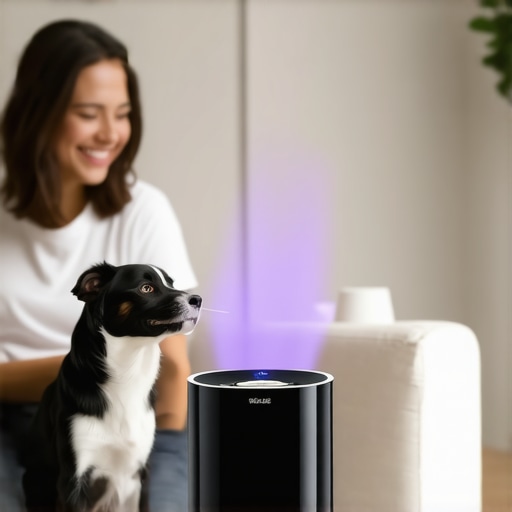
If you live in a humid zone, your AC isn’t just a refrigerator; it’s a dehumidifier. Your pets add to the latent heat load through respiration and moisture. An oversized unit—often the result of poor manual J calculations—will ‘short cycle,’ meaning it cools the air too fast without removing the moisture. This creates a ‘cold swamp’ effect where pet odors become trapped in the high humidity. Integration of a whole-home air purifier, specifically one utilizing bipolar ionization or HEPA-grade filtration with UV-C treatment, is the only way to break down these odors at a molecular level. Without it, you’re just moving dirty air from one room to another. Proper system performance testing ensures that your blower can handle the static pressure of these advanced purifiers. If the static pressure is too high, you’ll hear that ‘whistle’ or ‘howl’ in the vents—that’s the sound of your motor dying. We often recommend duct cleaning services followed by ‘Pookie’ (mastic) sealing to ensure the air actually reaches the purifier instead of being sucked in from the dusty crawlspace.
“Ventilation shall be provided to ensure indoor air quality is maintained at levels that minimize health risks from contaminants.” – ASHRAE Standard 62.1
The 2025 Regulatory Cliff and Air Quality
As we move into 2025, the industry is shifting away from R-410A to A2L refrigerants. These new systems are more efficient but also more sensitive to airflow restrictions. For pet owners, this means the margin for error is gone. If your system is struggling with dander, the new sensors in these 2025 units will likely trip more frequently, leading to a 24/7 heating emergency response call. You can find more about these shifts in our heating service innovations guide. Furthermore, with the rise of app-controlled heating systems, homeowners often think they can solve everything from their phones. But your phone won’t tell you that your return air duct is collapsed or that your carbon monoxide detector installation is the only thing keeping you safe from a soot-clogged furnace. You need a tech who understands the furnace repair myths that lead to poor IAQ. Don’t be the person who buys a $10,000 system only to choke it out with a $0.50 filter and a Golden Retriever. Invest in integration, get your airflow measurement services done, and stop letting ‘Sales Techs’ treat your home like a commission check. Contact a real pro to get your system dialed in for your pets.