My old mentor used to scream at me until he was blue in the face: ‘You can’t cool or heat what you can’t touch!’ This is why airflow matters more than horsepower. He’d stand over me in a cramped, muddy crawl space while I was trying to patch a rusted-out plenum, reminding me that the house is a single thermodynamic pressure vessel. If the ‘lungs’ of the house—the crawl space and the attic—are sick, the living room doesn’t stand a chance. Most guys call themselves ‘HVAC techs’ but they’re really just part-swappers. They see a blower motor replacement as a payday, whereas I see it as a symptom of a system choking on high static pressure because the crawl space is a damp, unconditioned mess. If you want to master home comfort, you have to stop thinking about the furnace and start thinking about the envelope.
The Physics of the Crawl Space: Latent Heat and the Stack Effect
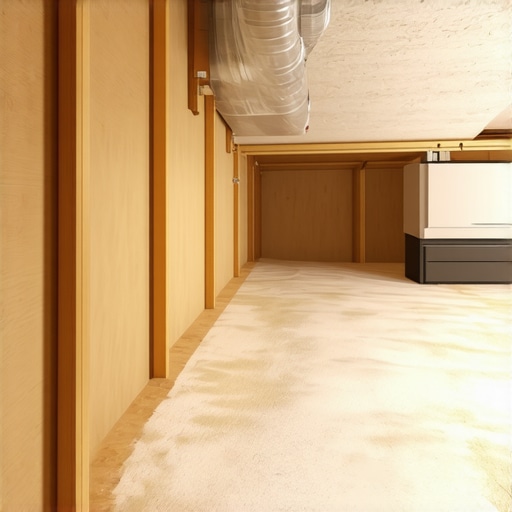
In the cold North, your crawl space is a battleground. You’ve got the ‘stack effect’ working against you every single hour. Warm air in the house rises and escapes through the attic, creating a vacuum that sucks cold, damp air up from the dirt floor of your crawl space. This isn’t just ‘ghost air’; it’s a chemical cocktail of moisture and soil gases. When we talk about IAQ improvement services, we aren’t just talking about a fancy scent diffuser. We are talking about stopping that infiltration at the source. Creating a true vapor barrier means more than just throwing some 6-mil poly on the ground. It requires meticulous sealing—using ‘Pookie’ (mastic) on every duct joint and ensuring the barrier is taped and sealed to the foundation walls. This prevents the earth’s latent heat—the moisture-laden energy—from turning your joists into a petri dish.
“The most expensive equipment in the world cannot overcome a bad duct system.” – Industry Axiom
When that damp air hits your cold floor joists, it reaches its dew point and condenses. This moisture makes your heating system work twice as hard. Why? Because moist air is harder to heat than dry air. This is where dehumidification services become the unsung hero of winter comfort. By stripping that moisture out before it enters the ductwork, you’re allowing your furnace to focus on sensible heat—the temperature you actually feel on your skin. If you’re constantly dealing with baseboard heater repair in peripheral rooms, it’s often because those rooms are losing the war against the cold draft coming up through the floorboards. You aren’t just fighting the cold; you’re fighting the physics of evaporation.
Mechanical Solutions for an Encapsulated Environment
Once you’ve sealed the space, you can’t just leave it stagnant. Stagnant air is dead air. This is where heat recovery ventilators (HRVs) come into play. In a northern climate, you can’t afford to just dump your heated air outside to get fresh oxygen. An HRV uses the outgoing warm air to pre-heat the incoming fresh, filtered air. It’s like a heat exchanger for the entire house. For those with severe allergies, pairing this with HEPA filter systems ensures that the air being circulated is scrubbed of the particulates that usually thrive in damp crawl spaces. If your system sounds like a jet engine taking off, you might be overdue for a blower motor replacement because the motor has been fighting the high static pressure of clogged, undersized, or moisture-heavy filters for years.
I’ve seen too many homeowners get talked into a $15,000 system when all they needed was programmable thermostat programming and a better strategy for their crawl space. If you have a furnace in the crawl, the flue pipe installation is critical. If that pipe isn’t pitched right or if it’s corroded, you’re looking at a carbon monoxide nightmare. I always check the thermocouple replacement needs on older standing pilot units, but in 2025, we’re moving toward smarter controls. Remote thermostat access allows you to monitor the temperature in the crawl space itself, alerting you before a pipe bursts during a polar vortex. This kind of proactive tech is part of the heating service innovations we are seeing today.
The Ductwork Manifesto: Why ‘Tin Knockers’ Matter
The guys who build the ducts—the ‘Tin Knockers’—are the real MVPs. You can have a 98% AFUE furnace, but if your ducts are leaky and running through a freezing crawl space without a vapor barrier, you’re losing 30% of your heat to the worms. Every joint needs to be sealed with mastic. Forget duct tape; it’s a lie. Duct tape is for everything except ducts. When I’m down there, I’m looking for ‘sweating’ ducts. If a duct is sweating in the winter, you’ve got a massive thermal bridge problem. Understanding choosing the right HVAC fixes means realizing that insulation is only as good as the air barrier behind it.
“Ventilation shall be provided by mechanical means, or by a combination of mechanical and natural means.” – ASHRAE Standard 62.2
If you’re wondering how to identify when furnace repair is urgent, look at your energy bills. A sudden spike often means your system is ‘short cycling’ because it can’t move the air effectively, or the crawl space has become so cold that the furnace never hits its set point. This isn’t just a comfort issue; it’s a mechanical failure in the making. Regular maintenance, as discussed in preventative HVAC repair tips, should always include a visual inspection of the vapor barrier integrity. If the ‘Juice’ (refrigerant) or the gas pressure is fine, but the house is still cold, the crawl space is the first place I look. For more expert insights, you can see how we handle furnace repair myths. Don’t let a ‘Sales Tech’ sell you a compressor you don’t need when your crawl space is sucking the life out of your home. If you need a real diagnosis, feel free to contact us today.