The Myth of the Basement Bucket: Why Your Portable Dehumidifier is a Band-Aid for a Bullet Wound
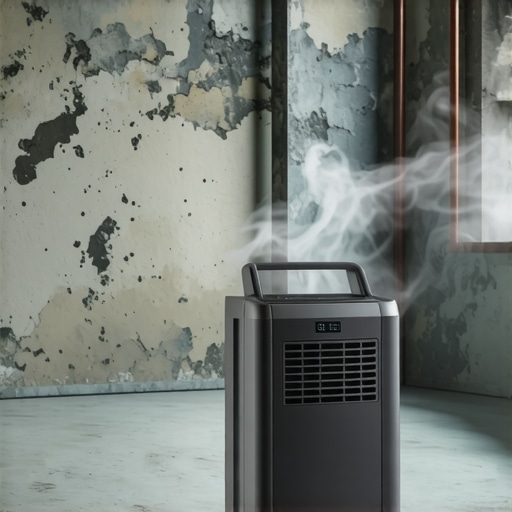
I’ve spent thirty years dragging my tool bag through flooded mechanical rooms and cramped crawlspaces where the air is so thick you could carve it with a linoleum knife. If there’s one thing that makes my blood pressure spike more than a ‘Sales Tech’ trying to sell a new condenser for a blown fuse, it’s seeing a row of plastic, vibrating portable dehumidifiers humming away in a damp basement. Homeowners think they’re winning the war against mold, but they’re really just feeding a cycle of thermodynamic failure. Comfort isn’t something you buy in a box from a big-box retailer; it’s a result of calculated physics and disciplined airflow. Most people think they have a ‘moisture problem,’ but what they actually have is a failure of static pressure testing and a total lack of understanding regarding latent heat.
“The most expensive equipment in the world cannot overcome a bad duct system.” – Industry Axiom
My old mentor, a man who could identify a refrigerant leak by the specific pitch of a compressor’s whine, used to scream at me, ‘You can’t cool what you can’t touch!’ He was talking about the evaporator coil, of course, but the logic applies to moisture too. If your basement air is stagnant because some tin knocker thirty years ago didn’t install enough return air drops, no portable unit is going to save you. You can’t dehumidify air that isn’t moving. Those little plastic units are basically just 500-watt space heaters that happen to catch a few pints of water. They add sensible heat back into the room while struggling to drop the dew point. In the cold, damp climates of the North where we deal with snow melt systems installation and heavy soil saturation, a portable unit is like trying to drain the Atlantic with a thimble.
The Thermodynamic Reality: Latent vs. Sensible Heat
To understand why your basement feels like a swamp even with the ‘Dry’ light on, we have to talk about Thermodynamic Zooming. Air has two types of heat: sensible (what you read on a thermometer) and latent (the energy hidden in water vapor). When a heat pump installation or a high-efficiency furnace installation is done correctly, the system is designed to handle both. But in a basement, the walls are cooled by the surrounding earth. This keeps the sensible temperature low, which means your main AC unit doesn’t run long enough to pull out the humidity. This is called ‘short cycling.’ The thermostat is satisfied because it’s 68 degrees, but the relative humidity is still sitting at 75% because the two-stage furnace installation wasn’t paired with a proper HVAC load calculation services audit. This leads to that sour, acidic smell of mold—the same smell I encounter during a nasty compressor burnout.
When the air is saturated, it’s heavy. It sits on the floor like a physical weight. A portable dehumidifier only treats the air in its immediate three-foot radius. The rest of the basement stays damp, and that moisture eventually migrates upward, forcing your main system to work harder. If you’re seeing moisture on your windows or smelling musk, it’s time to identify when furnace repair is urgent because high humidity can actually corrode your heat exchanger over time. I’ve seen high-efficiency furnaces rusted through in five years because the basement was a constant sauna. It’s a slow death for expensive equipment.
The Airflow Manifesto: Why Static Pressure is King
If you want a dry basement, stop looking at the ‘Gas’ (refrigerant) and start looking at the ‘Tin’ (ductwork). Static pressure testing is the only way to know if your house can actually breathe. Think of your HVAC system like a heart and the ducts like arteries. If the return air is restricted, the blower motor has to work overtime, creating heat and reducing the evaporator coil’s ability to reach the dew point. This is why we push preventative hvac repair tips that focus on airflow first. If the static pressure is too high, you’re literally strangling the machine. I’ve gone into hotel boiler services calls where the basement was so humid the sparky (electrician) was afraid to touch the panel. The fix wasn’t more portable units; it was re-engineering the return air to pull that heavy, wet air off the floor and across a real, whole-home dehumidification coil.
“Standard practice requires that residential systems be designed for a maximum of 0.5 inches of water column total external static pressure to ensure proper airflow and latent heat removal.” – ACCA Manual D
We see this constantly in the North. People invest in snow melt systems installation for their driveways but ignore the fact that their basement is a literal sponge. During the winter, they use portable heater safety checks to make sure their space heaters aren’t fire hazards, but they don’t realize that improper humidity control in the summer is what’s actually destroying their structural integrity. In the dry Southwest, they worry about swamp cooler maintenance, but here, the enemy is the silent creep of vapor pressure. When we perform a proper ac installation, we aren’t just hooking up pipes and charging the system with juice. We are balancing the entire home’s envelope.
Solving the Damp Basement Once and for All
So, what’s the fix? It isn’t a bigger bucket. It’s a two-stage furnace installation or a variable speed heat pump installation that can run at lower speeds for longer periods. This allows the evaporator coil to stay cold and consistently strip moisture from the air without over-cooling the space. We also look at preventative maintenance contracts that include checking the ‘Pookie’ (mastic) on the duct joints. If your ducts are leaking in the basement, you’re just cooling the spiders and wasting money. Every gap in that tin is a lost opportunity to control your environment. You need a system that was sized using HVAC load calculation services, not some rule-of-thumb guess by a guy in a clean shirt who hasn’t seen the inside of an attic in a decade. If you want to stop the rot, you have to extend your system’s life by treating the cause, not the symptom. Stop buying plastic junk and start investing in the physics of your home. If your basement is still damp, it’s not a mystery—it’s a mechanical failure that requires an expert who knows that airflow is the only thing that matters at the end of the day.