The Ghost in the Cold Steel: A Forensic Look at Heat Exchangers
I’ve spent thirty winters in the rust belt, dragging my tool bag through crawlspaces and over frozen rooftops where the wind-chill makes your eyes water. I’ve seen it all, but nothing gets my blood boiling like a ‘Sales Tech’—those guys who wear clean uniforms and carry a clipboard but wouldn’t know a manometer from a meat thermometer. They love the ‘cracked heat exchanger’ scare tactic because it’s the easiest way to frighten a homeowner into a $15,000 system they don’t need. But physics doesn’t lie. When I walk into a house where the furnace is acting up, I don’t start by pulling out a financing brochure. I pull out my combustion analyzer. This isn’t just a fancy gadget; it’s a polygraph test for the metal heart of your heating system.
“If the concentration of carbon monoxide in the flue gas exceeds 400 ppm air-free, the appliance is failing and must be corrected immediately.” — ASHRAE Standard 103
The Sales Tech Scam: A Forensic Case Study
Last February, during a polar vortex that had the local gas lines screaming, I followed a tech from one of those ‘big box’ HVAC companies. He’d told an elderly couple their furnace was a ‘ticking time bomb’ and quoted them for a full replacement. He even showed them a grainy photo of ‘cracks’ that looked suspiciously like a smudge on his lens. When I arrived, the house was a chilly 58 degrees. I didn’t look at the heat exchanger first; I looked at the flame. A healthy flame is a crisp, steady blue. This one was dancing, flickering yellow every time the blower motor kicked on. That’s the classic sign of a pressure imbalance. I hooked up my analyzer. While the Sales Tech claimed it was a total loss, my readings showed the CO was actually within safe limits, but the excess air was spiking. The problem? A poorly executed furnace repair by a previous tech who didn’t understand airflow. The ‘crack’ was actually just surface scale from a lack of preventative maintenance. A thorough heat exchanger cleaning and a gas pressure adjustment saved them $12,000. That’s why you hire a technician, not a salesman.
The Anatomy of Thermodynamic Stress
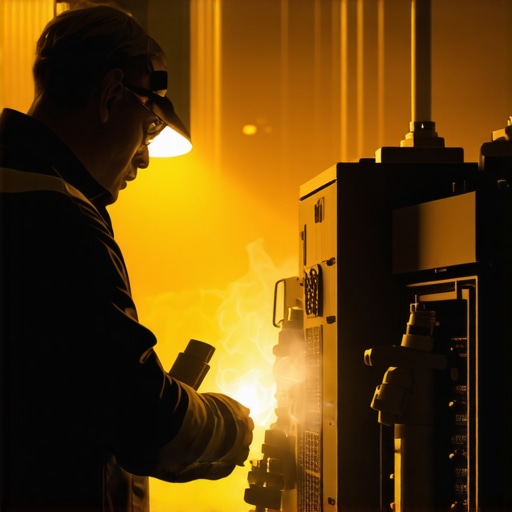
Your heat exchanger is a series of metal tubes or clamshells that separate the toxic combustion gases (the ‘juice’ or ‘gas’ as the old-timers call it) from the air you breathe. It’s a violent environment. When the burners ignite, that metal expands rapidly. When the blowers kick on, it cools. This constant expansion and contraction—what we call thermal cycling—eventually causes fatigue. If your ductwork was installed by a ‘tin knocker’ who didn’t understand static pressure, the heat exchanger will overheat, accelerating this process. We’re talking about 1,200°F internal temperatures. If that metal can’t shed heat because of poor airflow, it will eventually pop a seam or develop a hairline fracture. [IMAGE_PLACEHOLDER] This is where combustion analysis becomes critical. We aren’t just looking for holes you can see with your eyes; we’re looking for the chemical signature of a failure. When a crack opens up, the high-pressure air from your blower fan (the ‘supply air’) pushes into the lower-pressure combustion chamber. This disrupts the flame, introduces too much oxygen into the combustion process, and causes the production of carbon monoxide (CO).
Combustion Analysis: The Polygraph Test
A true technician analyzes the flue products. We look at the O2, CO2, and most importantly, the CO levels. We also check ‘Excess Air.’ If I see the O2 levels jump the second the indoor blower starts, I know air is leaking into the heat exchanger. It’s physics, not guesswork. In our cold climate, where we rely on variable speed furnace services, the complexity of these readings increases. Modern high-efficiency furnaces (90% AFUE and above) have a secondary heat exchanger made of stainless steel to handle the acidic condensate. These are even more prone to clogging if the system isn’t level or the drainage is botched. If you’re smelling something acidic or sour, that’s not just ‘old furnace smell’—that’s the smell of a system eating itself from the inside out.
“Installation of equipment shall be in accordance with the manufacturer’s instructions and the terms of its listing.” — ACCA Manual S
Beyond the Furnace: The Ecosystem of Comfort
A furnace doesn’t live in a vacuum. In modern, tight homes, we often see issues where the furnace is literally starving for air. This is why I always recommend energy recovery ventilators (ERVs). An ERV allows your home to breathe without losing its thermal envelope, preventing the ‘negative pressure’ that can cause back-drafting in your furnace or even your wood burning stove installation. If you have a radiant floor heating installation, you might think you’re safe from these issues, but even those boilers require precise combustion analysis and gas line installation for furnaces and boilers must be sized correctly to ensure the manifold pressure is spot on. I’ve seen ‘Sparkies’ try to wire up app-controlled heating systems and geofencing temperature control, but if the underlying combustion isn’t right, a fancy thermostat is just a digital witness to a mechanical murder.
When to Pull the Plug: Repair vs. Replace
So, when do you actually need to replace it? If the combustion analysis shows CO leaking into the airstream, there is no ‘repair.’ You don’t patch a heat exchanger. You don’t weld it. You replace the exchanger (if it’s under warranty) or you replace the furnace. It’s a safety issue, plain and simple. However, if the unit is failing because of a cracked heat exchanger but it’s 15 years old, the ‘math’ of the repair ($2,000 for the part and labor) vs. a new system ($6,000-$9,000) usually favors replacement. But don’t let a salesman tell you that without seeing the numbers on a calibrated analyzer. Make sure they check the whole-home humidifiers and occupancy sensor installation while they’re at it, because a truly efficient home is a balanced system, not just a box in a basement.