The Lesson from the Old Man of the North
My old mentor, a grizzled tin knocker named Gus who’d spent forty years smelling like PVC glue and scorched copper, used to scream at me whenever I’d look at a bone-dry house in January: ‘You can’t cool what you can’t touch, and you can’t humidify what you can’t bypass!’ He’d whack his wrench against the ductwork to emphasize that airflow is the only thing that matters. Gus didn’t care about flashy marketing; he cared about the physics of the pressure differential. When a homeowner complains about static shocks that could jump-start a car or wood floors that are beginning to gape like a thirsty man’s mouth, 90% of the time, they think they need a whole new system. A ‘Sales Tech’ would probably agree and quote them for a full-scale energy recovery ventilators installation before checking the basics. But if you’ve got a bypass humidifier that isn’t putting out, the culprit is almost always a tiny, humble electromagnetic gatekeeper: the solenoid valve.
Thermodynamic Zooming: The Physics of the Bypass
To understand why bypass humidifier repair is usually localized to the solenoid, you have to understand the enthalpy of the air moving through your furnace. A bypass humidifier doesn’t use a motor to move air; it relies on the pressure high-side (supply) being greater than the low-side (return). We take a six-inch round duct, tap it into the supply plenum, and run it to the humidifier cabinet mounted on the return. Because air is lazy and follows the path of least resistance, it flows through that bypass, over a water-soaked evaporator pad, and hitches a ride back into the furnace to be distributed. This is where latent heat comes into play. As the dry, heated air passes through the pad, it undergoes evaporative cooling, picking up moisture (latent heat) and dropping its sensible temperature. If that water isn’t hitting the pad, you’re just recirculating dry air. This process is critical in the North, where the ‘Polar Vortex’ sucks every ounce of moisture out of the structure. Without proper humidity, your 80% or 95% AFUE furnace has to work harder because dry air doesn’t hold heat as well as humidified air.
“Humidity control is as essential to human comfort as temperature control, particularly in climates where the outdoor dew point drops below freezing for extended periods.” – ASHRAE Fundamentals Handbook
The Forensic Diagnosis: Tracking the 24 Volts
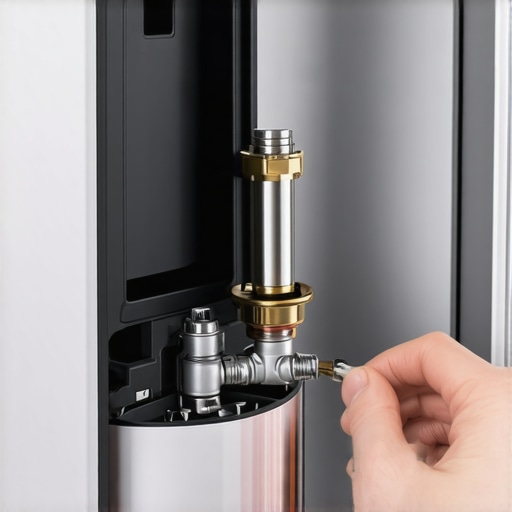
When I walk up to a dead humidifier, I’m not looking to replace the whole plastic box. I’m looking for the heartbeat. I start at the humidistat. If I crank it up and don’t hear a ‘click,’ we have an electrical issue or a dead sensor. If I do hear the click, I head to the solenoid valve. The solenoid is a simple device: a coil of wire and a plunger. When the humidistat calls for moisture, it sends 24 volts to that coil, creating a magnetic field that lifts the plunger and lets the ‘juice’ (water, in this case) flow. I pull out my multimeter. If I’ve got 24V at the wires but no water out the other side of the valve, the solenoid is either electrically dead or mechanically jammed with calcium and scale. This is a common contactor repair style of thinking—don’t replace the motor if the switch is broken. Frequently, the orifice inside the solenoid, which is smaller than a needle’s eye, gets plugged by the hard water common in our region. I’ve seen ‘Sales Techs’ tell people they need a whole new furnace setup including hyper-heat heat pumps just because they didn’t want to bother cleaning a $2 orifice or replacing a $60 valve.
Beyond the Valve: The Total System Health
While the solenoid is the usual suspect, a true professional looks at the whole mechanical anatomy. If I’m already in the basement, I’m checking the furnace flame sensor cleaning needs because a dirty sensor will shut down the heat before the humidifier even has a chance to cycle. I’m looking at the blower compartment. Is the ‘Sparky’ (electrician) or the previous installer using a sail switch or a sensing relay? If the blower isn’t moving enough air due to a clogged filter—another airflow crime—the humidifier won’t get the pressure differential it needs to function. This is why preventative HVAC repair tips for year-round efficiency always start with the filter. If you’re dealing with a larger home, we might even discuss infared heater installation for those cold spots or ventless gas heater services for a garage, but none of that replaces the need for a functioning central humidification system. For those worried about long-term costs, I always recommend looking into warranty service plans that cover these small but vital components. A single 2 AM emergency call for a ‘leaking’ humidifier (usually a stuck-open solenoid) costs more than five years of proactive maintenance.
“The most expensive equipment in the world cannot overcome a bad duct system or neglected peripheral components.” – Industry Axiom
The A2L Transition and the Future of Comfort
As we move into 2025, we’re seeing a massive shift in the industry with the phase-out of R-410A in favor of A2L refrigerants like R-454B. While this mainly affects your AC, it changes the way we think about the total air stream. Newer systems are being packed with sensors, including occupancy sensor installation to ramp down airflow when you aren’t home. But physics doesn’t change. Whether you have an old cast-iron boiler or the latest UV light installation for HVAC to kill mold on your coils, you still need to manage the dew point. If you find your humidifier isn’t working, don’t let someone sell you the moon. Check the solenoid. Check the pad for scale. Check the ‘Pookie’ (mastic) on the bypass duct to ensure it isn’t leaking air. If you’re unsure how to diagnose the electrical side, it’s always safer to contact us for a professional look. For more on how these small fixes save you thousands, check out our guide on furnace repair myths debunked. Keeping your home comfortable is about mastering the air you have, not just buying more ‘gas’ for a broken machine.