The Physics of the Frozen Tundra: Why Most Snow Melt Systems Fail
Old Man Miller, my first mentor, used to stand over a freshly dug trench in 15-degree weather, screaming, ‘You can’t heat what you don’t insulate, kid!’ He was a mean old bird, but he was right. In the North, when the polar vortex hits, homeowners think they can just throw some heat under a driveway and the snow will vanish like magic. It’s not magic; it’s thermodynamics. Most ‘Sales Techs’—those guys who look like they’ve never seen the inside of a crawlspace—will try to sell you a system based on square footage alone. They ignore the latent heat of fusion. It takes 144 BTUs to turn one pound of ice at 32°F into one pound of water at 32°F. If your system isn’t designed to handle that energy dump, you’re just making slush, which is arguably more dangerous than the snow itself. We see this often when we get called for emergency heating repair in the dead of January because a boiler has redlined trying to keep a poorly insulated sidewalk clear.
“Snow melting systems shall be designed to prevent the accumulation of snow and ice on the heated surface under the design snow conditions.” – ASHRAE Handbook—HVAC Applications
The Substrate Strategy: More Than Just ‘Pookie’ and Pipes
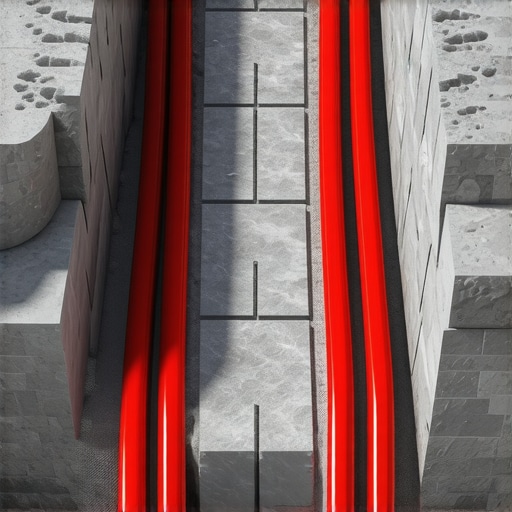
When you’re installing a hydronic system under pavers, the ‘Tin Knocker’ mentality doesn’t apply. We aren’t moving air; we’re moving a glycol-water mixture through PEX-AL-PEX tubing. The first mistake is neglecting the base. You need at least 1-2 inches of rigid foam insulation (like XPS) beneath your sand or gravel base. Without it, you are literally trying to heat the entire planet Earth. You’re losing 40% of your ‘juice’ to the soil. We use a similar logic in heating service innovations today: stop the loss before you boost the gain. [image1] The pavers themselves act as a thermal mass. They take time to heat up (sensible heat) before they can even begin to melt the first flake of snow. This is why duct design services are so critical; the fluid dynamics in your hydronic loop must be balanced using manifolds so the center of the driveway doesn’t stay frozen while the edges are clear.
The Mechanical Anatomy: From Boilers to Spa Heater Services
A snow melt system is essentially a heavy-duty cousin of your home’s heating plant. Often, we use a plate-and-frame heat exchanger to separate the ‘juice’ in your boiler from the glycol in the outdoor loops. This protects your indoor unit from the massive temperature shocks of 30°F fluid returning from the driveway. It’s the same tech we use in spa heater services. If that heat exchanger fouls, your efficiency drops through the floor. We also look at the ‘Sparky’ side of things. You need moisture and temperature sensors. If the system only runs based on temperature, it’ll bake your pavers when it’s 20°F and sunny, wasting hundreds in utility costs. Integrating these into a voice control setup Alexa Google allows for manual overrides when you see a storm coming on the radar, but the automation should be the brain. Many homeowners are now opting for priority service memberships just to ensure these complex outdoor hydronics are flushed and tested before the first frost.
“The most expensive equipment in the world cannot overcome a bad duct system—or in the case of hydronics, a poorly calculated thermal load.” – Industry Axiom
Thermostat Wiring Upgrades and Zoning Logic
Managing a snow melt system requires a sophisticated thermostat wiring upgrades. You aren’t just clicking a mercury switch. You’re managing ‘idling’ temperatures. In the North, we often keep the slab at 35°F when snow is predicted, so the system doesn’t have to jump from 10°F to 32°F instantly—that’s how you crack pavers and stress your boiler. Proper zoning system installation allows you to prioritize the walkway to the front door over the secondary parking pad, saving energy. While we’re under the hood, I always tell folks to check their indoor air. If your boiler is running 24/7 to clear the drive, make sure your HEPA filter systems and dehumidification services are up to snuff, as the constant high-heat operation can change the pressure dynamics inside the home. Don’t fall for furnace repair myths that say these systems are ‘set and forget.’ They require a tech who knows the smell of burnt glycol and the sound of a pump cavitation.
The Maintenance Checklist: Portable Heaters are Not the Answer
If your snow melt fails, don’t start dragging out 1500-watt units without performing portable heater safety checks. Those things are fire hazards in a garage. Instead, look for the ‘Beer Can Cold’ equivalent on your hydronic lines—the return should be cool, but not freezing. If you’re seeing a ‘low flow’ error, your pump might be toast. It’s always cheaper to do a contact-us for a diagnostic than to replace $10,000 worth of pavers because the pipes underneath froze and burst due to a bad glycol mix. Remember, comfort is physics, not magic. Whether it’s the air in your ducts or the fluid under your feet, it’s all about the move of energy.