The Lie of the ‘Tonnage Rule’
My old mentor, a man who smelled like burnt compressor oil and R-22, used to scream at me whenever I looked at a house and tried to guess the unit size. ‘You can’t cool what you can’t touch!’ he’d bellow. This was his way of saying that if the air doesn’t physically move over the evaporator coil in the right volume, the BTUs on the nameplate don’t mean a thing. He taught me that airflow is the king, and the load calculation is the crown. Most of the ‘Sales Techs’ out there—those guys in crisp white shirts who haven’t crawled through a spider-infested crawlspace in a decade—will walk into your home, look at your existing 3-ton unit, and tell you that you need a 3.5-ton because ‘bigger is better.’ They are lying to you. They are selling you a shortcut that leads to a short-cycling nightmare.
“The most expensive equipment in the world cannot overcome a bad duct system.” – Industry Axiom
Thermodynamic Zooming: Sensible vs. Latent Heat
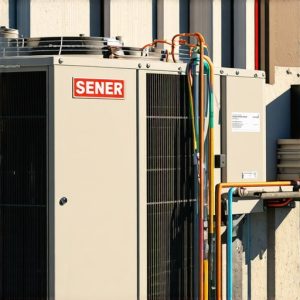
To understand HVAC load calculation services, you have to understand what we’re actually fighting: heat. But heat isn’t just the temperature on the thermostat (that’s sensible heat). In places where the humidity is thick enough to chew, like our service areas during a swampy July, we are also fighting latent heat. When we perform a Manual J calculation, we aren’t just looking at the square footage. We are looking at the ‘envelope’ of the home. We look at the orientation of your windows (fenestration), the R-value of your attic insulation, and even the number of people living there. [IMAGE_PLACEHOLDER_1] If we slap an oversized unit in your house, it will satisfy the sensible heat—the temperature—in ten minutes and then shut off. But it hasn’t run long enough to drop the evaporator coil below the dew point to pull the moisture out of the air. You end up in a house that is 72 degrees but 70% humidity. It feels like a cold swamp. That is why proper AC installation starts with math, not a tape measure.
The SEER2 Transition and The Airflow Manifesto
As of 2023 and moving into 2025, the industry has shifted to SEER2 compliant upgrades. This isn’t just a marketing buzzword; it’s a total overhaul of how we measure efficiency under static pressure. The old SEER ratings were tested in a lab under perfect conditions. SEER2 assumes your ductwork is, frankly, a mess. If you’re looking at efficient HVAC repairs, you have to realize that a high-efficiency 18-SEER unit connected to a 1970s duct system is like putting a Ferrari engine in a lawnmower. It won’t perform. We see this all the time with heat pump installation. A heat pump requires precise airflow to manage the refrigeration cycle effectively during the ‘reversing’ phase. If your load calculation is off, your heat pump will struggle to extract heat from the frozen air outside, leading to excessive use of ’emergency heat’ strips that will make your electric bill look like a phone number.
The Anatomy of Failure: Why Components Die
When a system isn’t sized correctly, the mechanical components pay the price. I’ve seen thousands of contactor repair calls and relay services needed simply because the unit was ‘cycling on its internal limit.’ This happens when the unit is too big for the ducts, the pressure builds up, and the compressor overheats. You’ll hear that distinct ‘click-hum-trip’ sound of a compressor struggling. That’s the sound of money leaving your pocket. If you don’t address the load issue, you’ll be calling for furnace ignition repair or a new capacitor every two years because the system is starting and stopping five times more than it should.
“Proper equipment capacity is the first step in ensuring ASHRAE 62.2 indoor air quality standards are met.” – ASHRAE Standards
Commercial Complexity: Restaurant Kitchen Exhaust and Negative Pressure
It’s not just homes. If you’re running a business, restaurant kitchen exhaust repair is a different beast of load calculation. You have a massive hood sucking 3,000 CFM of air out of the building. If you don’t have a ‘Make-Up Air’ unit (MUA) sized correctly, your building will go into a ‘negative pressure’ state. Every time a customer opens the front door, it feels like a wind tunnel, and you’re sucking humid, unconditioned air through every crack in the walls. This ruins your geofencing temperature control settings and forces your HVAC to work 200% harder. This is where we look at flue pipe installation and venting to ensure that we aren’t creating a backdraft of carbon monoxide while the exhaust is running. It’s a delicate dance of physics that most ‘Sparky’ or general handymen simply don’t understand.
The Solution: More Than Just a Filter Change
We often recommend UV light installation for HVAC to keep the coils clean, but even the best UV light won’t fix a system that was installed poorly from day one. This is why warranty service plans are vital, but they are only as good as the tech who knows how to read a manifold gauge. When we check your ‘Juice’ (refrigerant), we are looking at subcooling and superheat to see how that load is actually being handled by the evaporator. If the ‘Suction Line’ isn’t ‘beer can cold’ while maintaining the right pressures, something is wrong with the thermal transfer. Don’t let a ‘Tin Knocker’ just slap some tape on your vents. You need ‘Pookie’ (mastic) to seal those ducts and a real load calc to ensure the static pressure is within the manufacturer’s specs. If you’re wondering about the state of your system, check out these top HVAC repair strategies or learn more about urgent furnace repair signs before the next polar vortex hits.