The Great Thermodynamic Lie of the Single Thermostat
You’ve seen it every summer and winter: the downstairs is a meat locker, and the upstairs feels like the surface of the sun. Most homeowners think they just need a ‘bigger unit’ or more juice (refrigerant) pumped into the coils. They’re wrong. As a guy who’s spent 30 years crawling through blown-in insulation and fighting tin knockers over duct sizes, I can tell you that a single thermostat trying to control two floors is a physical impossibility. You aren’t fighting a broken AC; you’re fighting the Stack Effect and the laws of physics. In a two-story home, heat doesn’t just sit there; it migrates, and your ductwork—likely sealed with crumbling tape instead of proper pookie (mastic)—is leaking the comfort you paid for into the attic.
“The most expensive equipment in the world cannot overcome a bad duct system.” – Industry Axiom
The Physics Lesson: Why Airflow is King
My old mentor used to scream at me until he was purple in the face, ‘You can’t cool what you can’t touch!’ This is why airflow matters more than horsepower. When you have a two-story house, your HVAC system is trying to push air against gravity and static pressure. Without a zoning system installation, your unit just dumps air wherever it finds the path of least resistance. Usually, that’s the first floor, leaving the upstairs bedrooms to bake in latent heat. We’re talking about sensible heat (the temperature you see on the wall) vs. latent heat (the humidity that makes your skin feel like wet cardboard). A single-stage system can’t handle both effectively in a multi-level structure. This is where heating service innovations transforming 2025 climate control come into play, moving us toward precision delivery rather than brute force.
The Blueprint for Multi-Level Comfort: How Zoning Actually Works
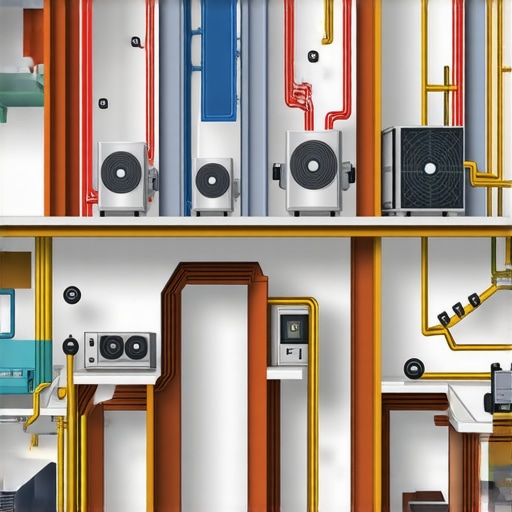
A zoning system uses motorized dampers—think of them as traffic cops inside your ducts—to direct air exactly where it’s needed. When the upstairs hits 78°F but the downstairs is 68°F, the dampers to the first floor close, forcing all that cold air upstairs. But you can’t just slap dampers on a 20-year-old clunker. If you choke off too much airflow on a standard blower, you’ll skyrocket the static pressure and blow the motor or freeze the evaporator coil. This is why a two-stage furnace installation or a variable-speed blower is non-negotiable for a successful zone setup. These systems can ramp down their output so they don’t over-pressurize the ‘active’ zone. If you’re still running an old pilot-light dinosaur, you’re also likely looking at a chimney liner installation to ensure your furnace vents safely without rotting out your masonry from the inside out.
The 2025 Regulatory Cliff: R-454B and Your Future
We are currently in the middle of the biggest shift in HVAC history since the R-22 phase-out. If you’re looking at a new zoning setup, you need to understand R-454B refrigerant transition services. The old R-410A is being retired because of its high Global Warming Potential. The new A2L refrigerants like R-454B are ‘mildly flammable.’ Don’t panic—it just means the equipment now requires specialized sensors and controls. Integrating these with a zoning board requires an expert who knows more than just how to use a nut driver. It’s about safety. You want a tech who understands that the suction line should be ‘beer can cold’ but also knows how to calibrate a leak sensor for the new gas. For more on this, check out the ultimate guide to ac installation expert tips for 2025 success.
The Anatomy of the System: From Contactors to Geofencing
When I go into a house that’s uncomfortable, I don’t start at the thermostat. I start at the outdoor unit. I check for a pitted contactor repair need or a swollen capacitor. If the ‘heart’ of the system is failing, zoning won’t save you. But once the mechanicals are sound, we look at the brains. Modern zoning thrives on geofencing temperature control and remote thermostat access. This allows the system to ‘know’ when you’re heading home and start pre-cooling the upstairs master suite without wasting energy on the guest rooms downstairs. It’s about Thermodynamic Zooming—focusing your cooling energy where the bodies are, not just where the square footage is. If your system is struggling, sometimes it’s as simple as an annual heating inspection to find the 20% of your ductwork that’s fallen apart in the crawlspace. You can find more top hvac repair strategies to extend your systems life here.
“Proper air distribution is fundamental to maintaining thermal comfort and indoor air quality.” – ASHRAE Standard 55
The Danger Zone: Gas Lines and Water Heaters
If we’re upgrading your furnace to a two-stage model for zoning, we have to look at the gas line installation for furnaces. You can’t feed a high-efficiency furnace through a straw. Likewise, your hot water heater repair or replacement often happens during these upgrades because everything shares the same mechanical room and often the same venting system. I’ve seen ‘Sales Techs’ install a fancy zoning system and ignore a back-drafting water heater that’s dumping CO into the house. That’s why you need a technician who values physics over commissions. Whether you have electric heater services or gas, the principles of static pressure remain the same. If the air can’t move, the heat won’t leave. Understanding choosing the right hvac fixes is the difference between a comfortable home and a $10,000 mistake.
Final Verdict: Is Zoning Worth the Investment?
If you live in a two-story house, zoning isn’t a luxury; it’s the only way to achieve true equilibrium. Without it, you are constantly over-cooling one floor to make the other tolerable, which is like running your car at redline just to keep the lights on. It kills your compressor, spikes your bills, and leaves you sweating in bed. Don’t fall for the ‘Sales Tech’ trap of a bigger unit. Invest in the infrastructure—the dampers, the variable speed blowers, and the smart controls. It’s science, not magic. If you’re ready to stop fighting your house and start living in it, it’s time to talk about a real airflow strategy. For emergency issues or urgent diagnostics, read about how to identify when furnace repair is urgent and why to stay ahead of the next heatwave or cold snap.