My old mentor, a man who spent forty years breathing in soot and fiberglass, used to scream at me every time I reached for a manifold gauge without checking the return air first. ‘You can’t cool what you can’t touch!’ he’d bark, usually while I was wedged into a crawlspace. He was right then, and he’s right now. In the world of mechanical physics, airflow is the undisputed king, and nowhere is that more evident than in the damp, stagnant environment of a northern basement. When homeowners talk to me about a ‘musty smell,’ they think they have a cleaning problem. They don’t. They have a thermodynamic crisis. We are talking about latent heat—the energy required to change water from a vapor to a liquid. In a basement, that moisture stays suspended in the air until it hits a cold surface, like a concrete wall or a copper pipe, and then it’s ‘game over’ for your air quality.
The Airflow Manifesto: Physics vs. Humidity
Most ‘Sales Techs’ will try to sell you a bigger AC unit to handle the basement moisture. They are lying to you. In fact, an oversized unit is the fastest way to turn your lower level into a cold swamp. It short-cycles, hitting the temperature setpoint (sensible heat) and shutting off before the evaporator coil has time to actually wring the water out of the air (latent heat). If you want a dry basement, you need runtime. This is where inverter-driven compressors become the hero of the story. They don’t just kick on and off; they ramp down and run for longer periods at lower speeds, continuously stripping moisture from the air. This is a far cry from the old-school ‘on-off’ hammers that just spike your electric bill without solving the humidity load.
“The most expensive equipment in the world cannot overcome a bad duct system.” – Industry Axiom
If you’re dealing with a basement that feels like a cave, the first place I look isn’t the thermostat; it’s the hydronic heating systems or the boiler. Many older homes in our region rely on boiler repair services to keep the pipes hot, but those systems do zero for air movement. You have all this heat but no ‘Tin Knocker’ ever installed a proper return air drop to the basement floor. Without that circulation, the moisture just sits there. This is why HVAC maintenance plans that include a total static pressure test are vital. If the air isn’t moving, the moisture isn’t leaving.
The Regulatory Reality of 2025
We are entering a new era of refrigerant regulations. The industry is moving away from R-410A toward A2L refrigerants. If your old basement unit is leaking juice, don’t let some hack ‘top it off’ and call it a day. That’s a scam. It’s a sealed system; if it’s low, there’s a hole. With the new 2025 standards, repairing an old, leaky system is becoming a fool’s errand. You need to look at heating service innovations transforming 2025 climate control to understand how new sensors and safety protocols are changing the game. When I’m doing an annual heating inspection, I’m not just looking for cracks in the heat exchanger; I’m checking if your basement’s relative humidity is consistently over 60%. If it is, you are breeding mold, and your structural beams are at risk.
[IMAGE_PLACEHOLDER]
When Dehumidification Services Are Mandatory
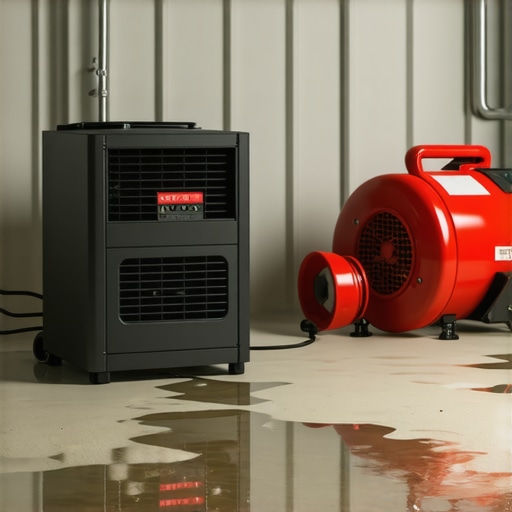
There are specific scenarios where ‘opening a window’ isn’t just ineffective—it’s destructive. If you have recently undergone an oil to gas conversion, your chimney physics have changed. Gas burns cleaner but introduces different moisture dynamics into the home’s stack effect. Similarly, if you have a garage heater installation that shares a wall with your basement, the temperature differential can cause massive condensation on the interior side of the masonry. You need a dedicated, whole-home dehumidifier integrated into your ductwork, sealed with pookie (mastic), to ensure that the air being pulled from the basement is actually being processed. This isn’t a luxury; it’s a structural necessity. According to ASHRAE standards, maintaining indoor relative humidity below 60% is the primary defense against microbial growth. Failing to do so can lead to situations where furnace repair is urgent because of corrosion caused by high ambient moisture levels.
“Ventilation and air-conditioning systems shall be designed to maintain the indoor relative humidity at less than 65%.” – ASHRAE Standard 62.1
Don’t fall for the evaporative cooler services trap in this climate either. Adding more moisture to a basement through ‘swamp cooling’ is the fastest way to rot your floor joists. Instead, look into app-controlled heating systems that allow you to monitor humidity levels from your phone. If you see that basement humidity spike while you’re at work, you can trigger the dehumidification cycle before the ‘sour’ smell of a compressor burnout is replaced by the ‘earthy’ smell of black mold. Whether you need fireplace insert services to help with draft issues or a full-scale hydronic heating systems overhaul, remember: physics doesn’t care about your budget. It only cares about the dew point. If you ignore the moisture, you’re just waiting for a disaster that no amount of ‘Sparky’ work or boiler repair services can fix. Stick to HVAC maintenance plans that actually measure moisture, and you’ll save yourself thousands in the long run.