The Sound of Silence is the Sound of a Cold House
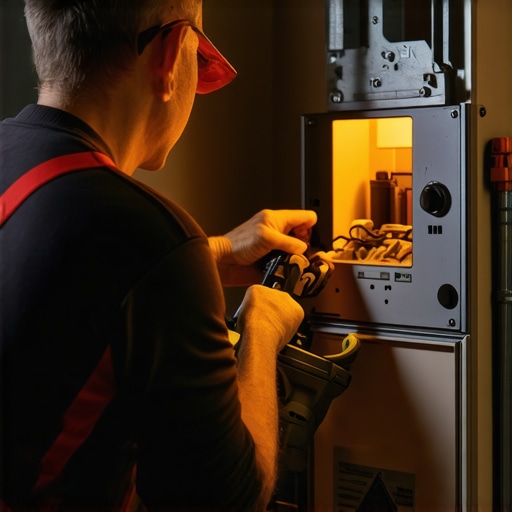
You wake up at 3:13 AM and something is wrong. It’s not a sound; it’s the lack of one. The rhythmic, low-frequency hum of your furnace has vanished. In the North, where the mercury can drop ten degrees in an hour, that silence is a predator. By the time you realize the house is down to 62°F, the panic sets in. Most folks reach for their phone and call the first guy with a shiny truck and a heavy marketing budget. But here is the truth from someone who has spent thirty years in crawlspaces: you don’t just need a guy with a wrench; you need a technician who understands the forensic anatomy of heat.
I once followed a ‘Senior Comfort Consultant’—which is just fancy HVAC-speak for a salesman in a clean polo shirt—who had quoted a homeowner $12,500 for a total system replacement. He told her the heat exchanger was ‘compromised’ and that her family was in immediate danger of carbon monoxide poisoning. I got there, pulled the blower, and used a high-res borescope. The heat exchanger was pristine. The real culprit? A simple limit switch replacement and a bird’s nest clogging the chimney liner installation. A $200 fix versus a $12,000 predatory sale. That is why rebuilding trust is more important than the hardware itself.
The Forensic Anatomy of Your Heating System
To understand why your system failed, you have to look at it as a biological entity. Your furnace isn’t just a box that burns gas; it’s a thermodynamic engine that requires precise inputs to survive. When we perform system performance testing, we aren’t just looking for ‘heat.’ We are looking at static pressure, gas manifold pressure, and temperature rise.
“The burner should be checked for proper primary air adjustment and the vent system inspected for any signs of blockage or deterioration.” – ASHRAE Standards
Take the draft inducer motor repair, for example. This little motor is the lungs of your furnace. If it doesn’t spin up to create a vacuum, the pressure switch won’t close, and the ‘Sparky’ (electrician) side of the board will never send the signal to open the gas valve. If you hear a high-pitched screeching sound—like a cat in a blender—your bearings are shot. Ignoring that sound is the fastest way to find yourself needing commercial furnace repair or a residential overhaul in the middle of a blizzard. If your furnace is short-cycling, it might be that your limit switch replacement is overdue because the system is overheating due to poor airflow. You see, the unit is trying to save itself from melting down by shutting off prematurely.
Why Airflow is King (and Static Pressure is the Queen)
Most gas furnace repair calls aren’t actually about the gas. They are about the air. If your ductwork is sized for a 2-ton system and some ‘Tin Knocker’ slapped in a 5-ton unit, the furnace is going to choke. It’s like trying to exhale through a cocktail straw. This is where system performance testing reveals the truth. We measure the Total External Static Pressure (TESP). If it’s too high, your blower motor will work twice as hard and die half as fast. We often recommend thermostat wiring upgrades and proper duct sealing with ‘Pookie’ (mastic) to ensure the heat actually reaches the rooms, rather than leaking into the attic. If you are struggling with uneven heat, efficient HVAC repairs are often found in the ducts, not the furnace cabinet.
The 2025 Shift: Dual Fuel and Geothermal
We are entering a new era of home heating. The old ways of just burning ‘juice’ (fuel) are evolving. Dual fuel heat pump systems are the current gold standard for reliability and efficiency. You use a high-efficiency electric heat pump when it’s 40°F outside, and the gas furnace only kicks in when the ‘Polar Vortex’ hits. It’s the ultimate redundancy. For those looking for the absolute peak of engineering, geothermal heat pump systems utilize the constant temperature of the earth to provide warmth. It’s physics at its finest. However, these systems require a level of expertise that most ‘Sales Techs’ simply don’t possess. They want to sell you a standard box and move on; we want to build a system that respects the laws of thermodynamics.
“The most expensive equipment in the world cannot overcome a bad duct system.” – Industry Axiom
When you’re looking at how to identify when furnace repair is urgent, listen for ‘flame rollout’ or a yellow, flickering flame. That’s a sign of incomplete combustion. A healthy furnace should have a steady, crisp blue flame. If it’s yellow, call us. You might have a cracked heat exchanger, and that is one of the few times I will tell you to shut it down immediately for safety.
Repair vs. Replace: The Cold Hard Math
I get asked every day: ‘Is it worth fixing?’ If your furnace is over 15 years old and the repair costs more than 30% of a new unit, it’s time to talk. But don’t fall for the furnace repair myths that say every problem requires a new installation. If your draft inducer motor repair is all you need to get another five years of life out of a 90% AFUE unit, then we do the repair. We also provide portable heater safety checks for those using space heaters as a stopgap—because nothing burns a house down faster than a faulty space heater on a thin extension cord. For more on this, check out our guide on furnace repair myths debunked by industry experts.
Ultimately, warmth is about more than just a thermostat setting. It’s about knowing that the person who worked on your unit cares more about the gas manifold pressure than their commission check. Whether it’s chimney liner installation to protect your masonry from acidic flue gases or thermostat wiring upgrades to support a smart home, the goal is always the same: reliability through physics, not marketing. If you want to stay ahead of the curve, look into heating service hacks for 2025 to see how the industry is changing.