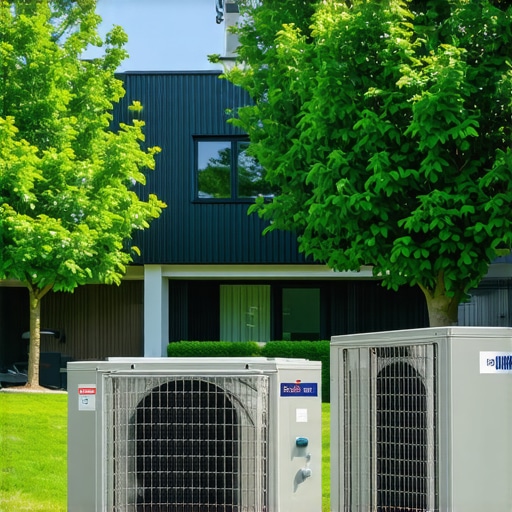
The R-410A Obituary and the A2L Era
If you have been listening to the humming of your outdoor condenser lately, you are listening to the swan song of an entire era of HVAC technology. By 2026, the industry will have fully pivoted away from R-410A, the ‘Pink Gas’ we have hauled around for decades. We are now entering the world of A2L refrigerants—R-454B and R-32. These aren’t just minor tweaks to the juice; they are ‘mildly flammable’ alternatives that require entirely new sensors, updated wiring repair for heating systems, and a technician who actually knows how to use a torch without blowing the house to kingdom come. 2026 isn’t just a calendar flip; it is the year the EPA’s mandates finally catch up with your wallet. If you are clinging to a rattling 15-year-old furnace, you are sitting on a ticking financial clock. This transition makes heat pump installation the only logical move for homeowners looking to bypass the skyrocketing costs of legacy refrigerant HVAC repair.
The Physics Lesson: You Can’t Cool What You Can’t Touch
My old mentor used to scream at me in the middle of a cramped mechanical room, ‘You can’t cool what you can’t touch!’ He was talking about surface area and the fundamental law of thermodynamics. He’d point at a dust-caked evaporator coil and tell me that if the air can’t physically scrub the heat off those fins, the whole system is just a very expensive noise machine. This is why airflow matters more than horsepower. A 5-ton unit on a 3-ton duct system is a death sentence for the compressor. The ‘Tin Knockers’ who slapped together ductwork in the 90s didn’t care about static pressure, but a modern heat pump will refuse to work under those conditions. If the air doesn’t move, the heat doesn’t move. It is that simple. This is why we insist on AC installation secrets that focus on the plenum and the return drop rather than just the shiny box on the pad.
“The most expensive equipment in the world cannot overcome a bad duct system.” – Industry Axiom
The Cold Climate Reality: Heat Pumps vs. The Polar Vortex
In the North, specifically in places like Chicago or the Northeast, we have spent decades relying on cast iron radiators and massive boilers. I’ve spent my fair share of winters performing school boiler maintenance and radiator replacement in buildings that felt like they were built during the Civil War. But the 2026-spec cold-climate heat pumps are different. We aren’t talking about the ‘glorified hair dryers’ of the 1980s that stopped working at 40°F. Modern ‘Hyper-Heat’ technology uses flash-injection to maintain capacity down to -15°F. However, if you are moving from a boiler to a heat pump, you need to understand radiant floor heating installation as a potential companion or ensure your HVAC load calculation services are spot on. If you undersize a heat pump in a Northern winter, you’ll be relying on the ‘toaster strips’ (electric backup heat) which will make your electric bill look like a mortgage payment. Proper sizing isn’t a guess; it is a science.
The Static Pressure Silent Killer
When we talk about static pressure testing, most homeowners’ eyes glaze over. But think of it like blood pressure for your house. If the pressure is too high, the ‘heart’ (your blower motor) has to work twice as hard to push air through those narrow, kinked veins. High static pressure is the primary reason why new heat pumps fail prematurely. We use ‘Pookie’ (mastic) to seal every joint because even a tiny leak in the return air can suck in unconditioned attic air or basement dampness, throwing the whole thermodynamic cycle out of whack. A properly sealed system ensures the refrigerant—the ‘Gas’—can do its job of absorbing latent heat at the evaporator and dumping it outside. Without that balance, you’ll be calling for furnace ignition repair or emergency service during the first cold snap. It’s why we emphasize top HVAC repair strategies that start with the ductwork, not just the components.
The Sensory Experience of a Burnout
You never forget the smell of a compressor burnout. It’s a sharp, acidic, sour stench that tells you the refrigerant has turned into a corrosive sludge. This usually happens when a system is ‘short cycling’—turning on and off every five minutes because it’s oversized or the airflow is restricted. In the North, we see this often when people try to DIY their boiler maintenance services and ignore the expansion tank or the circulator pump. In 2026, the complexity of A2L systems means that a burnout won’t just be an expensive fix; it will be a regulatory nightmare involving specialized recovery tanks. This is why HVAC maintenance plans are no longer an ‘optional’ upsell from a ‘Sales Tech’; they are the only way to ensure your system survives the transition. A technician who checks your contactors for pitting and your capacitors for bulging is worth ten times the guy who just sprays your coils with a hose and leaves. [image_placeholder_1]
Why 2026 is the Smartest Financial Pivot
By 2026, the tax credits provided by the Inflation Reduction Act will be fully integrated into the market, making heat pump installation significantly more affordable than traditional furnace/AC combos. But there is a catch. If you wait until your current system dies in a 2 AM emergency, you won’t have time to do a proper Manual J load calculation. You’ll be at the mercy of whatever unit is on the ‘Sparky’s’ truck. Proactive replacement allows you to vet HVAC load calculation services to ensure your new system is matched to your home’s actual heat loss and gain. Check out these heating service innovations to see how the tech is evolving. If you have an old boiler, don’t just wait for a leak; consider how a hybrid system can save you 40% on your annual energy spend. Whether it’s radiator replacement or a full duct renovation, the goal is the same: efficiency through physics.
“Standard 62.2 defines the roles of mechanical ventilation in low-rise residential buildings, but it cannot account for a homeowner who seals their house like a tomb without an HRV.” – ASHRAE Standards Reflection
The Truth About ‘Topping Off’
I’ll tell you right now: if a tech tells you that you need a ‘pound of gas’ every year, he’s either lazy or a thief. HVAC systems are sealed loops. If the juice is low, there is a hole. Period. In the 2026 landscape of expensive A2L refrigerants, ‘topping off’ will cost you a fortune. We find leaks using ultrasonic detectors or nitrogen pressure tests, not by guessing. If you are experiencing poor performance, it might be time to look into urgent furnace repair signs or, more likely, a refrigerant circuit failure. Investing in a heat pump now means getting a factory-sealed, warranty-backed system that eliminates the ‘recharge’ scam. Combined with a robust HVAC maintenance plan, you are buying peace of mind for the next 15 years. Don’t fall for the ‘Sales Tech’ pitch that you need a 20 SEER2 unit if your windows are single-pane and your attic has three inches of insulation. Insulation and airflow are the foundation; the heat pump is just the engine. If you’re ready to make the jump, you can contact us for a real evaluation, not a sales pitch.
http://Alex%20Morgan
This post really clarifies the future-ready approach homeowners should adopt for HVAC systems, especially with the phase-out of R-410A. I’ve seen how high static pressure or poorly sealed ductwork can dramatically increase energy bills and system failures, which makes me wonder—what are the most common mistakes you see homeowners make when upgrading to these new A2L refrigerant-based heat pumps? Personally, I had a friend who underestimated the importance of proper sizing and ended up relying on electric backup heat all winter, costing a fortune. It seems that proactive planning, including load calculations and duct sealing, is essential, but how do most homeowners get up to speed with these complex yet crucial steps? Would love to hear some practical tips on how to ensure a seamless transition without these pitfalls.
http://Stephanie%20Morgan
This article hits the nail on the head about the urgency of planning ahead for the 2026 refrigerant phase-out. I’ve seen firsthand how ductwork issues, especially high static pressure, can sabotage even the best heat pump systems. It’s a critical factor that many homeowners overlook, often leading to inefficient performance or premature failure of equipment. My question is, how do you recommend homeowners approach the initial assessment of their existing duct and electrical systems before making the switch? Is there a simple checklist they can follow, or should they always hire a professional for these evaluations? Personally, I think a proactive approach with professional load calculations and duct sealing not only saves money but also ensures the system runs smoothly in the long run. What has been your experience with DIY assessments versus professional evaluations in this transition? I’d love to hear practical advice for homeowners wanting to prepare for this major upgrade.