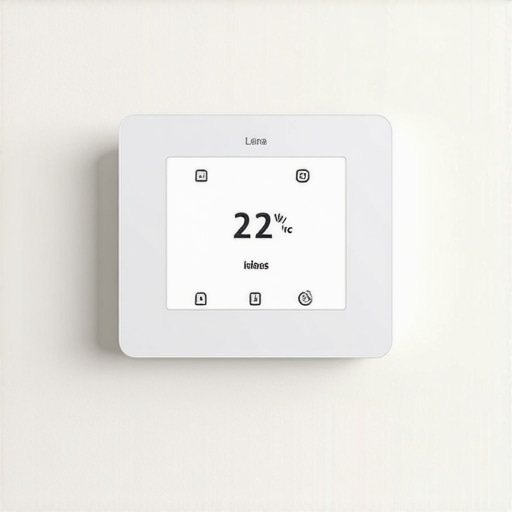
The Brain and the Brawn: Why Your Thermostat Is Currently Killing Your Heating Bill
I’ve spent thirty years crawling through crawlspaces and balancing on joists in freezing attics, and if there’s one thing I’ve learned, it’s that most homeowners treat their thermostat like a light switch. It isn’t. In the dead of a Northern winter, when the wind is howling off the lake and your hydronic heating systems are the only thing keeping your pipes from bursting, that little plastic box on the wall is the most misunderstood piece of equipment in your house. My old mentor used to scream at me, his face turning the same shade of red as a glowing heat exchanger, ‘You can’t cool what you can’t touch, and you can’t heat what you don’t understand!’ He was a fanatic about physics. He understood that HVAC isn’t about blowing air; it’s about the transfer of energy. If you’re living in a place where radiant floor heating installation is the standard, you aren’t just heating the air—you’re charging a thermal battery. If your programming logic is flawed, you’re just throwing money into the combustion chamber. We’re heading into 2026, and with the cost of energy and the phase-out of older equipment, you can’t afford to be sloppy. You need to understand the mechanical anatomy of your system before you start pushing buttons.
“The most expensive equipment in the world cannot overcome a bad duct system.” – Industry Axiom
Fix 1: Stop the ‘Setback’ Sabotage in Hydronic Systems
In cold climates like Chicago or the Northeast, hydronic heating systems and radiant floor heating are king. But here’s the problem: homeowners apply forced-air logic to a high-mass system. They set the thermostat to 62°F when they leave for work and expect it to be 72°F when they get home at 5 PM. In a radiant floor setup, that slab of concrete takes hours to recover. Your boiler will fire at 100% capacity, cycling the circulator pumps relentlessly, trying to catch up. This causes massive wear on your components and kills your efficiency. For 2026, the fix is ‘Consistent Thermal Loading.’ Limit your setbacks to no more than 3 degrees. This keeps the water temperature steady and prevents the boiler from entering a high-fire ‘recovery mode’ that eats gas like a muscle car. If you’re worried about the cost of these systems, looking into heating service innovations transforming 2025 climate control can give you a leg up on the latest tech. Radiant heat is about steady-state physics, not quick-hit comfort.
Fix 2: Managing the Draft Inducer Motor Cycle
Every time your thermostat calls for heat, the first thing that happens isn’t a flame; it’s the draft inducer motor. This little motor clears the heat exchanger of any residual gases and proves that the venting is clear. If your thermostat programming is too tight—meaning the ‘swing’ or ‘differential’ is set to 0.5 degrees—your furnace is going to short-cycle. Every time it cycles, that inducer motor has to spin up. I’ve replaced more draft inducer motors than I can count because people wanted their house at exactly 71.2 degrees at all times. A draft inducer motor repair is an avoidable expense. Set your differential to 1.5 or 2 degrees. It allows the system to run longer, more efficient cycles, which is better for the heat exchanger and the motor’s bearings. You’ll save on the ‘juice’ (electricity) and prolong the life of the ‘gas’ side of the system. For more on keeping things running, check out top hvac repair strategies to extend your systems life.
Fix 3: Demand-Controlled Ventilation (DCV) and Occupancy Sensors
We’re moving toward smarter multi-family heating upgrades where we don’t just heat empty rooms. In 2026, your thermostat should be tied into occupancy sensor installation. Why are you heating the upstairs guest room to 70 degrees when nobody has been in there for three days? By using occupancy sensors, your thermostat can drop that zone into an ‘away’ mode automatically. Furthermore, integrate demand-controlled ventilation. This ensures you’re only bringing in fresh, cold outside air when CO2 levels dictate it, rather than on a fixed timer. This prevents the blower motor from working overtime to move unneeded air. If your blower is already sounding like a marbles in a dryer, you’re looking at a blower motor replacement sooner rather than later. Don’t let a ‘Sparky’ (electrician) tell you it’s just a loose wire; usually, it’s a symptom of a system that’s been over-worked by poor programming. Learn more about preventing these disasters at preventative hvac repair tips for year-round efficiency.
“Standard 62.1-2022 provides the minimum ventilation rates and other measures intended to provide indoor air quality that is acceptable to human occupants.” – ASHRAE Standards
Fix 4: The Blower Motor ‘Post-Purge’ Optimization
Most modern thermostats allow you to control the ‘Fan Off Delay.’ When the burners stop, there is still a massive amount of sensible heat trapped in the heat exchanger. If the blower motor shuts off too soon, that heat just sits there, potentially causing the limit switch to trip or, worse, stressing the metal until you get a cracked heat exchanger. By extending the fan-off delay to 120 or 180 seconds, you’re ‘scavenging’ that free heat and pushing it into the house. It’s the difference between using all the energy you paid for and letting it waste away in the mechanical room. This is a key part of any HVAC maintenance plans. If you’re worried about the upfront costs of upgrading to a variable-speed motor that handles this better, there is financing for heat pump installs and high-efficiency furnaces available that can offset the ‘sticker shock.’ You can see the reality of these costs at choosing the right hvac fixes what homeowners need to know.
Fix 5: Staging Logic for Dual-Fuel and Multi-Family Upgrades
If you’re in a multi-family building or a house with a hybrid system (heat pump with gas backup), your thermostat programming is the difference between a $200 bill and a $600 bill. In 2026, you need to lock out the ‘auxiliary heat’ (the expensive stuff) until the ambient temperature hits a specific ‘balance point.’ Most ‘Sales Techs’—those guys in shiny shirts who couldn’t find a TXV if it hit them in the face—will set the backup heat to kick in whenever there’s a 2-degree difference between the setpoint and the room temp. That’s a scam. You want that heat pump working down to its literal physical limit. Use your thermostat’s ‘Compressor Lockout’ and ‘Auxiliary Lockout’ settings to ensure you aren’t burning gas when the ‘juice’ is cheaper. If you’re unsure how to handle this, having warranty service plans in place can ensure a real tech—a ‘Tin Knocker’ who knows his stuff—comes out to calibrate it properly. I’ve seen people save 30% just by changing the staging delay from 5 minutes to 20 minutes. It’s all about keeping the system in its most efficient stage for as long as possible. For those looking for more tips, heating service hacks for comfort and savings in 2025 is a great resource.
The Verdict: Physics Beats Magic Every Time
At the end of the day, your HVAC system is a machine, not a magician. It follows the laws of thermodynamics. If you treat your thermostat like a toy, the machine will break. If you program it to respect the mechanical limits of the inducer, the blower, and the hydronic loops, it will treat your wallet with respect. Don’t fall for the ‘Sales Tech’ pitch that you need a whole new $20,000 system when your programming is the actual problem. Get a real veteran to look at your static pressure and your cycles. Comfort is physics, and in 2026, physics is the only thing that’s going to keep you warm without breaking the bank. Always remember: ‘Suction line’ should be beer-can cold in the summer, and your heat exchanger should never be ‘stressed’ in the winter. Keep it simple, keep it clean, and keep your ‘Pookie’ (mastic) tight on those ducts.