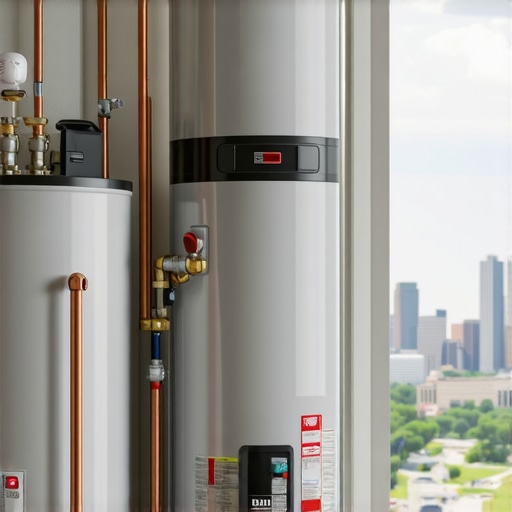
The metallic rattle in the garage
The shop smells like WD-40 and cold, metallic grit today. I’ve spent two decades staring at the guts of Dallas plumbing, and I can tell you the sound of a dying water heater is a distinct, rhythmic thud that no amount of flushing can fix. If your unit is older than ten years, you are basically living with a ticking clock in your utility closet. Most homeowners in North Texas ignore the warning signs until they are standing ankle-deep in a flood in the middle of a Tuesday night. Editor’s Take: If your hot water fluctuates or the tank shows visible rust, the 2026 standard for Dallas homes is shifting toward high-efficiency tankless systems to avoid the inevitable failures of aging pressure vessels.
When the temperature drops and the North Central Expressway turns into an ice rink, that old tank has to work double time to keep up. I’ve seen enough burst tanks in Highland Park to know that the wait-and-see approach usually ends in a call to emergency plumbing dallas tx. Modern tankless units are no longer a luxury; they are a logistical necessity for anyone tired of the twenty-minute wait for a shower to get lukewarm. Let’s get into the mechanics of why your current setup is likely failing you.
Why your current tank is a ticking clock
A standard water heater is basically a giant kettle that never turns off. In a city like Dallas, where the water is notoriously hard, minerals settle at the bottom and create a layer of sediment that acts as an insulator. You’re heating rocks instead of water. This isn’t just an efficiency issue; it’s a structural one. The heat eventually cracks the glass lining of the tank. If you hear a popping sound like popcorn coming from the garage, that’s the sediment exploding. It’s a signal that your efficiency is tanking and a leak is imminent. A tankless system eliminates this entire failure point because it doesn’t store water; it flash-heats it through a copper heat exchanger only when you turn the tap.
Technical reality dictates that flow rate is the only metric that matters. In 2026, the demand for high-output showers and multi-fixture usage in larger Dallas homes exceeds what a 50-gallon tank can provide. You run out of hot water because the recovery time for a tank is abysmal. Observations from the field reveal that a typical tank takes nearly an hour to recover after a single long shower. A tankless unit provides endless hot water, provided you size the BTUs correctly for our local incoming water temperatures. It is about flow, not storage. [image placeholder]
The North Texas hard water tax
Dallas water comes with a heavy dose of calcium and magnesium. Whether you are in Deep Ellum or Northwood Hills, your plumbing is under constant assault from scale buildup. This scale is the primary killer of water heaters in Texas. When we talk about plumbing repair dallas, we are often talking about descaling pipes and fixtures that have been choked by mineral deposits. Tankless units are sensitive to this, but they are also easier to maintain. You can flush a tankless unit with a vinegar solution in thirty minutes, whereas a traditional tank often has so much sediment at the bottom that the drain valve gets plugged, making a full flush impossible.
The regional weather patterns here also play a role. We remember the 2021 freeze. Units located in uninsulated garages or on exterior walls are vulnerable. A major advantage of moving to a tankless system in 2026 is the advanced freeze protection sensors that come standard in premium brands like Rinnai or Navien. These units have internal heaters that kick on to prevent the heat exchanger from cracking when the Dallas grid starts to struggle. It is a level of redundancy that an old atmospheric vent tank simply cannot offer. If you are looking for water heater replacement dallas, you have to consider the long-term survival of the appliance against our volatile climate.
Gas lines and the cold truth about flow
One of the biggest friction points I see is the assumption that you can just swap a tank for a tankless unit without checking the infrastructure. Most older homes in Dallas were piped with half-inch gas lines. A high-output tankless unit often requires a three-quarter-inch line to provide the necessary BTUs for that instant heat. If an installer tells you it’s a simple swap without looking at your gas meter, they are lying to you. You’ll end up with a unit that shuts down every time your furnace kicks on. This is where dallas plumbing services need to be thorough. We have to map the load of the entire house before we even pull the old tank out.
The reality is that 2026 technology has solved the “cold water sandwich” problem that plagued early tankless models. New units use a small internal buffer tank or a recirculation pump to ensure that hot water is at the tap the moment you turn it on. This saves thousands of gallons of water per year that would otherwise go down the drain while you wait for the shower to get warm. In a state where water conservation is becoming a legal and ethical priority, this efficiency isn’t just about the bill; it’s about the resource.
A future where the hot water never stops
Comparing the old guard to the 2026 reality is like comparing a typewriter to a workstation. One is a mechanical relic that works until it breaks; the other is a smart appliance designed for optimization. We are seeing more integration with home automation systems where your water heater can alert your phone if it detects a leak or needs a filter change. This proactive maintenance is the only way to avoid the emergency plumbing calls that ruin your weekend and your flooring. The shift to tankless is about taking control of the utility rather than just reacting to its failure.
Common roadblocks in the Dallas market
Does a tankless heater work during a power outage? Not without a backup. These units rely on an electronic ignition and a control board. If the Dallas power grid goes down, you’ll need a small UPS or a generator to keep the hot water flowing. Can I install it myself? I wouldn’t recommend it. Between the gas pressure requirements, the venting needs (which often require stainless steel or specific PVC), and the local Dallas code permits, it is a job for a licensed professional. How long do they actually last? While a tank is lucky to hit twelve years in Texas, a well-maintained tankless unit can easily go twenty-five. The math favors the long game.
If you are tired of the rust, the noise, and the fear of a flooded garage, it is time to move away from the tank. The technology has matured, the local expertise is here, and the efficiency gains are too large to ignore. Stop paying to keep 50 gallons of water hot while you sleep. Switch to a system that only works when you do, and enjoy the peace of mind that comes with knowing your plumbing is ready for the next decade of Texas weather. Reach out to a local expert today to audit your gas lines and find the right fit for your home.