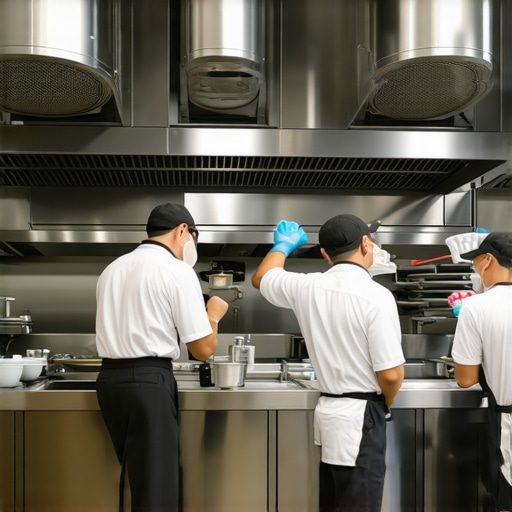
The smell of a commercial kitchen exhaust system in failure isn’t just burnt grease; it is the sour, acidic tang of a compressor burnout and the screech of a belt-driven upblast fan that hasn’t seen a drop of oil since the Bush administration. As we lurch toward 2026, the regulatory cliff is finally here. We are no longer just dealing with moving air; we are dealing with the death of R-410A and the mandatory pivot to low-GWP refrigerant retrofits and SEER2 compliant upgrades. If you are a restaurant owner, your kitchen is a thermodynamic battlefield where the exhaust hood is the general, and if that general loses control of the static pressure, your profit margins are going up in smoke.
The Physics Lesson: You Can’t Move Heat You Can’t Touch
My old mentor, a man who had more refrigerant oil in his veins than blood, used to scream at me until his face matched the red on a high-side gauge: ‘You can’t cool what you can’t touch, and you can’t touch what you won’t let into the building!’ This is the absolute law of airflow. In a restaurant, for every cubic foot of air you suck out through that grease-laden hood, you have to bring a cubic foot back in. If your make-up air unit is dead, your building goes into a vacuum. Suddenly, your front door is impossible to open, and your pilot light relighting duties become a full-time job because the negative pressure is literally sucking the flame off the burner. That isn’t a ‘ghost in the machine’; it’s basic physics being ignored by a ‘Tin Knocker’ who didn’t balance the system.
“Ventilation systems shall be designed and installed so that the air removed from the space is replaced by an equal amount of supplied air.” – ASHRAE Standard 62.1
1. The Make-Up Air (MUA) Rebalancing & SEER2 Compliance
By 2026, the old way of just ‘dumping air’ into the kitchen is a financial death sentence. We are looking at SEER2 compliant upgrades that require a deeper understanding of sensible vs. latent heat. In a high-moisture kitchen, your MUA unit needs to do more than just blow; it needs to conditioned. When I’m looking at a unit, I’m checking the evaporator coil temperature. If that coil doesn’t drop below the dew point, you aren’t removing latent heat (humidity); you’re just moving hot, wet air around. This leads to ‘sweating’ ducts and mold. Using inverter-driven compressors in your make-up air units allows the system to ramp up or down based on the actual load of the kitchen, rather than slamming on and off like a sledgehammer, which is why heating service innovations transforming 2025 climate control are so vital for the upcoming year.
2. The Low-GWP Refrigerant Retrofit Trap
The transition to A2L refrigerants like R-454B is the biggest shift since we ditched R-22. These are ‘mildly flammable,’ which sounds terrifying to a restaurant owner already standing next to a 600-degree broiler. The fix for 2026 isn’t just swapping the ‘gas’ (refrigerant). It’s the sensors. If you’re running old walk-in coolers connected to your exhaust logic, you need to be prepared for the A2L transition. You cannot just ‘top off the juice’ anymore. It’s a sealed system, and if you have a leak, the new sensors will shut your system down to prevent a concentration of flammable vapor. I’ve seen ‘Sales Techs’ try to sell a whole new walk-in for a simple leak, but the real pros know how to perform a proper retrofit by changing the TXV and ensuring the lubricants are compatible. This is where top hvac repair strategies to extend your systems life become your best friend.
“Equipment must be designed to handle the specific pressures and properties of the refrigerant being used to ensure safety and efficiency.” – EPA Section 608 Regulations
3. Static Pressure & The Upblast Fan bearing Screech
If your exhaust fan sounds like a banshee, your bearings are shot. But why? Usually, it’s because the static pressure is too high. If the ductwork is choked with ‘Pookie’ (mastic) and grease, the fan has to work twice as hard to move the same volume of air. This burns out motors and snaps belts. In 2026, we are seeing more demand for integrated snow melt systems installation around rooftop units to ensure that during a polar vortex, your exhaust isn’t blocked by a snow drift, causing a CO buildup. I’ve been on roofs where the exhaust was so restricted it was literally pulling ‘juice’ back through the seals. You need to verify that your duct is sized for the CFM your hood demands. If the ‘Tin Knocker’ who installed it used 10-inch duct for a 2000 CFM fan, you’re fighting a losing battle. This is often ignored until it becomes an urgent repair issue.
4. Dehumidification & Winterization: The Pilot Light Mystery
In the North, where the air gets thin and cold, kitchen exhaust systems face a unique enemy: the ventless gas heater services and fireplace insert services nearby that compete for oxygen. If your kitchen exhaust is too powerful and your MUA is weak, it will pull air down the chimney of your fireplace or water heater. This is called backdrafting, and it’s how people get carbon monoxide poisoning. I always check the pilot light relighting frequency of a restaurant’s auxiliary heat. If they’re constantly out, the exhaust is winning the tug-of-war. We solve this with dedicated dehumidification services and properly tuned dampers. A solid preventative hvac repair plan is the only way to catch these pressure imbalances before the building inspector does. Don’t wait for the ‘beer can cold’ suction line to turn into a block of ice; get your priority service memberships in order now to handle the 2026 shift.