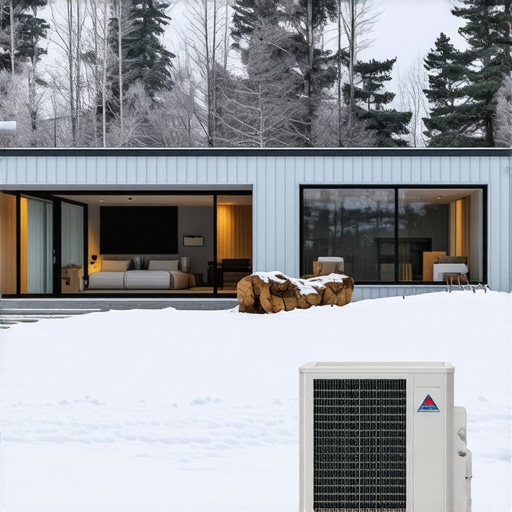
The Cold Hard Truth About 2026 Heating: Why Hyper-Heat is Killing the Furnace
My old mentor, a grizzled tin knocker named Miller who had lungs full of insulation dust and a heart made of cast iron, used to scream at me, ‘You can’t move heat that isn’t there!’ Back in the 90s, he was right. If the ambient temperature dropped below freezing, your standard heat pump became a glorified toaster, relying on expensive electric heat strips that spun the electric meter like a runaway carousel. But Miller didn’t live to see the 2026 shift. Today, we aren’t just moving heat; we are squeezing it out of the sub-zero air with hyper-heat technology that makes those old gas-guzzlers look like relics of the steam age.
“The most expensive equipment in the world cannot overcome a bad duct system.” – Industry Axiom
The Physics of the Polar Vortex: Why You’re Freezing
When your home feels like a walk-in freezer despite the thermostat being cranked to 75, you aren’t just facing a mechanical failure; you’re losing a war against thermodynamics. In the North, we deal with sensible heat loss that would make a Florida tech retire on the spot. Most homeowners think they need urgent furnace repair services because their vents are blowing lukewarm air. In reality, the traditional system is likely hitting its ‘balance point’—the temperature where the heat pump can no longer keep up with the heat escaping through your walls. This is where the 2026 hyper-heat models change the game. By using flash-injection technology, these units maintain 100% heating capacity down to 5°F and keep chugging all the way to -13°F. No more ’emergency heat’ light burning a hole in your wallet.
1. The Death of R-410A and the Rise of A2L Efficiency
If you’ve been waiting to pull the trigger on a heat pump installation, the regulatory cliff is here. We are moving away from R-410A ‘juice’ into the era of A2L refrigerants like R-454B. Why does this matter for your cold home? These new refrigerants are more efficient at low temperatures, meaning the compressor doesn’t have to work as hard to move ‘the gas’ through the lines. This transition has forced manufacturers to redesign their coils, leading to better heat exchange and fewer instances of the dreaded ‘refrigerant leak detection’ calls that plague older, thinner-walled coils. If you buy a cheap, leftover 2024 unit now, you’re buying a dinosaur that will be expensive to charge in five years.
2. Ductless Mini-Splits: The Airflow Manifesto
One room is a sauna, the other is an icebox. That isn’t magic; it’s bad static pressure. A ductless mini-split installation bypasses the ‘pookie’-slathered, leaky ductwork of an old house and delivers heat directly to the source. When we install these in 2026, we are looking at HSPF2 ratings that dwarf anything we saw a decade ago. Because there’s no duct loss, you aren’t paying to heat your attic or crawlspace. You’re heating your living room. My mentor used to say pookie (mastic) was the only thing keeping most houses from falling apart, but with ductless, we don’t even need the tin knocker’s tape.
3. The Limit Switch Replacement Trap
I’ve seen ‘Sales Techs’ try to sell a $15,000 system when a homeowner complains about the heat cutting out. Often, it’s just a $40 limit switch. The limit switch is the brain’s safety fuse; if the furnace gets too hot because of a dirty filter or blocked return air, it kills the flame to prevent a cracked heat exchanger. In the 2026 hyper-heat world, these sensors are more advanced, communicating with variable-speed motors to ramp down rather than just shutting off. This prevents the ‘short cycling’ that kills compressors. If your tech isn’t checking static pressure before recommending a heating service, they aren’t a tech—they’re a salesman in a blue shirt.
“Design heating loads shall be determined in accordance with the procedures described in the ASHRAE Handbook.” – ACCAs Manual J
4. Financing for Heat Pump Installs: The 2026 Tax Credit Win
Let’s talk brass tacks. These systems aren’t cheap. But between the HEEHRA rebates and the federal tax credits, the government is practically begging you to stop burning fossil fuels. When you look at financing for heat pump installs, you have to calculate the ‘Total Cost of Ownership.’ A ventless gas heater service might seem cheaper upfront, but the carbon monoxide risk and the moisture it dumps into your air (latent heat load) make it a poor long-term choice compared to a clean, hyper-heat electric system.
5. Chimney Liners and Venting: The Silent Killer
If you’re still clinging to an old 80% AFUE furnace, your chimney is a liability. I’ve seen 20-year-old masonry chimneys crumbling because the acidic condensate from modern furnaces eats the mortar. A proper chimney liner installation is mandatory for safety, but with a hyper-heat pump, you can decommission that chimney entirely. No more drafting issues, no more back-drafting ‘smoke’ smells, and no more ‘Sparky’ having to rewire a combustion blower motor every three years. Modern comfort is about removing the fire from the house and letting the physics of refrigerant do the heavy lifting.
The Verdict: Is Your House Ready?
If your home is cold, don’t just ‘top off the gas.’ A sealed system shouldn’t leak; if it does, you need refrigerant leak detection, not a band-aid. The move to hyper-heat in 2026 is about more than just being ‘green’—it’s about the fact that we finally have the technology to beat the North’s winter without a flame. Stop calling for ‘evaporative cooler services’ in a blizzard and start looking at the thermodynamic reality of your home’s envelope. Airflow is king, and hyper-heat is the new queen of the castle. Ready to stop shivering? Contact us to get a real load calculation, not a ‘rule of thumb’ guess from a sales guy.