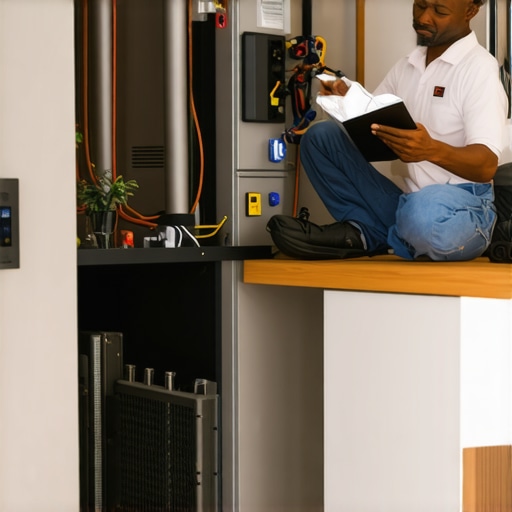
The Great Refrigerant Reset: Why Your Wallet is in the Crosshairs
I’ve spent three decades belly-crawling through fiberglass-filled attics and dodging wasps on commercial rooftops, and I can tell you one thing: the industry is about to hit a brick wall. We are currently staring down the barrel of the R-410A phase-out, transition to A2L refrigerants like R-454B and R-32, and a massive regulatory shift that’s going to make the ‘old juice’ look like liquid gold. If you’re planning an upgrade in 2026, you aren’t just buying a box that blows air; you’re navigating a thermodynamic minefield. But here’s the kicker—the government and utility companies know these units are getting pricier, so they’ve stuffed the coffers with rebate cash. The problem? Most people leave that money on the table because they don’t know how to play the game. Before we get into the brass tacks of 5 Rebate Application Tips to Save $1,000+ on 2026 HVAC Upgrades, let me tell you about the time I almost lost my cool with a ‘Sales Tech’ in a church basement.
The $22,000 Dust Bunny: A Sales Tech Sighting
Last winter, I got a call from a deacon at a local parish. He was shaking. A ‘Comfort Advisor’ (that’s fancy talk for a guy in a polished polo who’s never turned a wrench) told him their main furnace was a ‘ticking time bomb’ and quoted $22,000 for a full replacement. He said the heat exchanger was shot and the sensors were failing. I went down there, pulled the panel, and found the furnace flame sensor cleaning was the only thing on the menu. The sensor was just coated in silica dust, causing the unit to drop out on safety. I cleaned it with a piece of emery cloth, and that old iron started purring like a kitten. That ‘Sales Tech’ was trying to hit a commission goal, ignoring the fact that many furnace myths are designed to part you from your money. This is why you need a veteran, not a salesman, to tell you how to actually save money through rebates rather than unnecessary replacements.
“The most expensive equipment in the world cannot overcome a bad duct system.” – Industry Axiom
The Physics of the North: Why AFUE Matters in 2026
In our neck of the woods, where the wind-chill can turn a condensate line into a popsicle in twenty minutes, we care about the AFUE (Annual Fuel Utilization Efficiency) rating. When we talk about multi-family heating upgrades or church heating systems, we are fighting the laws of physics. Every time your furnace fires up, we’re looking at flame rollout and the danger of cracked heat exchangers. If you’re upgrading to a high-efficiency system to snag a rebate, you have to understand the ‘Thermodynamic Zooming’ involved. We aren’t just making fire; we are condensing flue gases to extract latent heat. This requires specialized PVC venting because that condensate is acidic and will eat through standard ‘tin knocker’ ductwork or old flue pipes. If your contractor doesn’t mention carbon monoxide detector installation as part of a high-efficiency package, show them the door. It’s not just a code requirement; it’s a life-saver in a sealed, tight home.
Tip 1: Leverage Demand-Controlled Ventilation (DCV)
In 2026, rebates are heavily weighted toward ‘smart’ tech. Demand-controlled ventilation (DCV) is the heavy hitter here. Instead of just dumping fresh air into the building 24/7, DCV uses CO2 sensors to tell the system when people are actually in the room. This is huge for church heating systems or large halls. Why heat the whole sanctuary on a Tuesday afternoon when only the pastor is in his office? By installing DCV, you can often qualify for ‘Custom Tier’ utility rebates that far exceed standard equipment credits. It’s about being precise with your airflow, not just throwing more ‘gas’ at the problem.
Tip 2: Smart Controls and Geofencing Temperature Control
If your thermostat doesn’t know where you are, you’re losing money. Geofencing temperature control uses your phone’s GPS to tell the HVAC system to ramp down when you’re three miles away and start the ‘recovery’ period when you’re heading home. This isn’t just a luxury; it’s a key requirement for many 2026 Energy Star rebates. When you look at heating innovations, smart zoning is the backbone. By proving that your system isn’t running full tilt while you’re at work, you’re more likely to see that $1,000+ check in your mailbox.
Tip 3: The Synergy of Hot Water Heater Repair and HVAC
Wait, why is a ‘Tin Knocker’ talking about plumbing? Because in 2026, ‘Heat Pump Water Heaters’ are the darlings of the rebate world. If you are already doing an HVAC upgrade, look for ‘bundled’ rebates that include hot water heater repair or replacement. Integrating a heat pump water heater into your mechanical room can actually help dehumidify the space in the summer, slightly lowering the load on your AC. It’s a closed-loop efficiency mindset that the rebate auditors love. I’ve seen homeowners double their rebate amount just by adding a water heater upgrade to their HVAC project.
Tip 4: Radiant Floor Heating Installation Credits
There is nothing like radiant floor heating installation for true thermal comfort in a cold climate. Unlike forced air, which rises to the ceiling (leaving your toes like ice cubes), radiant heat warms the objects in the room. In 2026, many ‘Electrification’ rebates apply to hydronic systems or electric radiant mats if they are powered by heat pumps. It’s a cleaner, more efficient way to heat, and because it doesn’t rely on leaky ductwork, it’s a favorite for high-performance building credits. It’s the ultimate way to combat the ‘polar vortex’ without blowing dust around your house.
“A high-efficiency furnace requires precise venting to prevent the accumulation of corrosive condensate.” – ASHRAE Standard 155P
Tip 5: Priority Service Memberships as a Rebate Requirement
Here’s the secret the big box stores won’t tell you: many high-value rebates require proof of ‘Commissioning’ and a preventative maintenance contract. The utility company isn’t going to give you $1,500 if the unit is going to be neglected and lose its efficiency within two years. Signing up for priority service memberships doesn’t just get you a faster response time when your inducer motor dies at 3 AM; it provides the ‘paper trail’ of maintenance that rebate processors demand. I always tell my customers that preventative maintenance is the only way to protect that investment. Without it, you’re just a number on a spreadsheet to the manufacturer.
The A2L Transition: Don’t Buy a Dinosaur
As we move into 2026, the industry is transitioning to ‘Mildly Flammable’ (A2L) refrigerants. These systems require new sensors and different leak detection protocols. If a contractor tries to sell you a bargain-basement R-410A unit, be careful. While it might be cheaper upfront, the ‘juice’ (refrigerant) for those units is going to skyrocket in price as production is slashed. You might save $500 now only to pay $2,000 in five years for a simple recharge. Instead, use the 2026 rebates to offset the cost of a new R-454B system. It’s better for the planet, and more importantly, it’s better for your long-term maintenance budget. Whether you are looking for expert installation tips or just trying to keep your old furnace alive, always look at the total cost of ownership, not just the sticker price. If you need help navigating these technical waters, don’t hesitate to contact us. We’ll give you the straight talk, no ‘Sales Tech’ fluff included.