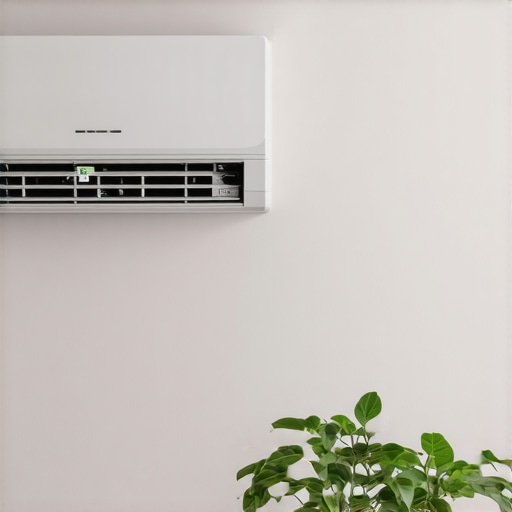
The Wisdom of the Tin Knocker: Why 2026 is the Year of the Mini-Split
My old mentor, a grizzled foreman who spent more time in crawlspaces than his own living room, used to scream at me every time I reached for a roll of duct tape. ‘You can’t cool what you can’t touch, kid!’ he’d yell, his voice echoing off the sheet metal. He wasn’t just being a cranky old-timer; he was teaching me the fundamental law of thermodynamics. If the air doesn’t spend enough time crossing the evaporator coil, you aren’t removing heat—you’re just moving hot air around in circles. In those days, we solved everything with bigger blowers and more ‘Pookie’ (mastic) on the seams. But as we stare down the barrel of 2026, the old ways of hacking into plaster walls to run inefficient flex duct are dead. We are entering the era of the inverter-driven compressor and the surgical precision of ductless systems.
“The most expensive equipment in the world cannot overcome a bad duct system.” – Industry Axiom
If you are living in a home with a vintage heating setup, perhaps relying on a massive cast-iron radiator, you likely know the struggle of steam boiler repair during a Chicago-style polar vortex. But come July, that boiler is a paperweight, and you’re sticking noisy, dripping boxes in your windows. As an HVAC veteran who has seen every control board diagnostics failure known to man, I can tell you that the transition to ductless mini-splits isn’t just about ‘convenience’—it’s about surviving the regulatory and physical realities of the next decade. Here is why the ductless revolution is the only logical path forward for 2026.
1. The Inverter-Driven Compressor: Ending the ‘All or Nothing’ Cycle
Most traditional central air units are ‘dumb.’ They are either 100% on or 100% off. It’s like driving a car where the gas pedal only has two positions: floor it or brake. This leads to massive temperature swings and ‘short cycling,’ which kills compressors. Inverter-driven compressors, the heart of a modern mini-split, are different. They modulate. They ramp up to hit the set point and then throttle down to a whisper to maintain it. This isn’t just about saving a few bucks on the electric bill; it’s about HVAC repair prevention. When a motor doesn’t have to start and stop 50 times a day, the capacitors don’t pop, and the contactors don’t pit. For homeowners looking at choosing the right HVAC fixes, the inverter is the single greatest leap in reliability we have seen in thirty years.
2. The R-454B Transition: Future-Proofing Against the Regulatory Cliff
By 2026, the ‘gas’ we’ve used for years, R-410A, will be on its way to the graveyard. We are currently in the middle of low-GWP refrigerant retrofits and the transition to A2L refrigerants like R-454B. These new refrigerants are more efficient at carrying heat, but they operate at different pressures. If you install an old-style central unit now, you are buying a dinosaur. Mini-splits are leading the charge in this transition. These systems are designed from the factory to handle the physics of the new ‘juice.’ Plus, with rebate application assistance, many homeowners are finding that the government is essentially subsidizing their move away from high-GWP (Global Warming Potential) gases. I’ve seen ‘Sales Techs’ try to dump old R-410A inventory on unsuspecting seniors; don’t be a victim. Look for the tech that understands the 2025/2026 refrigerant shift.
3. Thermodynamic Zoning: No More ‘Icebox’ Bedrooms
In a traditional North-zone home, you might have a master bedroom that feels like a sauna while the basement is an icebox. This is a failure of static pressure and airflow. When you install a ductless system, you are bypassing the ‘Tin Knocker’s’ worst nightmare: leaky, undersized ducts buried behind drywall. Each head in a mini-split system acts as its own independent zone. This is critical for dual fuel heat pump systems. You can keep your steam boiler repair experts on speed dial for those nights it hits -20°F, but use your hyper-efficient mini-splits for 90% of your heating and 100% of your cooling. This hybrid approach is the innovation transforming 2025 climate control.
“Standard design practice should ensure that the HVAC system is capable of maintaining the indoor environment within the specified comfort zone.” – ASHRAE Standard 55
4. Moisture Management and Latent Heat Removal
In humid climates, cooling is only half the battle. You have to remove the ‘latent heat’—the energy trapped in water vapor. A traditional oversized AC unit cools the air so fast that it shuts off before it can dehumidify the room, leaving you in a ‘cold swamp.’ Because a ductless unit with an inverter stays on at a low speed, the evaporator coil stays below the dew point longer. It constantly wrings the moisture out of the air. This protects your home from mold and prevents the need for constant flue pipe installation adjustments or dehumidifier add-ons. If you’ve ever smelled that ‘dirty sock’ odor from a traditional coil, you know exactly why better moisture management matters.
5. Total System Longevity via Priority Service Memberships
A mini-split is a precision instrument. It isn’t a ‘set it and forget it’ appliance like a toaster. To keep those inverter boards from frying, you need clean power and clean coils. This is where priority service memberships come in. Regular maintenance on a mini-split is simpler but more critical than on a central unit. You aren’t crawling through an attic to check a flue pipe installation; you’re ensuring the sensors are calibrated and the condensate lines are clear. Most of the ‘broken’ units I see are just victims of neglected filters. When you invest in a high-end AC installation, the goal is to make it last 20 years, not 10. A tech with a multimeter and a bottle of coil cleaner is your best friend here.
The Final Verdict: Is it Worth the Investment?
I’ve spent three decades listening to the screech of failing bearings and the hiss of refrigerant leaks. I’ve seen the ‘Sales Techs’ quote $20,000 for a new furnace when the customer just needed a $50 hot water heater repair or a flame sensor cleaning. I don’t care about the sale; I care about the physics. In 2026, the physics favor ductless. Between the rebate application assistance available for high-efficiency heat pumps and the sheer comfort of zonal control, there is no contest. Whether you’re dealing with a complex control board diagnostics issue on an old unit or looking to upgrade your entire lifestyle, stop fighting your ductwork. Airflow is king, and in the modern age, the king is ductless.