The Forensic Diagnosis: Why Your Furnace is Suicide-Sprinting Toward 2026
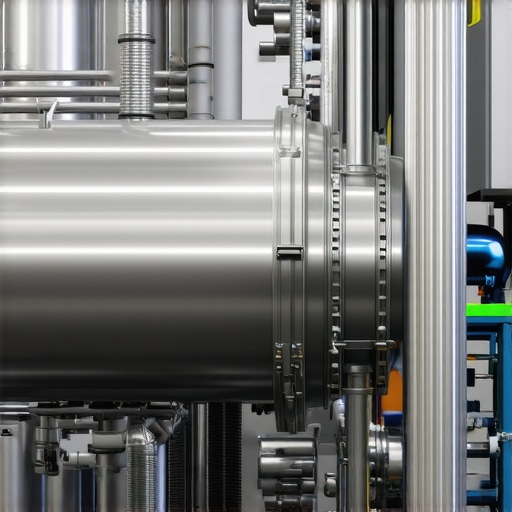
Listen closely. That rhythmic thrumming in your basement isn’t just the sound of comfort; it’s a mechanical heart rate. As a technician who’s spent three decades crawling through crawlspaces and smelling the scorched-dust scent of a failing system, I can tell you that the next two years are critical. We are heading toward a massive wave of equipment failures in 2026, and the culprit isn’t a ‘bad part’—it’s physics. Specifically, the physics of a neglected heat exchanger. My old mentor used to scream at me until he was blue in the face: ‘You can’t heat what you can’t touch!’ He was talking about airflow. If your burners are firing but that heat can’t efficiently jump across the metal of the heat exchanger because of a layer of carbonized soot, you aren’t just wasting ‘gas’ (refrigerant’s cousin in the heating world); you are killing the metallurgy of your system.
“The most expensive equipment in the world cannot overcome a bad duct system or a restricted thermal transfer interface.” – Industry Axiom
In the North, where the polar vortex turns your furnace into a marathon runner, heat exchanger integrity is everything. When we talk about gas furnace repair, most homeowners think about a spark igniter or a dirty flame sensor. But the real HVAC repair happens at the molecular level. A heat exchanger is a series of metal tubes or clamshells that separate the toxic combustion gases from the air you breathe. When these get coated in dust because of a lazy furnace filter replacement schedule, the metal starts to ‘cook’ itself. We call this thermal stress. In a cold climate, the constant expansion and contraction (the ‘breathing’ of the metal) eventually leads to hairline fractures. By the time 2026 rolls around, these microscopic cracks become 24/7 heating emergencies. This is why identifying when furnace repair is urgent is the difference between a simple cleaning and a $7,000 bill.
Thermodynamic Zooming: The Chemistry of a Crack
Let’s talk about the ‘why.’ When burners fire, they produce CO, CO2, and water vapor. In high-efficiency systems, that vapor is acidic. If your heat exchanger is dirty, the ‘Delta T’ (the temperature difference) between the fire and the air drops. The heat stays trapped in the metal. This causes the metal to exceed its design temperature, leading to ‘flame rollout.’ This isn’t just a repair issue; it’s a safety issue. If you’re looking for strategies to extend your system’s life, you start by stripping the burners and vacuuming the secondary heat exchanger. I’ve seen ‘Sales Techs’ walk into a house, see a little rust, and immediately try to sell a $15,000 system. Don’t fall for it. Often, a deep cleaning and IAQ improvement services like high-MERV filtration can stabilize the system’s internal environment.
The Propane and Cold Climate Heat Pump Pivot
For those of you in rural areas utilizing propane conversion services, the stakes are even higher. Propane burns ‘wetter’ and hotter than natural gas. If your combustion analysis isn’t spot-on, you’re essentially sandblasting your heat exchanger with heat. We’re seeing a shift toward cold climate heat pumps, but even those require a functional backup. If you have an old boiler, radiator replacement might seem like the fix, but if the primary heat source—the exchanger—is choked, the whole hydronic loop fails. We use leak detector integration to monitor these systems now, linking them into smart building management platforms. This isn’t ‘magic’; it’s just better sensors. If you want to avoid the 2026 cliff, you need to stop thinking about your furnace as a ‘box that makes hot’ and start seeing it as a thermal exchange engine that needs to breathe.
“Standard 62.1 requires that ventilation systems be designed to prevent the accumulation of moisture and contaminants that lead to structural degradation and health risks.” – ASHRAE Standards
I’ve been the ‘Tin Knocker’ on jobs where the ductwork was so restricted the furnace was literally gasping for air. We used ‘Pookie’ (mastic) to seal the returns, but if the heat exchanger is already fouled, sealing the ducts just finishes the job of killing the blower motor. If you’re worried about your current setup, check out these furnace repair myths to see if you’re being fed a line of junk by a salesman in a clean uniform. Real technicians have grease under their nails and a combustion analyzer in their hand. We look for the ‘sour’ smell of a cracked exchanger long before the CO detector goes off. If you want to survive the next two winters without a total system collapse, get the soot out now. Your wallet—and your family’s lungs—will thank you.
For more technical breakdowns or to schedule a real-deal inspection, you can contact us here. Don’t wait for the first freeze of 2026 to find out your heat exchanger has finally given up the ghost.