The Reckoning of 2026: Why Your Old Heating Strategy is Obsolete
My old mentor, a man who could smell a refrigerant leak from the driveway, used to smack the side of a sheet-metal plenum and bark, ‘You can’t heat what you can’t move!’ He was obsessed with static pressure before most techs knew how to read a manometer. That lesson stayed with me through thirty years of crawling through fiberglass-filled attics and dodging ‘Sparky’ while he wired a panel. Today, as we stare down the barrel of the 2025-2026 regulatory shift, that old-school physics matters more than ever. We are entering the era of the A2L transition—where R-410A is a dinosaur and ‘mildly flammable’ refrigerants like R-454B are the new standard. If you think your heating bill is high now, wait until you see the cost of inefficiency in the next two years. This isn’t just about ‘saving the planet’; it’s about avoiding the financial train wreck of an outdated, oversized furnace screaming in your basement. Transitioning to a dual fuel setup, often paired with an oil to gas conversion, is no longer a luxury—it is a survival strategy for the modern homeowner.
‘The most expensive equipment in the world cannot overcome a bad duct system.’ – Industry Axiom
1. The Thermodynamic Magic of the Economic Balance Point
In the trade, we talk about the ‘Balance Point.’ This is the exact outdoor temperature where your heat pump can no longer keep up with the heat loss of your home. In a standard setup, once you hit that point, the system kicks on expensive electric strip heat—what we call ‘the toaster’ because it eats electricity like a hungry teenager. But with a dual fuel system, we use a high-efficiency furnace installation as the secondary stage. When the mercury drops below 30°F, the system intelligently flips from the ‘juice’ (electricity) to gas or propane. This is where HVAC load calculation services become critical. If your tech doesn’t perform a Manual J, they are just guessing. An oversized unit will ‘short cycle,’ turning on and off so fast it never actually de-humidifies or stabilizes the temperature, leading to a home that feels like a cold swamp in the winter and a sauna in the summer. By leveraging the specific heat capacity of gas during a polar vortex, you stop the meter from spinning like a top.
2. Hyper-Heat Tech: Defying the Laws of the Old Guard
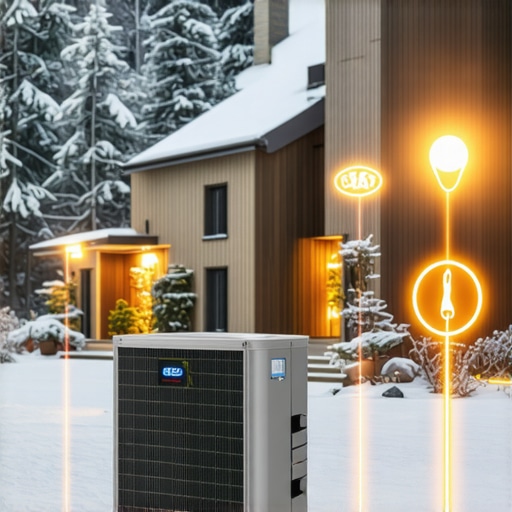
Ten years ago, I would have told you a heat pump is useless below freezing. I was wrong. Modern hyper-heat heat pumps utilize flash injection technology in the compressor to maintain 100% heating capacity down to 5°F and sometimes lower. We’re talking about moving sensible heat from the freezing outdoor air into your living room using advanced vapor injection. It’s not magic; it’s refrigeration physics. This eliminates the need for the furnace to kick in for 90% of the winter, reserving the gas burner only for those brutal nights when the wind is howling through the eaves. If you are still relying on baseboard heater repair to keep your toes warm, you are literally burning cash. The efficiency of these inverter-driven compressors is a ‘game-changer’ (though I hate that term)—they ramp up and down like a dimmer switch rather than slamming on and off like a light switch, which preserves the life of the capacitor and contactor. [image_placeholder_1]
3. The Regulatory Cliff and the Death of R-410A
We are currently standing on a regulatory cliff. By 2026, the EPA’s mandate on GWP (Global Warming Potential) will have completely overhauled the manufacturing landscape. This means the 13 SEER unit you bought five years ago is a relic. New systems require specialized sensors and updated thermostat installation to handle the A2L refrigerants. If you’re looking at ac-installation-secrets-that-hvac-pros-wont-tell-you, the biggest secret is that the cost of ‘juice’ (refrigerant) for old R-410A systems is going to skyrocket as production is phased out. A dual fuel system installed now prepares you for this transition. We aren’t just ‘topping off the Freon’ anymore; we are building hydronic heating systems and hybrid loops that can adapt to changing energy prices. This is why I tell homeowners to check their ultimate-guide-to-ac-installation-expert-tips-for-2025-success before signing a contract with a ‘Sales Tech’ who just wants to swap a box and run.
‘Energy efficiency is the first fuel; it is the most effective way to reduce costs while maintaining thermal comfort.’ – ASHRAE Standard 90.1
4. Airflow Architecture: Why Your ‘Tin Knocker’ Matters
You can buy the most expensive high-efficiency furnace installation on the market, but if your ‘Tin Knocker’ (duct guy) didn’t size the return air drops correctly, you’re dead in the water. I’ve seen 5-ton units choked down by 3-ton ductwork, causing the evaporator coil to freeze into a block of ice or the heat exchanger to overheat and crack. This is where demand-controlled ventilation enters the chat. Modern dual fuel systems don’t just blast air; they manage it. They use ECM motors to overcome the static pressure of a high-MERV filter, ensuring that the air actually reaches the ‘Suction Line’ at the right pressure. If you’re struggling with uneven temperatures, choosing-the-right-hvac-fixes-what-homeowners-need-to-know involves looking at your ductwork, not just the thermostat. I’ve spent too many hours applying ‘Pookie’ (mastic) to leaking joints to believe that a new unit alone fixes a drafty house. It’s about the entire envelope.
5. The Financial Logic of Fuel Switching
The fifth reason dual fuel is the 2026 winner is simple: energy independence. With a fireplace insert services addition for ambiance or emergency heat, and a dual fuel primary system, you can choose the cheapest fuel source in real-time. Natural gas prices fluctuate differently than electricity. A smart system monitors these rates. If you are currently on an old oil tank, an oil to gas conversion combined with a heat pump can cut your winter bills by 40% or more. This isn’t just about preventative-hvac-repair-tips-for-year-round-efficiency; it’s about a total system overhaul. Even if you live in a dry climate where swamp cooler maintenance was once the norm, the shift toward heat pumps is inevitable because they provide superior dehumidification—or humidification—control. Don’t be the person calling for how-to-identify-when-furnace-repair-is-urgent-and-why in the middle of a blizzard. Plan the transition now, ensure your HVAC load calculation services are professional, and stop letting your money leak out of your unsealed plenums. Comfort is physics, and physics doesn’t care about your budget—unless you plan for it.