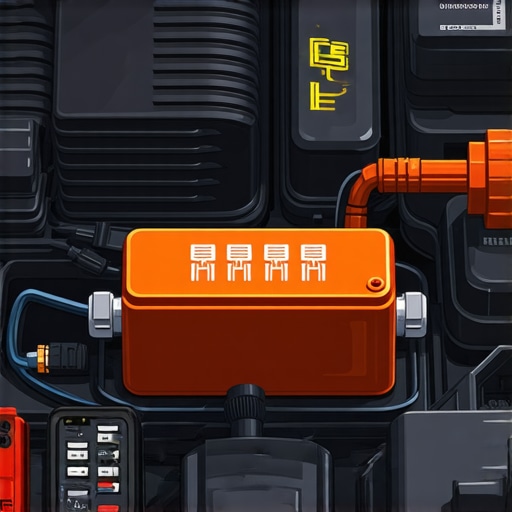
The Sound of a Dying Summer: Why Silence Isn’t Golden
You know that sound. Or rather, the lack of it. It’s 4:00 PM on a Tuesday in July, the humidity is thick enough to chew, and you realize the house feels… heavy. You walk over to the thermostat—a smart thermostat setup you installed for efficiency—and it says ‘Cool On,’ but the air coming out of the registers is room temp. You step outside, and instead of the rhythmic thrum of the condenser, you hear a faint, pathetic hum followed by a click. That’s the sound of a system trying to breathe but lacking the electrical lungs to do it. As a guy who’s spent three decades in attics that feel like the devil’s sauna, I can tell you right now: nine times out of ten, your compressor isn’t dead. Your juice-box—the capacitor—is just cooked.
The Forensic Diagnosis: Catching the ‘Sales Tech’ in the Act
Last season, I followed a guy they call ‘Shiny Shirt Shawn’ out to a job. He was one of those ‘Sales Techs’ who spends more time on his hair than his manifold gauges. He’d quoted this couple $14,000 for a high-efficiency furnace installation and a new AC because the unit ‘wouldn’t turn over.’ He told them the compressor was grounded. I walked in, pulled the disconnect, discharged the capacitor with my insulated screwdriver, and saw the top was bulging like a can of expired tuna. A $50 part and fifteen minutes of labor later, the unit kicked on so hard it shook the gravel. If you don’t know the signs, you’re an easy target for a replacement quote you don’t need. Understanding choosing the right HVAC fixes is the difference between a minor repair and a second mortgage.
“The most expensive equipment in the world cannot overcome a bad duct system or a failed starting component.” – Industry Axiom
The Physics of the ‘Kickstart’: Why Airflow is King
To understand why your AC won’t start, you have to understand the ‘Phase Shift.’ Most residential AC motors are single-phase. They don’t naturally have the torque to start spinning from a dead stop against the high head pressure of the refrigerant. The capacitor acts like a temporary battery, storing potential energy and dumping it into the start winding to create a second phase of electricity. This creates the magnetic field torque needed to get that motor up to 3450 RPM. If that capacitor is weak, the motor just sits there, drawing Locked Rotor Amps (LRA) and heating up until the internal thermal overload trips. This is Thermodynamic Zooming: the electricity creates the torque, the torque creates the airflow, and the airflow allows the evaporator coil to drop below the dew point, stripping latent heat from your air. Without that electrical kick, the whole cycle of physics is dead in the water.
5 Signs You Need a Capacitor Replacement in 2026
1. The Ominous Hum and Click
This is the most common symptom. The contactor pulls in (the click), sending voltage to the motor, but the motor can’t start. It sits there humming—converting electrical energy into heat instead of motion—until the internal safety switch pops. If you hear this, turn the system off immediately. Forcing it to try and start repeatedly can burn out the motor windings, turning a cheap capacitor job into a full condenser fan motor repair.
2. The Bulging ‘Mushroom’ Top
Capacitors are filled with a dielectric oil and tightly wound foil. When they overheat—often due to high ambient temps or HVAC duct sealing issues causing high static pressure—the oil expands. The top of the silver canister is designed to bulge out as a safety feature to break the internal connection. If it’s not flat as a pancake on top, it’s junk.
3. The ‘Hard Start’ or Stuttering
Does your AC sound like it’s struggling to get going? If the lights in your house dim significantly when the unit kicks on, your capacitor is likely losing its capacitance (measured in Microfarads). In 2026, with the push toward Energy Star heating certification and higher SEER2 requirements, systems are more sensitive to voltage drops than ever.
4. Intermittent Cutouts
Sometimes a capacitor works when it’s cool but fails once the midday sun hits the cabinet. This thermal instability is a precursor to total failure. It’s the same reason we see 24/7 heating emergency response calls in the winter for a draft inducer motor repair; electrical components hate extreme temperature swings.
5. The Visual ‘Ooze’
If you see a brown, oily substance leaking from the terminals, the internal seal has failed. That oil is what keeps the heat down inside the cap. Once it’s gone, the component is a ticking time bomb. This is often ignored until the unit fails during a record-breaking heatwave.
The 2026 Regulatory Cliff: Why You Can’t Wait
We are currently in the middle of the A2L refrigerant transition (R-454B and R-32). By 2026, the cost of maintaining older R-410A systems is going to skyrocket because the ‘juice’ (refrigerant) is being phased out. A simple capacitor failure on an older unit can be a blessing if caught early, but if you let a bad capacitor kill your compressor now, you might be forced into a full system replacement under the new, more expensive 2025/2026 standards. Checking your electrical components is a key part of top HVAC repair strategies to keep your current rig running until the market stabilizes.
“Standard 180-2018 establishes minimum HVAC inspection and maintenance requirements that help preserve the integrity of electrical starting components and thermal heat transfer.” – ASHRAE Standards
The Northern Climate Context: Why it Matters for Heating Too
While we’re talking about AC, remember that in the North, your furnace uses similar capacitors for the blower motor. If your blower won’t start, you’re looking at a furnace repair or potentially a cracked heat exchanger if the unit overheats. Whether it’s a commercial furnace repair for a warehouse heating solutions project or a simple hot water heater repair, the electrical fundamentals remain the same: clean power and proper capacitance. If your high-efficiency furnace installation wasn’t paired with HVAC duct sealing, the blower has to work twice as hard, pulling more amps and frying the capacitor faster. It’s all connected. You can’t just fix the ‘part’ without looking at the ‘path’ (the ductwork). Using urgent furnace repair identification techniques can save your system before the polar vortex hits.
The Math: Repair vs. Replace
A capacitor replacement usually runs a few hundred bucks including the service call. A new compressor? You’re looking at $2,000 to $4,000. A new R-454B system in 2026? You might be staring down $10,000 to $18,000 depending on the tonnage and efficiency. It’s a no-brainer. This is why I tell people to ignore the ‘Sparky’ (electrician) who says your breaker is just weak and the ‘Tin Knocker’ (duct guy) who says you just need more vents. Start with the basics. Check the cap. Check the contactor. Ensure your smart thermostat setup isn’t short-cycling the unit, which is the fastest way to kill a capacitor. Preventive maintenance isn’t a scam; it’s physics. If you want your system to last, you have to protect the components that do the heavy lifting.