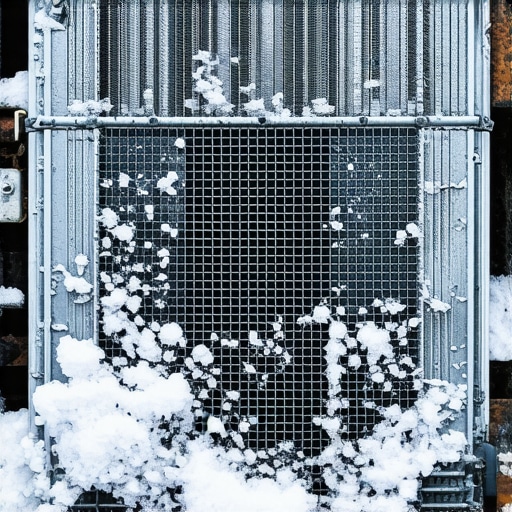
The Ghost in the Pipes: Why Thermodynamics Doesn’t Care About Your Budget
My old mentor, a man who had more soot in his lungs than a 1950s coal boiler, used to scream at me until he was purple: ‘You can’t cool what you can’t touch, and you can’t heat what you can’t flow!’ He’d stand over a shivering radiator in a drafty warehouse and poke me in the chest. This is the fundamental law of the Airflow Architect. Whether it is a steam-fed cast iron beast or a modern electric heater service, if the medium—be it air, water, or steam—can’t move the energy to the destination, you aren’t a technician; you’re just a guy charging for a guess. This winter of 2026 isn’t going to be kind to those who ignore the physics of heat transfer.
The Forensic Diagnosis: Anatomy of a Failing Radiator
When the mercury drops below zero and the ‘Polar Vortex’ headlines start screaming, your heating system isn’t just a machine; it’s a life-support system. In my 30 years of melting in attics and losing feeling in my toes on frozen rooftops, I’ve learned that a radiator is the heart’s terminal. If the heart (the boiler or furnace) is pumping but the terminal is clogged, the system dies. We are seeing a massive shift in 2026 toward high-efficiency warehouse heating solutions and infared heater installation, but the humble radiator remains the backbone of many cold-climate homes. Here is how you diagnose a terminal failure before the pipes burst.
“The most expensive equipment in the world cannot overcome a bad duct system or an improperly piped hydronic loop.” – Industry Axiom
1. The Metallic ‘Death Rattle’ and Expansion Stress
A radiator should have a predictable hum or a gentle click as it expands. If you hear a screeching or a heavy ‘clunk,’ you aren’t just hearing heat; you’re hearing mechanical stress. In electric heater services, this often points to a failing element or a dying transformer replacement need. In steam systems, it’s often ‘water hammer’ caused by trapped condensate. When the metal begins to fatigue from decades of expansion and contraction, it develops micro-fractures. If you ignore these, you’re looking at a catastrophic floor-ruining leak. This is where predictive maintenance alerts come into play—modern sensors can now detect these vibration patterns before the metal gives way.
2. The ‘Cold Foot’ Syndrome: Sediment and Sludge
If the top of your radiator is scorching but the bottom is ‘dead-man cold,’ you’ve got a flow problem. Over decades, calcium and rust settle at the bottom of the unit, creating a layer of insulation that prevents the hot water or steam from touching the metal. You’re paying for the ‘gas’ (fuel) but only getting 50% of the BTUs. This is Thermodynamic Zooming at its finest: the boiler is working overtime to overcome the latent heat loss trapped in that sludge. No amount of programmable thermostat programming can fix a radiator that is 30% full of mud. At this point, the ‘Tin Knocker’ logic applies—sometimes the cost of a power flush exceeds the value of the unit, and a replacement is the only way to restore the AFUE rating you’re paying for.
3. The Rusty Tear: Corrosion and Pinholes
If you see a rust stain that looks like a tear running down the side of your radiator, it’s over. Oxygen is the enemy of any closed-loop system. When fresh water is constantly added to a system (usually because of a leak elsewhere), it brings in new oxygen which eats the iron from the inside out. Once you see ‘pitting’ on the exterior, the structural integrity is gone. This is why heating service hacks for comfort and savings in 2025 and 2026 emphasize the use of steam humidifiers to maintain air quality without stressing the hydronic system, but once the radiator is weeping, you’re on borrowed time. I’ve seen ‘Sales Techs’ try to epoxy these shut. Don’t fall for it. It’s a pressurized vessel; treat it with respect or it will treat your floor to a flood.
4. The Efficiency Cliff: When the Math Doesn’t Add Up
In the trade, we talk about the ‘Cliff.’ It’s that point where a furnace tune-up service or a radiator bleed costs more in labor than the energy savings it provides. In 2026, with energy costs skyrocketing, if your radiators are oversized or under-finned for your current square footage, you are literally burning money. Modern UV light installation for HVAC and HEPA filter systems ensure the air you’re heating is clean, but the radiator has to be efficient enough to get that air to the set point. If your system is cycling every ten minutes—what we call ‘short cycling’—and the radiators never get fully hot, your system is poorly matched to your home’s load. Check out our ultimate guide to ac installation and heating logic for a deeper dive into load calculations.
“Design of hydronic heating systems shall be based on the heat loss of the building as determined by ASHRAE standards or an equivalent method.” – ASHRAE Standard 90.1
The Physics of Comfort: Beyond the Radiator
You can’t just slap a new radiator on a bad system and expect a miracle. A real tech looks at the whole ‘body.’ Is the transformer replacement needed because the old one is buzzing like a beehive? Is your furnace repair urgent because of a cracked heat exchanger that’s leaking CO? In cold climates, we worry about flame rollout and the ‘Polar Vortex’ effect. If you have a warehouse heating solution, you’re likely looking at infared heater installation to supplement those old radiators. Infrared doesn’t heat the air; it heats the objects (and people), which is much more efficient in high-ceiling environments. It’s all about moving energy where it belongs. If you’re feeling a draft, it’s not ‘ghosts’—it’s a pressure imbalance that needs a professional eye.
Don’t let a ‘Sales Tech’ talk you into a $20,000 system when a few strategic radiator replacements and top hvac repair strategies could buy you another decade of comfort. Physics is a harsh mistress, but if you respect the laws of thermodynamics, she’ll keep you warm all winter. If your radiators are showing any of these four signs, it’s time to stop the ‘Pookie’ and tape fixes and call a real Sparky or HVAC veteran to get the job done right.