The Cold Room Mystery: Why Your Thermostat Is Lying to You
You’re sitting in your living room, the digital display on your wall proudly screams 72°F, yet you can see your breath and your left foot feels like it’s been dipped in a glacier. This isn’t a ghost; it’s a physics failure. Most homeowners think their furnace is either ‘on’ or ‘off’ like a light switch, and that’s the problem. In my 30 years of crawling through spider-infested crawlspaces and smelling the metallic tang of overheated limit switches, I’ve seen thousands of ‘Sales Techs’ try to fix this by upselling a bigger unit. That’s a scam. A bigger unit just ‘short cycles’—it blasts the house with a 140°F heat spike for five minutes, satisfies the thermostat near the return air, and shuts off before the warm air ever reaches the back bedroom. You don’t need more horsepower; you need a smarter throttle. That’s where high-efficiency furnace installation with two-stage technology comes in to save your 2026 winter.
The Airflow Manifesto: Lessons from Big Sal
My old mentor, Big Sal, used to grab me by the collar of my work shirt every time I’d suggest a bigger blower motor. He’d scream, ‘You can’t heat what you can’t touch!’ This is why airflow matters more than raw BTU output. If the air in your ducts is moving too fast (because the furnace is oversized) or too slow (because your ‘tin knocker’ used 6-inch flex for a 10-inch run), the heat exchanger can’t transfer that energy effectively. We call this the boundary layer problem. When we talk about heating service innovations transforming 2025 climate control, we are really talking about manipulating that air so it hangs out in the room long enough to actually warm the drywall and the furniture, not just the air molecules near the ceiling. To understand why your house feels like a collection of different microclimates, you have to look at the ‘Static Pressure’—basically the blood pressure of your HVAC system. If your static is too high, your furnace is suffocating, and no amount of capacitor replacement services will keep that blower from burning out prematurely.
“The most expensive equipment in the world cannot overcome a bad duct system.” — Industry Axiom
The Two-Stage Solution: Low-Fire vs. High-Fire Physics
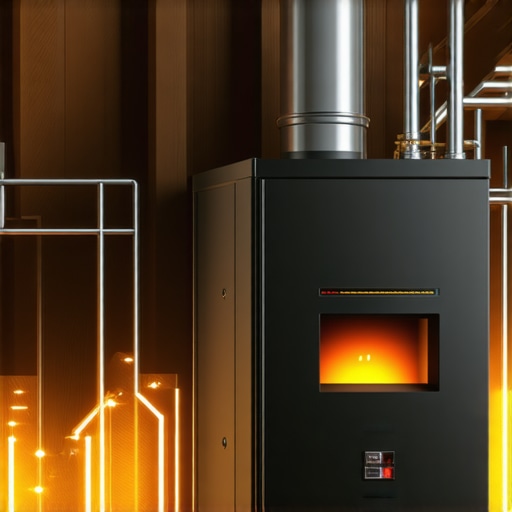
In the frigid North, where the polar vortex turns your heat pump into a glorified lawn ornament, a two-stage furnace is the only way to maintain ‘sensible heat’ equilibrium. A single-stage furnace is a caveman tool; it’s 100% fire or 0%. A two-stage unit, however, operates at about 65% capacity for about 80% of the time. This ‘Low-Fire’ mode is the secret to fixing cold spots. Because the furnace runs for longer cycles at a lower intensity, it gently mixes the air throughout the house, eliminating the ‘stratification’ where the floor is 55°F and the ceiling is 85°F. When the mercury truly drops into the negatives, the second stage kicks in to provide that 100% capacity punch. This is why identifying when furnace repair is urgent often starts with noticing those long run times—except with two-stage units, long run times are actually a feature, not a bug. They use less ‘juice’ (electricity) and keep the heat exchanger at a more consistent temperature, reducing the expansion and contraction cycles that lead to cracked heat exchangers.
[IMAGE_PLACEHOLDER]
The 2026 Regulatory Cliff and A2L Refrigerants
As we head into 2026, the industry is reeling from the R-410A phase-out. Even if you’re just looking for a furnace, you need to understand how this impacts your total system. If you’re opting for a dual-fuel setup—which combines a gas furnace with hyper-heat heat pumps—you’re now dealing with A2L refrigerants like R-454B. These are ‘mildly flammable,’ which means your new air handler repair or installation now requires leak sensors and spark-proof contactors. Don’t let a ‘trunk-slammer’ installer tell you it’s the same old process. If they don’t mention chimney liner installation for your 80% AFUE furnace or the specific venting requirements for a 96% high-efficiency condensing unit, they are setting you up for a CO2 leak or a basement full of acidic condensate. I’ve seen ‘Pookie’ (mastic) slapped over holes that should have been sealed with high-temp RTV, and that’s how you end up with a ‘sick building’ and a commercial furnace repair bill on a residential budget.
Maintenance: The Secret to Avoiding the $15,000 Quote
I despise ‘Sales Techs’ who walk into a house with a shiny clipboard and tell a homeowner they need a total replacement because of a ‘weak capacitor.’ Most capacitor replacement services are a 20-minute job that costs less than a fancy steak dinner, yet some companies use them as ‘entry drugs’ for a $15,000 system swap. However, there is a limit. If your heat exchanger has a hairline fracture, no warranty service plans in the world will make it safe. You’re looking at a carbon monoxide factory. This is why dryer vent cleaning and regular maintenance are vital; they reduce the back-pressure on the entire home’s envelope. To keep that new two-stage beast running, you need a smart thermostat setup that actually understands ‘staging.’ If you hook a $20 mercury-bulb thermostat to a $5,000 high-efficiency furnace, you’ve just turned a Ferrari into a lawnmower. The thermostat needs to communicate with the furnace’s control board to decide when to ramp up the blower speed and the gas pressure.
“Design conditions for heating shall be based on the 99% or 97.5% column for the city nearest the project.” — ACCA Manual J, Section 1-4
The Anatomy of a Modern Install: Don’t Get Burned
When we do a high-efficiency furnace installation, we aren’t just swapping boxes. We’re looking at the ‘Gas Train,’ the combustion air intake, and the drainage for the secondary heat exchanger. If you’re in a cold climate, that condensate line can freeze, backing up water into the furnace and frying the inducer motor. I’ve been on roofs repairing pool heater repair units and seen residential vents installed so poorly they look like a Dr. Seuss drawing. Proper installation means using a manometer to check gas pressure and a combustion analyzer to ensure you aren’t sending 20% of your fuel up the flue as unburned gas. This is the difference between a system that lasts 25 years and one that dies in 8. For those worried about long-term costs, top hvac repair strategies to extend your systems life always include keeping the ‘evap’ coil clean and ensuring the ‘Suction Line’ is ‘beer can cold’ in the summer—but in the winter, it’s all about the flame signal and the limit switches.
Final Verdict: Is Two-Stage Worth It?
If you enjoy hot and cold flashes like a malfunctioning sauna, stick with a single-stage unit. But if you want a house that actually feels ‘seamlessly’ warm (pun intended, despite the ban), the two-stage furnace is the only way to fly in 2026. It’s about more than just efficiency; it’s about the physics of comfort. Don’t let a ‘Sparky’ or a ‘Tin Knocker’ who doesn’t understand the Carnot cycle touch your system. Insist on a load calculation. Insist on a static pressure test. And for heaven’s sake, keep your ‘Pookie’ away from the limit switches. Comfort isn’t magic; it’s just moving BTUs from one place to another without breaking the laws of thermodynamics along the way.