The Great Thermodynamic Lie and the -22°F Reality
My old mentor, a man who had more silver in his hair than a brazing rod, used to scream at me in the middle of a frozen mechanical room, ‘You can’t heat what you can’t touch, and you can’t move what you don’t understand!’ He was talking about cold climate heat pumps, but more importantly, he was talking about the physics of energy transfer. For thirty years, the industry line was that heat pumps were glorified hair dryers that quit the moment the mercury hit freezing. If you lived in a place where the wind howls like a banshee in January, you were stuck with a gas-chugging furnace or expensive electric baseboards. But as we head into the 2026 winter, the hyper-heat heat pumps hitting the market have flipped the script. We are talking about pulling heat out of air that feels like a liquid nitrogen bath. At -22°F, there is still molecular motion—there is still heat—and these new machines are designed to find it, squeeze it, and dump it into your living room.
“The most expensive equipment in the world cannot overcome a bad duct system.” – Industry Axiom
We are currently facing what I call the Regulatory Cliff. The transition to A2L refrigerants is here, and if you are still looking at old 410A blueprints, you are already behind. The new 2025 and 2026 standards require sensors that can sniff out a leak before it becomes a hazard, especially with the ‘mildly flammable’ labels on the new gas. But the real magic isn’t just the refrigerant; it’s the flash-injection technology in the compressor. In a standard unit, as it gets colder, the density of the gas drops, and the compressor starts spinning its wheels. Hyper-heat heat pumps use a bypass circuit to inject a bit of liquid refrigerant back into the compressor, keeping the mass flow high even when the ambient temp is low enough to shatter a plastic shovel. This isn’t some ‘Sales Tech’ gimmick designed to pad a commission; it is pure thermodynamics. If you are looking at new construction heating design, you have to account for this shift. You can’t just slap a unit on a pad and hope for the best.
The Airflow Manifesto: Why Your Ductwork is Killing Your Comfort
I’ve walked into a thousand homes where the owner complains that their new ductless mini-split installation isn’t keeping up. Nine times out of ten, it’s not the machine; it’s the environment. In the North, we deal with the ‘Cold Wall Effect.’ You can have the thermostat set to 72°F, but if your humidity is at 15%, you’ll feel like you’re in a walk-in cooler. This is where steam humidifiers come into play. Unlike those cheap bypass pads that grow mold and waste water, a steam canister actually injects latent heat into the air stream. It makes 70°F feel like 75°F because it stops the moisture from evaporating off your skin. It’s the difference between a dry heat and a swamp, and in a -22°F winter, that humidity is your best friend. If you’re struggling with uneven temps, you might need a heating service innovation that addresses the actual physics of your home’s envelope.
Then there is the issue of static pressure. Every tin knocker knows that a duct system is a lung. If the return air drop is too small, the heat pump can’t ‘breathe.’ It starves. The compressor starts to labor, the amperage spikes, and eventually, you’re looking at a wiring repair for heating systems because the heat has cooked the insulation off the leads. I’ve seen two-stage furnace installation jobs where the installer didn’t even bother to check the total external static pressure (TESP). They just ‘guesstimated.’ That’s how you end up with a dead blower motor in three years. If you want to avoid the ‘Scam Tune-Up’ where some kid in a clean uniform tries to sell you a UV light you don’t need, you have to demand a manometer test. Numbers don’t lie, but sales quotas do. You can find more on this in our guide to AC and heating installation.
The Tech Debt: Occupancy Sensors and Smart Controls
Let’s talk about occupancy sensor installation. In 2026, we aren’t just heating rooms; we are heating people. Why are you dumping 30,000 BTUs into a guest bedroom that hasn’t seen a human since Thanksgiving? Modern hyper-heat systems integrated with occupancy sensors can dial back the frequency of the inverter when the room is empty. This isn’t just ‘green’ nonsense; it’s about reducing the ‘cycles per hour’ on your equipment. Every time a system starts up, it’s like a cold start on a diesel engine—that’s where the wear happens. By using sensors and variable-speed tech, we keep the system in a ‘low-idle’ state, maintaining a constant temp rather than the jagged teeth of a standard on/off cycle. This is particularly vital for geothermal heat pump systems, which rely on steady-state efficiency to pay back their high upfront cost.
“Heat pumps for heating shall be sized to provide the design heating load of the building based on local climate data.” – ACCA Manual S
I remember a call-back I did last February. A ‘Sparky’ had tried to wire a complex ductless mini-split and crossed the communication wires with the high voltage. It didn’t just blow a fuse; it fried the main inverter board. A $1,200 mistake because someone didn’t respect the low-voltage logic. These aren’t the ‘dumb’ furnaces of the 1990s. They are computers that happen to move heat. When you are dealing with wiring repair for heating systems, you need someone who understands DC voltage and signal noise, not just someone who knows how to use a wire nut. If your system is acting ‘ghostly’—shutting off for no reason or throwing cryptic error codes—it’s likely a communication issue, not a mechanical failure. Check out how to identify urgent furnace and heat pump repairs before the first frost hits.
The 2026 Winter Survival Strategy
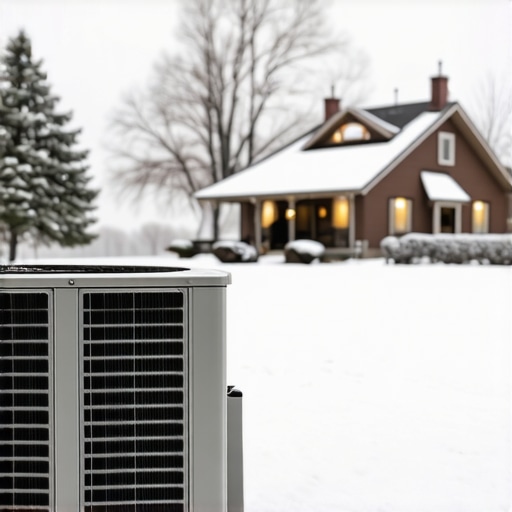
If you are planning to survive a polar vortex with a heat pump, you need to stop thinking about ‘blasting the heat.’ A hyper-heat system is a marathon runner, not a sprinter. If you drop the temp to 60°F while you’re at work and then try to crank it to 72°F when it’s -15°F outside, you are going to trigger the ‘auxiliary heat’ (those expensive electric strips). That is the fastest way to a $600 electric bill. The secret is to ‘set it and forget it.’ Let the inverter do its job. Let it find that sweet spot where it’s drawing minimal ‘juice’ while keeping the coil just above the threshold of a defrost cycle. And for heaven’s sake, keep the snow off the outdoor unit. I’ve seen units encased in ice like a prehistoric mammoth because the homeowner didn’t provide a proper ‘hat’ or stand for the unit. Airflow, airflow, airflow. If the fins are blocked with frost or ‘Pookie’ (mastic) is leaking out of your plenum, you’re losing money. For those looking to stay ahead of the curve, reviewing heating service hacks can save you a fortune before the 2026 deep freeze. Comfort isn’t magic; it’s a calculated victory over the laws of physics. Don’t let a ‘Sales Tech’ tell you otherwise. If you need real help, you can always contact us for a diagnosis that actually looks at the math, not just the commission check.