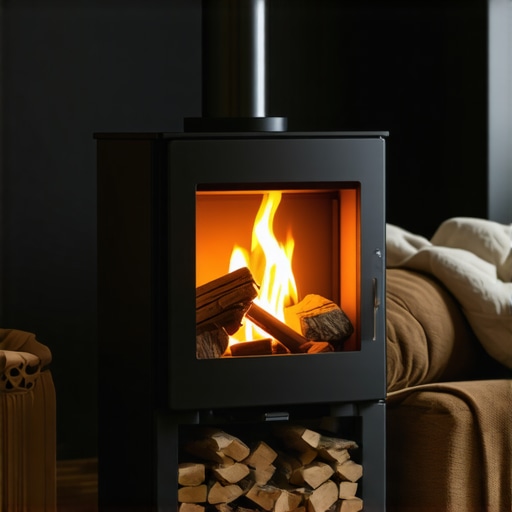
The Ghost in the Living Room: Why Your Pellet Stove is Back-Puffing
My old mentor, a guy who had soot permanently etched into his pores and carried a 4-foot pipe wrench like a shadow, used to bark at me: ‘If the air can’t move, the heat’s a ghost! You can’t heat what you can’t breathe, kid!’ He was a ‘Tin Knocker’ by trade but a physicist by necessity. He understood that whether you are dealing with restaurant kitchen exhaust repair or a small residential pellet stove, the laws of thermodynamics don’t take a day off. When your living room starts smelling like a campfire, it isn’t ‘ambiance’—it’s a failure of the pressure differential. A pellet stove is a precision-engineered combustion machine, not a campfire in a box. It relies on a delicate balance between the induction fan pulling oxygen in and the exhaust blower pushing combustion byproducts out. If that balance shifts by even a fraction of an inch of water column, you get smoke. This is the same logic we use in hospital HVAC zoning to prevent cross-contamination; we control the air, or the air controls us.
“The most expensive equipment in the world cannot overcome a bad duct system or improper venting.” – Industry Axiom
As we move into 2026, the tech inside these units is getting smarter, but the physics remains the same. If you’re seeing smoke, you likely have a ‘lazy flame’—that orange, flickering mess instead of a tight, blue-base torch. This usually means your fire pot is overflowing because the ‘gas’ (in this case, the air-fuel mixture) is rich. This is often the precursor to a larger system failure. Before you assume you need a total radiator replacement or a new heating plant, you need to look at the anatomy of the airflow. Most ‘Sales Techs’ will try to sell you a whole new unit for $5,000 when the issue is a $150 vacuum switch or a blocked OAK (Outside Air Kit).
The Forensic Diagnosis: Anatomy of a Smoking Stove
In my thirty years of melting in attics and crawling through crawlspaces, I’ve learned to treat a heating system like a living organism. The pellet stove has a heart (the auger), lungs (the blowers), and a brain (the control board). If your stove is smoking, one of these ‘organs’ is failing. Most often, it’s the lungs. The exhaust blower—the ‘tin’ part of the system—gets coated in fly ash. This increases the weight of the fan blades, slowing the RPMs just enough that it can’t overcome the static pressure of the vent pipe. This is why efficient HVAC repairs are the blueprint for a functioning home. You have to understand how to identify when furnace repair is urgent and why smoke in the home is a Level 1 emergency. It’s not just about the smell; it’s about carbon monoxide and the risk of a hopper fire.
“Ventilation systems shall be designed to ensure that the pressure within the combustion chamber remains negative relative to the room.” – NFPA 211 Standard for Chimneys, Fireplaces, and Vents
We also see issues with the vacuum switch. This is a safety device that tells the stove, ‘Hey, the exhaust fan is working, it’s safe to drop pellets.’ If your venting is restricted—perhaps by a bird’s nest or a heavy buildup of creosote—the switch won’t close. If a homeowner bypasses this (and I’ve seen some ‘Sparky’ types try to jump it with a piece of copper), you are inviting a disaster. This is as dangerous as ignoring a refrigerant leak detection alarm in a commercial chiller. You are playing with pressure and fire.
Fix 1: The ‘Deep Dive’ Combustion Chamber Cleanout
The first and fastest fix for a smoking stove in 2026 is the mechanical restoration of the burn pot and the exhaust path. You can’t just scrape the ash out; you have to look at the air intake holes. These tiny orifices often get plugged with ‘clinkers’—hardened mineral deposits from low-quality pellets. When these holes plug up, the ‘Thermodynamic Zooming’ effect occurs: the air velocity increases through the remaining holes, but the total volume of air drops. This creates an oxygen-starved environment. While you’re at it, check the gaskets. A leaking door gasket is the same as a hole in a steam boiler repair; it breaks the vacuum. If you can slide a dollar bill through your stove door when it’s latched, you’re losing static pressure. For more on maintaining this balance, check out preventative HVAC repair tips for year-round efficiency.
Fix 2: Resolving the Static Pressure Battle
If the stove is clean but still smoking, we look at the venting. In the HVAC world, we call this the ‘venting profile.’ Every 90-degree elbow you have in your pipe is the equivalent of adding 5 feet of straight pipe in terms of friction loss. If your ‘tin knocker’ installed too many turns, your exhaust blower is working too hard. In 2026, we are seeing more homeowners integrate their stoves with a smart thermostat setup. While this is great for efficiency, it can lead to ‘short-cycling’—where the stove turns on and off too frequently. This prevents the vent pipe from ever getting hot enough to establish a strong natural draft. If you’re in a cold climate like the Northeast or Chicago, that cold air in the pipe acts like a literal plug of ice. You need to ensure your baseboard heater repair and stove maintenance accounts for these thermal bridges.
Fix 3: Sensor Calibration and the R-454B Era
We are currently in the middle of the R-454B refrigerant transition services era, which is changing how we look at all home sensors. While R-454B is for cooling, the technology for ‘mildly flammable’ gas detection is trickling down into heating sensors. Modern 2026 pellet stoves use optical sensors to monitor flame quality. If that sensor is covered in soot, it tells the computer the fire is out, which leads to the auger overfeeding pellets. The result? A massive pile of unburnt fuel that eventually catches, creating a ‘smoke bomb’ effect. Cleaning your sensors is as vital as portable heater safety checks. If the ‘brain’ can’t see the fire, it can’t control the air. This is why we focus on heating service innovations transforming 2025 climate control; the sensors are the frontline of defense.
The Math: Repair vs. Replace in 2026
Is it worth fixing an old smoker? A professional cleaning and sensor recalibration might run you $300 to $500. A new, high-efficiency unit that meets the latest EPA standards for 2026 could be $4,000 plus installation. If your heat exchanger is warped or cracked, it’s game over. A cracked heat exchanger in a pellet stove is just as deadly as one in a gas furnace—it’s a direct path for CO to enter your lungs. If the bones of the stove are good, invest in the repair. If you’re looking at a major component failure like the main control board, you might want to consider the ultimate guide to AC installation logic: sometimes, the ‘juice’ isn’t worth the squeeze on a 15-year-old machine. If you’re also dealing with outdated heating, you might even look into spa heater services or radiator replacement to modernize the whole home’s thermal envelope.
Preventive Maintenance vs. The Scam Tune-Up
Don’t fall for the ‘Sales Tech’ who walks in with a flashlight and tells you that you need a new system because your flame is ‘too yellow.’ A real tech—a ‘veteran’—will pull out a manometer to measure the actual draft. They’ll check the amperage on your blowers. They’ll look for ‘Pookie’ (mastic) leaks in the vent joints. Real maintenance is about physics, not sales quotas. Whether it’s refrigerant leak detection or baseboard heater repair, the goal is always the same: efficiency and safety. If you’re unsure about your system’s health, learn choosing the right HVAC fixes before you sign any contracts. Comfort isn’t magic; it’s a well-calibrated machine doing exactly what the laws of thermodynamics demand.