The Sound of a Cold House: A Forensic Diagnosis
There is a specific kind of silence that happens at 3 AM in a northern winter. It is not the peaceful kind; it is the heavy, hollow silence of a furnace that has quit. You wake up, and the air feels ‘thin’ because the blower isn’t moving that 120-degree air. You walk to the thermostat, and that little ‘Heat On’ icon is blinking like a cry for help. Before you call a ‘Sales Tech’—those guys who wear clean uniforms and carry iPad brochures instead of pipe wrenches—you need to check the heart of your old-school gas beast: the pilot light. If you are running an older atmospheric furnace or a garage heater, that tiny blue flame is the only thing standing between you and a frozen pipe disaster.
I remember following a guy out to a call last winter. He was one of those ‘comfort advisors’ who hadn’t touched a manifold gauge in five years. He told a homeowner her furnace was ‘dead on arrival’ and quoted $12,000 for a new system because the pilot wouldn’t stay lit. He claimed the heat exchanger was shot. I walked in, saw the soot on the thermocouple, spent five minutes with a piece of Emory cloth, and the unit roared to life. He was selling a replacement; I was doing my job. That is the difference between an Airflow Architect and a salesman. Understanding the physics of thermocouple replacement and flame rectification saves you thousands.
“Proper sizing and installation of heating and cooling equipment are critical to maintain comfort and prevent system failure.” — ACCA Manual J
Step 1: The Sensory Safety Check & Gas Valve Prep
Before you go striking matches, you need to use your nose. Gas is odorless, but the mercaptan added to it smells like rotten eggs for a reason. If you smell that ‘sour’ gas odor, do not touch the Sparky’s light switch and do not try to light that pilot. You likely have a refrigerant leak detection level of urgency, but for your gas line. If the coast is clear, locate your gas valve. In 2026, we are seeing more hybrid setups where old furnaces are paired with cold climate heat pumps, but the pilot assembly remains a relic of the past. Turn the knob to ‘Off’ and wait five full minutes. This isn’t a suggestion; it is physics. You need any residual gas to dissipate into the draft hood before you introduce a flame.
Step 2: The Thermocouple Inspection (The Seebeck Effect)
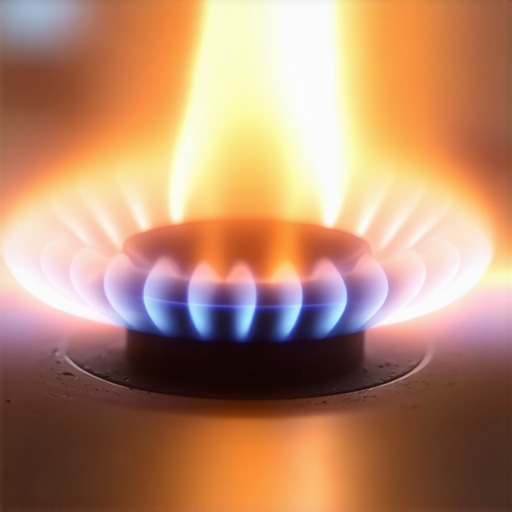
Why does a pilot light go out? Usually, it is a dirty thermocouple. This little copper rod is a heat-to-electricity transducer. It uses the Seebeck Effect to generate about 20 to 30 millivolts when heated by the flame. That tiny bit of juice tells the gas valve, ‘Hey, we have fire, it is safe to open the main burner.’ If the rod is covered in carbon or ‘Pookie’ (mastic residue), it won’t get hot enough. Take a flashlight and look at the tip of the thermocouple. It should be sitting right in the middle of the pilot flame’s path. If it looks like a burnt marshmallow, that is your problem. While you are down there, check your annual heating inspection records. If nobody has cleaned that orifice in two years, the flame will be lazy and yellow instead of a sharp blue ‘rooster tail.’
Step 3: The Relight and Hold Technique
Turn the knob to ‘Pilot,’ depress it, and use your long-reach lighter. Once the flame catches, do not let go of the knob immediately. I see rookies do this all the time. You have to hold that knob down for at least 60 seconds. You are waiting for that thermocouple to generate enough ‘juice’ to hold the internal solenoid open. In 2026, as we transition to R-454B refrigerant transition services and more complex electronic controls, these mechanical gas valves are becoming rare, but the logic remains the same. If the flame dies the second you let go, your thermocouple is likely shot, or your capacitor replacement services for the blower motor might be needed soon if the system is short-cycling and causing heat stress. Check out this guide on identifying urgent furnace repairs if the flame won’t stay lit after three tries.
“The most expensive equipment in the world cannot overcome a bad duct system.” — Industry Axiom
The 2026 Reality: R-454B and the Death of R-410A
If you are struggling with an old pilot light, you might be tempted to jump into a garage heater installation or a full system swap. Be warned: the industry has changed. We are now in the era of A2L refrigerants like R-454B. These are ‘mildly flammable,’ which means if you are upgrading to a cold climate heat pump, the installation requires new sensors and specific venting that older ‘Tin Knockers’ might not understand. This isn’t just about ‘topping off the gas’ anymore. It is about total system pressure and latent heat management. If your furnace is old enough to have a standing pilot, you should also be looking at steam humidifiers to keep your wood floors from cracking when the AFUE (Annual Fuel Utilization Efficiency) drops during a polar vortex. For more on these changes, see heating service innovations for 2025 and 2026.
When to Call the Vets
If you follow these steps and still have a cold house, the problem might be deeper. It could be a cracked heat exchanger (the ‘acidic’ smell of combustion gases is a giveaway) or a failed gas valve solenoid. Don’t be the guy who uses a portable heater and forgets about portable heater safety checks, leading to a tripped breaker or worse. Proper maintenance is cheaper than an emergency 2 AM call. I’ve seen restaurant kitchen exhaust repair jobs go sideways because people ignored simple airflow physics—don’t let your home be the next cautionary tale. If you need a pro who knows the difference between a real fix and a sales pitch, check our top repair strategies or contact us directly. Stop guessing and start measuring. Airflow is king, and heat is just a byproduct of doing the physics right.