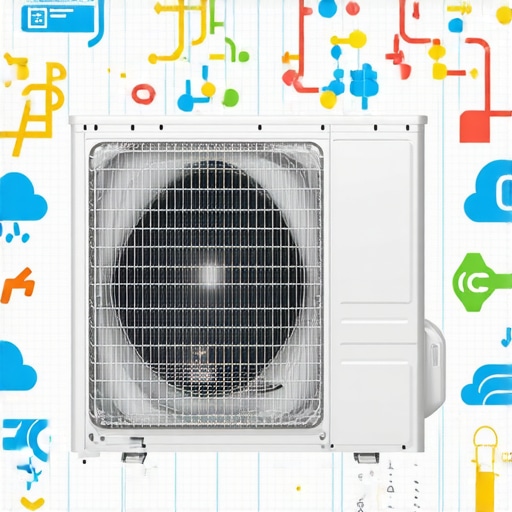
The Death Rattle of R-410A and the A2L Revolution
I recently followed a ‘Sales Tech’—one of those guys who spends more time in a mirror than in a crawlspace—who quoted a young couple $18,000 for a full system replacement because their compressor was ‘grounded.’ He told them the ‘juice’ was leaked out and 410A was illegal starting tomorrow. Total lie. I opened the panel, performed some basic control board diagnostics, and found a blown fuse and a 15-microfarad capacitor that had given up the ghost. Cost to the homeowner? Less than a steak dinner. But here is the catch: while that tech was a crook, he was right about one thing—the industry is about to hit a wall. By 2026, the R-410A systems we’ve installed for two decades will be the old dinosaurs, replaced by A2L refrigerants like R-454B. If you aren’t prepping now, you’re going to be left sweating in a cold swamp of high repair costs.
“The most expensive equipment in the world cannot overcome a bad duct system.” – Industry Axiom
In the humid trenches of the South, where the air is thick enough to chew, HVAC isn’t about temperature; it’s about latent heat. You can’t just ‘cool’ the air; you have to wring the water out of it like a wet rag. As we transition to R-454B, the physics changes slightly, but the goal remains the same: dropping that evaporator coil below the dew point without freezing the damn thing solid. R-454B is an A2L refrigerant, meaning it is ‘mildly flammable.’ Don’t let the sales guys scare you—it’s not a bomb—but it does require new sensors and different furnace repair services protocols to ensure safety. Here is how you stay ahead of the 2026 curve.
1. Stop the ‘Gas-and-Go’ Scam and Fix the Sealed System
If a technician tells you that your system just needs a ‘little bit of gas’ every year, he’s either lazy or a thief. A refrigeration circuit is a sealed system. If the ‘juice’ is low, you have a hole. Period. With R-410A prices already climbing as production phasedown begins, ‘topping off’ is the fastest way to drain your bank account. If you’re dealing with an older unit, especially something like a wall furnace installation or an aging split system, you need to decide: do you patch the leak now or prep for the R-454B swap? We are seeing heating service costs rise because the chemicals are getting scarcer. Use this time to have a real tin knocker check your static pressure. High pressure kills compressors, and a dying compressor in 2025 means you’re stuck buying a 410A unit that will be obsolete in 24 months. Check out these ac installation secrets to see how the pros avoid these pitfalls.
2. Master the Airflow: HRV and Variable Speed Logic
Airflow is the king, the queen, and the entire royal court. In humid climates, if your blower is moving air too fast, the air doesn’t spend enough time on the coil to drop the moisture. You end up with a house that is 70 degrees but 75% humidity—a cold swamp. This is why variable speed furnace services are non-negotiable for the 2026 transition. These systems can ramp down to prioritize dehumidification. Furthermore, with tighter homes, we’re seeing a massive need for heat recovery ventilators (HRV). An HRV allows you to bring in fresh air without the massive heat penalty, keeping your indoor air quality high while your R-454B system works efficiently. If you’re curious about how these innovations are changing the game, read up on heating service innovations.
“Design conditions shall be determined in accordance with the procedures described in the ASHRAE Handbook of Fundamentals.” – ACCA Manual J Section 1-4
3. Audit Your Secondary Systems: From Spas to Garages
While everyone is obsessed with the main AC, the real pros are looking at the periphery. Are you running spa heater services on an old, inefficient pilot light system? Is your garage heater installation leaking heat into your attic through bad ‘pookie’ (mastic) seals? Even ventless gas heater services need a second look as we move toward Energy Star heating certification standards. Everything in your home is part of the thermodynamic load. If your garage is 120 degrees because of poor insulation, that heat is migrating through the drywall into your living space, forcing your AC to work harder. When the new R-454B units arrive, they will be more sensitive to improper sizing. You cannot just ‘guess’ a five-ton unit anymore. You need a Manual J load calculation. For those who want to avoid the common traps, I recommend looking at these furnace repair myths to see what else the sales techs are lying to you about.
The Verdict: Don’t Wait for the 2026 Panic
When the clock strikes midnight on December 31, 2025, the R-410A era is effectively over for new equipment. The new R-454B systems will have ‘leak detection’ sensors and higher price tags due to the added tech. If your current system is screaming—literally, if you hear that metallic screech of a bearing failing—don’t wait for a total blowout in the middle of a July heatwave. Get your control board diagnostics done now. Whether it’s a wall furnace installation or a complex heat pump, knowing the state of your equipment is the only way to avoid being extorted by a ‘Sales Tech’ later. For a full breakdown of your options, see our ultimate guide to ac installation. Comfort isn’t magic; it’s physics. Keep your coils clean, your filters changed, and your suction line ‘beer can cold’—the right way.
http://Jeffrey%20Morgan
Reading this post really highlights the importance of not just reacting to HVAC issues but proactively preparing for the shift to R-454B and other A2L refrigerants. In my experience, many homeowners overlook the significance of controlling secondary heat sources, like poorly sealed garage doors or older spa systems, which can seriously undermine the efficiency of new systems. I’ve found that even minor improvements in sealing and insulation can dramatically improve system performance and longevity. Given the emphasis on airflow and dehumidification, I wonder how often HVAC professionals advise clients on integrating heat recovery ventilators (HRVs) with variable speed systems for optimal humid climate management? It seems crucial, especially here in the South, to consider these secondary factors now rather than waiting for 2026. How have others here approached these upgrades, especially in older homes where ductwork and secondary systems are less than ideal? Would love to hear some successful retrofit stories or practical tips.