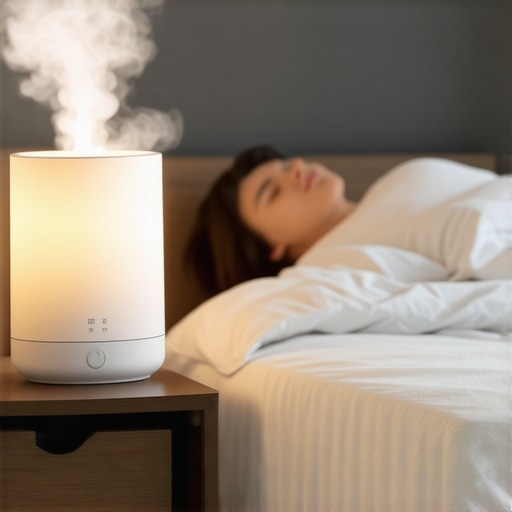
The Airflow Manifesto: Why Your Skin Is Screaming for Water
Your living room is 72 degrees, yet you are shivering, your knuckles are bleeding, and the cat is a walking static-electricity bomb. If you think your furnace is doing its job just because the fan is spinning, you have been misled by a ‘Sales Tech’ looking for a quick commission. My old mentor, a grizzled tin knocker from the era when we actually calculated loads with a slide rule, used to scream at me, ‘You can’t heat what you can’t touch!’ He was talking about air molecules, specifically the water hitching a ride on them. In the frozen trenches of a Northern winter, your HVAC system isn’t just a heater; it is a giant moisture-vacuum. When you crank that biomass boiler or fire up those heating service innovations, you are heating air that has zero moisture. The result? The air steals water from the only source available: you.
“Relative humidity affects the rate of heat loss from the human body by evaporation of moisture from the skin and through the lungs.” – ASHRAE Handbook of Fundamentals
1. Thermodynamic Comfort: Why 68° Feels Like 73°
In 2026, we are seeing a massive shift in how we handle indoor air quality. If you have been looking into garage heater installation or even high-efficiency church heating systems, you know that raw BTU output is only half the battle. Dry air is an insulator’s nightmare. Because water holds heat better than air, a home with 45% relative humidity feels significantly warmer at 68 degrees than a dry home at 72 degrees. By installing a whole-home steam or bypass humidifier, you allow the air to hold onto that sensible heat. This isn’t magic; it is psychrometrics. When the air is dry, moisture evaporates off your skin instantly, cooling you down. It is the same reason a 90-degree day in the desert feels fine, but a 90-degree day in a swamp feels like death. In the winter, we want that ‘swamp’ effect—minus the mold—to keep your skin from turning into parchment. This prevents you from constantly bumping the thermostat installation up, which saves your heat exchanger from unnecessary stress and delays the need for furnace repair.
2. The Dermatological Ductwork: Ending the Itch
Let’s talk about the ‘itch.’ Most homeowners think they need better lotion, but what they really need is a better plenum. When we perform a combustion analysis on a system, we are looking for efficiency, but we are also looking at how that heat is being delivered. Ventless gas heater services can provide quick heat, but they often mess with the moisture balance and air quality in ways that drive your skin crazy. A dedicated whole-home humidifier, integrated directly into your supply duct by a pro who knows how to use ‘Pookie’ (mastic) to seal the deal, ensures every room gets a balanced moisture load. This prevents the cracked lips and bloody noses that come from sleeping in what is essentially a kiln. If your crawl space heating solutions are pulling in dry, outside air, a humidifier is your only line of defense. Proper moisture levels keep your skin’s barrier intact, which is your body’s first line of defense against the winter flu.
“The most expensive equipment in the world cannot overcome a bad duct system or a lack of humidity control.” – Industry Axiom
3. Structural Preservation: Saving Your Wood and Your Wallet
I have walked into beautiful old churches with massive church heating systems where the wood pews were literally snapping in half. Why? Because the air was so thirsty it sucked the moisture out of the oak. Your home is no different. Hardwood floors, crown molding, and even the structural studs in your walls shrink when the RH drops below 20%. This leads to those annoying ‘house settling’ noises and gaps in your flooring. By ensuring your HVAC repair includes a humidity check, you are protecting the largest investment you own. In 2026, with the cost of materials skyrocketing, preventing wood rot and shrinkage is a financial imperative. We often see this in garage heater installation projects where people heat a space but don’t humidify it, causing their workbenches to warp and crack within a single season.
4. Static Reduction and Electronics Safety
We’ve all had that moment—you walk across the carpet, touch a light switch, and get zapped by a bolt that feels like it came from Zeus himself. In a dry house, static electricity is rampant. Not only is it annoying, but it is a silent killer for modern electronics. Your expensive smart thermostat installation or occupancy sensor installation can be fried by a static discharge. By maintaining a steady 35-45% humidity level, you create a conductive path in the air that allows static to dissipate harmlessly. This is especially critical if you are running complex biomass boiler services where the electronic controllers are sensitive to voltage spikes. Don’t wait for a 24/7 heating emergency response to realize your air is too thin; get a ‘Sparky’ or your HVAC tech to check the wiring on a new humidifier before the deep freeze hits. For more technical tips on keeping your system running, check out these preventative HVAC repair tips.
The Technical Truth: Steam vs. Bypass
Don’t let a sales guy talk you into a cheap plastic bypass unit if your house is over 3,000 square feet. A bypass humidifier relies on the pressure differential between the supply and return—it is ‘old school’ and often ends up as a leaky mess if the ‘tin knocker’ didn’t slope the drain right. Steam humidifiers, while more expensive, are the gold standard for 2026. They boil the water independently of the furnace run cycle, giving you precise control. This is the difference between a system that ‘kind of works’ and a system that makes your home feel like a luxury spa in the middle of a blizzard. If you are serious about your health and your home’s longevity, stop worrying about the ‘gas’ (refrigerant) for a second and start worrying about the water.