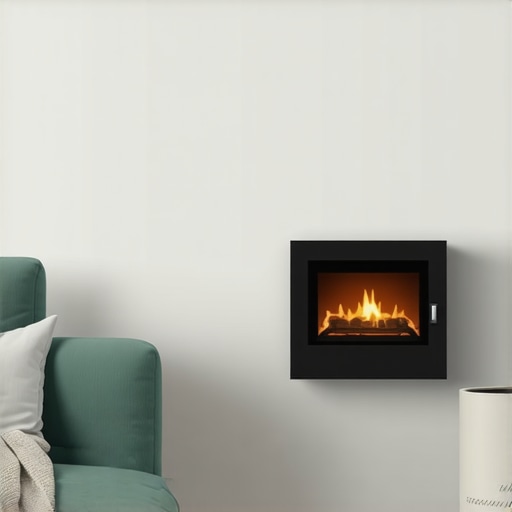
The Sound of a Cold Silence
There is a specific kind of silence that happens at 3 AM in a northern winter. It is not peaceful. It is the sound of a burner that refused to light and a blower motor that is just humming its own death knell. In my thirty years of crawling through crawlspaces and dragging manifolds across frozen gravel, I have seen it a thousand times. Most ‘Sales Techs’—those guys in the crisp white shirts who wouldn’t know a thermocouple from a hole in the wall—will tell you that silence means you need a $12,000 central system. They are usually wrong. When you are dealing with a studio apartment, a converted garage, or a tight guest house, the physics of a massive split system just do not make sense. That is why 2026 is seeing a massive resurgence in wall furnace installation. It is about right-sizing the heat for the space, not just selling the biggest box on the truck.
The Mentor’s Physics Lesson
My old mentor, a guy who had been a tin knocker since the days of coal furnaces, used to scream at me, ‘You can’t heat what you can’t touch!’ He was talking about airflow. In a small space, a central air handler is like trying to kill a fly with a sledgehammer. You end up with short-cycling, where the unit kicks on, blasts the room with hot air for three minutes, and shuts off before the walls even get warm. This leaves the room feeling drafty and drives the ‘gas’ or juice consumption through the roof.
“Proper sizing and selection of heating equipment are critical to ensuring both efficiency and occupant comfort in confined residential spaces.” – ASHRAE Standard 62.2
This is where the wall furnace wins the war. It relies on direct radiation and localized convection. It touches the air it’s meant to heat without losing 30% of its BTUs to leaky ducts in an unconditioned attic space. If you have been struggling with a chilly addition, choosing the right hvac fixes starts with understanding that horsepower doesn’t equal comfort.
The Mechanical Anatomy: A Forensic Diagnosis
If we look at a wall furnace like a living organism, we have to start with the heart: the heat exchanger. In a cold climate like Chicago or the Northeast, the heat exchanger is under constant stress. It expands and contracts every time that flame hits it. When I do a furnace tune-up services call, I’m not just vacuuming out dust. I’m looking for the hairline fractures that leak carbon monoxide into the room. A wall furnace is a simpler beast than a variable speed furnace, but its simplicity is its strength. There are fewer points of failure. No complex duct runs for a ‘tin knocker’ to mess up, and no massive blower motors that sound like a jet taking off in your living room.
However, simple doesn’t mean ‘set it and forget it.’ I recently walked into a job where a DIYer had tried his hand at a garage heater installation. He used the wrong venting material—single-wall pipe where he needed B-vent. The heat was backing up so hard it was melting the wiring repair for heating systems he’d tried to patch together with electrical tape. I had to tell him straight: you’re lucky you didn’t wake up dead. We performed a full combustion analysis to check the fuel-to-air ratio. If that flame isn’t a crisp, steady blue, you’re making soot and poison. This is why identifying when furnace repair is urgent is a life-saving skill.
The 2026 Shift: Technology Meets Small Spaces
Why are we talking about this for 2026? Because the ‘App-controlled heating systems’ revolution has finally hit the small-space market. We are no longer stuck with those clunky analog dials that are either ‘off’ or ‘surface of the sun.’ Modern wall units now integrate with thermostat installation that allows for precision scheduling. You can keep your garage at 45 degrees to keep the pipes from freezing, then crank it to 70 from your phone five minutes before you go out to work on the car. This level of control, combined with high AFUE (Annual Fuel Utilization Efficiency) ratings, makes these units a powerhouse for ADUs (Accessory Dwelling Units).
For those in the deep north, we are also seeing the rise of cold climate heat pumps as a secondary source. While a wall furnace handles the ‘sensible heat’ (the actual temperature you feel), a heat pump can be incredibly efficient until the mercury drops below zero. But when that polar vortex hits, you want the raw, reliable BTUs of a gas-fired wall unit. It is the ‘Suction Line’—the reliable backbone of your home’s climate.
“The most expensive equipment in the world cannot overcome a bad duct system, or the total absence of one where it is needed most.” – Industry Axiom
The Trap of the ‘Sales Tech’ and the Importance of Maintenance
I followed a guy last week who tried to sell a tenant a whole new mini-split system because the pilot light on their wall furnace kept blowing out. A $5,000 quote for a $150 fix. All it needed was a new thermocouple and a quick cleaning of the pilot orifice. This is why I preach preventative maintenance contracts. A real tech will look at the ‘Pookie’ (mastic) seals, check the gas pressure, and ensure the venting is clear of bird nests. If you ignore these basics, you’ll end up needing hvac repair strategies that cost more than the unit itself.
In dryer climates, people often confuse these needs with swamp cooler maintenance, but in our cold zones, it’s all about the heat. Whether you are looking at heating service innovations or just trying to survive the next freeze, the wall furnace is the unsung hero of 2026. It’s affordable, it’s efficient for small footprints, and when installed by someone who actually knows how to use a manometer, it’s the safest bet you can make. Don’t let a ‘Sales Tech’ tell you that you need a mansion-sized system for a cottage-sized life. Trust the physics, check your airflow, and keep your heat exchanger clean.