The Forensic Diagnosis of a Frozen Hearth
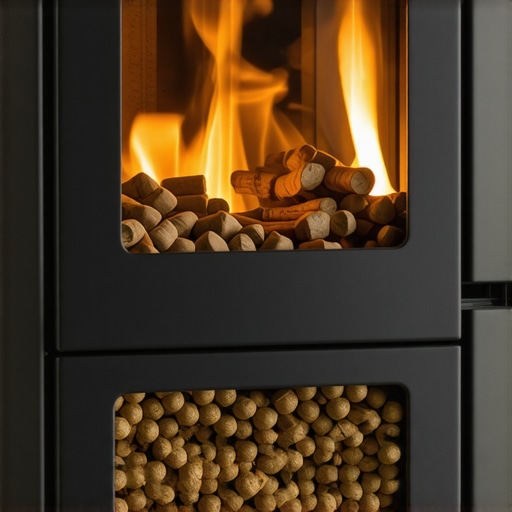
There is a specific kind of silence that only happens in the dead of a North Country winter. It’s not the quiet of a sleeping house; it’s the heavy, oppressive silence of a dead heating system when the mercury is bottoming out at ten below. I’ve spent thirty years listening to the hum of compressors and the roar of oil burners, but the most frustrating sound in the world for a homeowner is the ‘click-click-click’ of a pellet stove that refuses to feed the fire. You’re sitting there in a parkas, looking at a hopper full of fuel, while the burn pot remains bone dry. As an old-school technician, I’ve seen every shortcut and ‘sales tech’ scam in the book. Most guys will tell you the whole unit is shot and try to push a $5,000 replacement. But like my old mentor used to scream at me while we were crawling through sub-zero crawl spaces, ‘You can’t burn what you can’t touch, and you can’t touch what won’t move!’ This was his way of saying that in the world of thermodynamics, if the fuel delivery fails, the physics of heat exchange doesn’t mean a lick. Airflow and mechanical feed are the twin kings of the pellet world. If your stove is acting up, we need to perform a forensic breakdown of the mechanical anatomy before you spend a dime on new equipment.
“The most expensive equipment in the world cannot overcome a bad duct system—or in this case, a fundamental failure in the fuel delivery and exhaust vent logic.” – Industry Axiom
1. The Auger Jam: The Heart Attack of the System
The auger is the long screw-like mechanism that pulls pellets from the hopper and drops them into the fire pot. In my three decades, 90% of feed issues are just ‘pookie’—not the mastic we use for ductwork, but a slurry of sawdust and moisture that turns into a concrete-like substance inside the auger flighting. When pellets sit in a humid basement, they absorb moisture. When that damp wood meets the fine ‘fines’ (sawdust) at the bottom of the hopper, it jams the screw. You’ll hear the motor humming, trying to turn, but the mechanical resistance is too high. The Fix: You have to empty the hopper and manually clear the auger. Use a shop vac to suck out the fines. If the jam is severe, you might need a ‘tin knocker’ to help you navigate the vent logic, but usually, a good cleaning solves it. This is why top hvac repair strategies always emphasize fuel quality.
2. The Vacuum Switch: The Lungs That Won’t Breathe
Pellet stoves are high-tech beasts compared to old wood stoves. They rely on negative pressure. Inside the cabinet, there’s a vacuum switch connected to the exhaust transition by a small silicone hose. If the stove thinks it’s not venting properly, it will cut power to the auger motor to prevent carbon monoxide from backing up into your living room. In the North, where we deal with heavy snow and ice, your vent cap might be frosted over. If the ‘lungs’ of the stove can’t breathe, the ‘brain’ won’t let it eat. I’ve seen techs quote a motherboard replacement when it was just a spider web inside the vacuum hose. Check that hose for cracks or clogs before you call for urgent furnace repair.
3. The Failed Auger Motor: When the Muscles Give Out
If the auger isn’t jammed and the vacuum switch is closed, but the shaft still isn’t turning, your motor or gearbox has likely kicked the bucket. These motors are small, high-torque units that take a beating. You can test this by bypassing the sensors (only if you know what you’re doing—don’t blame me if you zap yourself) to see if the motor turns with direct ‘juice.’ If the motor is hot to the touch but the shaft is stationary, the internal gears are stripped. This is a common failure point in older units that haven’t had a preventative hvac repair in years. Replacing an auger motor is a surgical procedure, but it’s far cheaper than a whole new stove.
“A vent system shall be designed and installed so as to be gas tight and shall prevent the entry of flue gases into the building.” – NFPA 211 Standards
4. The High-Limit Snap Disk: The Fever Sensor
Every pellet stove has a safety device called a high-limit snap disk. It’s a bimetal sensor that ‘snaps’ open if the stove gets too hot, cutting power to the feed system. If your convection blower (the fan that blows heat into the room) is caked in dust, the stove will overheat and the snap disk will trip. In the HVAC world, we see this in furnace repair myths all the time—people think the unit is broken when it’s just protecting itself from a fire. If your stove runs for 15 minutes and then stops feeding, check your blowers and ensure the heat exchangers are clean.
5. The Pressure Switch and Exhaust Obstructions
In our cold Northern climate, ‘flame rollout’ and venting issues are lethal. If your exhaust pipe is restricted by fly ash, the pressure switch won’t engage. This isn’t just about the pellets; it’s about the physics of airflow. I’ve gone to jobs where a bird built a nest in the vent over the summer. The homeowner tries to fire it up in October, and nothing happens. We perform a combustion analysis to ensure the air-to-fuel ratio is correct. If the exhaust is blocked, the stove is just an expensive metal box. Clean your venting every single ton of pellets burned.
6. The Control Board Logic: The Confused Brain
Sometimes the issue is the ‘Sparky’ side of things. Modern stoves have control boards that monitor everything from the igniter pulse to the room temperature. If you have WiFi thermostat integration, a software glitch or a power surge could have fried the logic gates on the board. Look for blinking LED codes on the board. These are the stove’s way of crying for help. Before you replace a board, try a hard reset by unplugging the unit for ten minutes. You’d be surprised how often a ‘reboot’ fixes a feed issue.
7. Poor Fuel Quality: The ‘Wet Wood’ Syndrome
Not all pellets are created equal. If you bought the cheap bags that were stored outside at the big-box store, they might have a high moisture content. Wet pellets expand and crumble, creating a thick sludge that no auger can move. This is similar to why we recommend expert tips for installation: the quality of the input determines the longevity of the output. If your pellets are soft and swell when you squeeze them, get them out of your hopper immediately. You need hard, shiny pellets that snap when broken.
When to Call in the Pros vs. DIY
I’m all for a homeowner knowing their machine, but when you start dealing with choosing the right hvac fixes, you have to know your limits. If you’re smelling a sour, acidic scent—that’s the smell of an electrical component burning out. If you see smoke backing into the room, shut it down. Pellet stoves are great for supplemental heat, but they aren’t a replacement for a properly maintained system, whether that’s a professional ac installation or a propane conversion service for your main furnace. If you’ve checked the auger, the vacuum switch, and the fuel, and it still won’t feed, it’s time to call someone who knows the difference between a manifold and a miter saw. Stay warm out there, and remember: airflow is king.