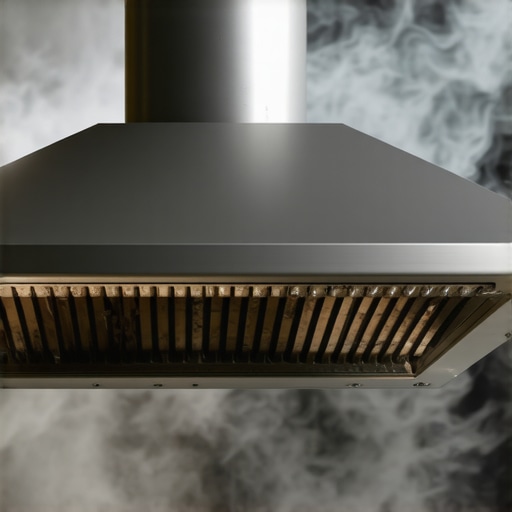
The Anatomy of a Kitchen Disaster
You can smell it before you even walk through the back door. It is not the smell of braised short ribs or fresh bread; it is the acrid, heavy scent of atomized grease and stagnant humidity. I have spent thirty years climbing grease-slicked ladders and crawling through ductwork that felt more like a cholesterol-clogged artery than a ventilation system. My old mentor, ‘Pop’ Johnson, used to grab me by the collar and point at a struggling rooftop unit. ‘Listen to the machine, kid,’ he would say. ‘You can’t cool what you can’t touch, and you can’t exhaust what you can’t move.’ Pop was a genius of static pressure. He taught me that 90% of cooling failures in restaurants start with the exhaust fan. If that fan is not pulling the latent heat—the moisture trapped in the air—out of the building, your AC is just spinning its wheels trying to fight physics it can’t win. This is the Forensic Diagnosis of a system on its deathbed.
“The most expensive equipment in the world cannot overcome a bad duct system.” – Industry Axiom
1. The Rhythmic Screech: Bearing Failure and Blower Motor Replacement
When a blower motor begins to fail, it does not go quietly into the night. It screams. That high-pitched metal-on-metal whistle is the sound of a bearing losing its lubricant. In a restaurant environment, the high ambient heat cooks the grease inside the motor bearings until it turns into a gummy resin. Once that happens, the motor has to work twice as hard to maintain the same RPMs. This is when the Sparky (our nickname for the electrician) gets called because you are suddenly tripping breakers. If you ignore that sound, you are looking at a total blower motor replacement. You aren’t just paying for the part; you’re paying for the emergency downtime during a Friday night rush. This is where top HVAC repair strategies come into play—catching a bearing before it seizes saves the shaft and the housing.
2. The ‘Curtain of Smoke’ and Static Pressure Imbalance
If your line cooks are squinting through a haze, your exhaust system has lost the battle against static pressure. Static pressure is the resistance your fan has to overcome to move air through the ducts. When grease builds up on the internal walls of the ductwork or on the fan blades, it increases the ‘drag.’ Mechanically, the fan might be spinning, but it is not moving the required Cubic Feet per Minute (CFM). This is why HVAC load calculation services are vital. Most restaurant owners don’t realize that adding a new high-output range or a charbroiler changes the entire thermodynamic profile of the kitchen. If your exhaust isn’t calibrated for that heat load, the smoke stays, and your IAQ improvement services become a moot point.
3. The Humidity Trap: Why the Kitchen Feels Like a Swamp
In humid climates like the South, a failing exhaust fan turns the kitchen into a literal sauna. This is where we look at the difference between sensible heat (the temperature on the thermometer) and latent heat (the energy in the water vapor). If the exhaust isn’t removing the steam from the dish machine or the boiling pots, the humidity levels skyrocket. Your AC unit’s evaporator coil will become overwhelmed trying to dehumidify the air, often leading to a frozen coil. This is a common diagnostic error where ‘Sales Techs’ will tell you that you need a new unit, but the reality is you just need your exhaust fan to do its job. For those managing larger facilities, even church heating systems with commercial kitchens face this exact physics struggle during large community events.
4. The R-454B Transition and the Makeup Air Crisis
As we move into 2025, the industry is dealing with the R-454B refrigerant transition services. This is the new ‘gas’ or ‘juice’ replacing R-410A. Why does this matter for your exhaust? Because your Makeup Air Unit (MAU)—the unit that replaces the air your exhaust sucks out—often uses refrigerant to pre-cool that incoming air. R-454B is an A2L refrigerant, meaning it is ‘mildly flammable.’ If your exhaust system is failing and causing air to backflow or stagnate, new safety regulations require refrigerant leak detection sensors and specific airflow triggers. If your exhaust fails, these new high-tech MAUs might shut down entirely to prevent a safety hazard. It’s a cascading failure that can be avoided with preventative HVAC repair tips.
“Standard 62.1-2022: Ventilation for Acceptable Indoor Air Quality requires that pressure relationships between spaces be maintained to prevent the spread of contaminants.” – ASHRAE Standards
5. The Vibration That Shakes the Office
If the manager’s office upstairs feels like it is in the middle of a minor earthquake, your exhaust fan blade is likely ‘out of round’ due to grease accumulation. Think of it like a tire out of balance on your truck. At high speeds, that weight imbalance creates centrifugal force that tears apart the fan’s mounting brackets and shakes the roof curbs. Eventually, this vibration can lead to cracks in the roof seal, letting rain in. We often use ‘Pookie’ (mastic) to seal up minor leaks, but you can’t Pookie your way out of a vibrating fan. This requires a professional cleaning and a balance check. Using occupancy sensor installation can help reduce this wear and tear by only running the fans at high speed when the kitchen is actually active.
6. Visible ‘Gunk’ and the Fire Hazard
If you see dark, oily streaks running down the side of your building from the exhaust fan, you are one spark away from a catastrophe. This grease is highly flammable. When the air is too thick with grease for the standard filters to handle, you need to look into HEPA filter systems for specialized areas or higher-grade grease extractors. This is a classic sign that your HVAC maintenance plans are either non-existent or being handled by someone who doesn’t know a wrench from a screwdriver. A real tech will check the ‘grease trough’ and ensure the drain line isn’t clogged.
7. Short Cycling and the Ghost in the Thermostat
If your kitchen AC is turning on and off every five minutes (short cycling), it might be reacting to the ‘hot spots’ created by a failing exhaust fan. The thermostat thinks the room is cool, but a pocket of 120-degree air is trapped against the ceiling because the exhaust isn’t pulling it out. This kills compressors. Replacing a compressor because you didn’t fix a $300 fan belt is the definition of a ‘Sales Tech’ victory. Instead, look into heating service hacks for 2025 to understand how modern controls can help balance these loads. Whether you are running a five-star bistro or maintaining church heating systems, the physics of airflow remains the same: you must maintain a negative pressure in the kitchen relative to the dining room to keep the ‘beast’ (the heat) contained.
The Verdict: Repair or Replace?
I always tell my clients: ‘Don’t buy a new engine if the tires are just flat.’ If your exhaust fan is under 10 years old, a blower motor replacement or a professional balancing is usually enough. But if your system was installed when R-22 was still the king of refrigerants, you are fighting a losing battle against efficiency. With the new 2025 regulations, upgrading to a system designed for R-454B with integrated occupancy sensor installation will pay for itself in utility savings within three years. Don’t let a ‘Sales Tech’ scare you into a $20,000 replacement without a full HVAC load calculation. Real pros look at the ductwork first. As Pop used to say, ‘The tin never lies.’ If the duct is collapsing or leaking, all the ‘juice’ in the world won’t keep your kitchen cool.