The Silence of a Cold Hopper: A Forensic Diagnosis
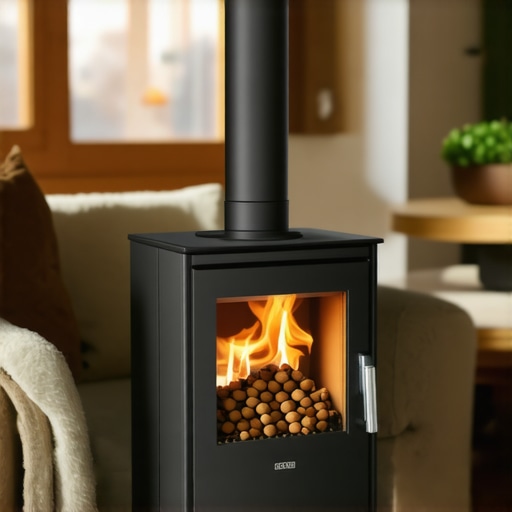
There is a specific kind of silence that haunts a technician during a Chicago January. It is not the peaceful silence of a sleeping house; it is the heavy, oppressive quiet of a heating system that has given up the ghost. When you walk into a living room and see a pellet stove sitting there like a dead piece of iron while the wind howls outside, you know you are looking at a failure of the fuel delivery system. As an HVAC veteran who has spent more nights in crawlspaces than in my own bed, I can tell you that a pellet stove that won’t feed is usually a victim of physics, not magic.
My old mentor, a man we called ‘Sarge’ who could troubleshoot a steam boiler by the smell of the condensate, used to scream at me, ‘You can’t make fire if you can’t move the fuel! This is why mechanical flow matters more than BTU ratings!’ He was right. Whether you are dealing with steam boiler repair or a high-efficiency pellet unit, the principles remain the same: if the delivery mechanism fails, the thermodynamics stop. In the world of heating, we often see folks overlook the simple mechanics of the auger because they are too busy worrying about smart thermostat setup or voice control setup Alexa Google. But when the house is 45 degrees, you need to understand the forensic anatomy of that stove.
“The integrity of the combustion air and fuel delivery path is the primary determinant of appliance safety and efficiency.” – ASHRAE Standards for Solid Fuel Heating
1. The Vacuum Switch: The Invisible Guardian
The most common reason a pellet stove stops feeding is the vacuum switch. Think of this as the ‘brain’ that ensures the exhaust fan is actually pulling air before it allows the auger to drop fuel. If the stove ‘thinks’ there is no airflow, it cuts the ‘juice’ to the auger motor to prevent a house full of smoke. I have seen hundreds of homeowners assume their motor is dead when they just had a bit of ash blocking the pressure tube. Take a small wire or a compressed air canister and clear that nipple. If that switch doesn’t close, the auger is nothing but a paperweight. This is a prime example of why preventative maintenance contracts are worth their weight in gold; we catch these blockages before the first frost hits.
2. The ‘Fines’ Trap: Why Dust Destroys Motors
If you reach into your hopper and pull out a handful of sawdust, you’ve found the ‘fines.’ Pellets are just compressed wood, and over time, they break down into a fine powder that acts like sand in a gearbox. This dust packs into the auger flighting and creates massive friction. Eventually, the torque required to spin the auger exceeds what the motor can provide, and you hear that sickening hum of a stalled winding. This isn’t just a stove issue; it is a fuel quality issue. Before you call for heating service hacks for comfort and savings in 2025, empty that hopper and vacuum out the ‘fluff.’ If you don’t, you’ll be looking at a burnt-out motor faster than a ‘Sparky’ can wire a subpanel.
3. The Auger Jam: Dealing with Foreign Objects
I once found a 1/2-inch bolt inside an auger assembly. No one knows how it got there, but it locked the system solid. When an auger jams, the motor tries to turn, gets hot, and the thermal overload protector kicks in. You need to physically inspect the feed chute. If you’ve been searching for efficient HVAC repairs: the blueprint for cooler summers and warmer winters, you’ll know that physical obstructions are the enemy of any moving part. Clear the jam, reset the motor, and pray you didn’t shear a pin.
4. The Lid Switch: The Simple Safety Fail
Many modern stoves won’t feed if the hopper lid is open. It’s a safety loop. Sometimes the switch gets bent, or a stray pellet keeps the lid from seating perfectly. It sounds stupid, but I’ve walked into houses where a ‘Sales Tech’ was trying to quote a $3,000 replacement system, and all I did was brush a pellet off the lid gasket. This is why you need to understand choosing the right HVAC fixes: what homeowners need to know. Don’t let someone sell you an inverter-driven compressor or a new furnace when your lid switch is just dusty.
5. The Auger Motor Capacitor: The Kickstart
If the motor hums but won’t turn, even without a jam, the start capacitor is likely shot. These little silver cans hold a charge to give the motor the ‘kick’ it needs to break the static friction of the pellets. In the freezing North, components get brittle. If the capacitor is dead, the motor has no torque. Replacing a capacitor is a ten-minute job, but if you don’t do it, the motor will eventually cook itself. It’s the same logic we use for thermostat installation or leak detector integration; the small components control the big ones.
“Failure to maintain proper venting and fuel delivery specifications can lead to carbon monoxide accumulation and equipment degradation.” – EPA Section 608 Mechanical Integrity Guidelines
6. Carbon and Soot on the Proof-of-Fire Sensor
The stove has a sensor (often a thermocouple or a low-limit switch) that tells the control board, ‘Hey, the fire is lit, keep feeding pellets.’ If this sensor is covered in soot, it stays cold. The board thinks the fire went out and stops the auger so it doesn’t bury the burn pot in unlit pellets. It’s a logic loop. Cleaning that sensor with a bit of steel wool is often the ‘secret’ fix. It’s the same level of precision required for a chimney liner installation; if the sensors can’t ‘breathe’ or ‘feel’ the heat, the system shuts down for safety.
7. The Control Board: The Logic Gate Failure
If you’ve checked the vacuum, the motor, and the sensors, and you still have no power to the auger, the control board has likely fried a relay. This usually happens during power surges or when the motor is struggling with a jam for too long. While you’re looking into heating service innovations transforming 2025 climate control, remember that older boards can often be repaired, but newer ones are ‘replace only.’ If you’re tired of the wood pellet life, this is often when folks start asking about propane conversion services or infared heater installation to supplement their heat.
The Thermodynamics of Comfort
In a cold climate, your heating system is a life-support machine. Whether it’s a pellet stove or a furnace, the physics of airflow and fuel delivery are king. If your unit is struggling, don’t just ‘top off the gas’ or ignore the sounds of a struggling motor. Consult the top HVAC repair strategies to extend your systems life and ensure you aren’t falling for furnace repair myths debunked by industry experts. When you need real help, you can always contact us to get a technician who knows the difference between a real fix and a sales pitch. Don’t let a ‘Sales Tech’ tell you that you need a whole new house when you really just need a clean auger and a fresh vacuum tube. Keep the ‘Pookie’ off the sensors and the fines out of the hopper, and you’ll stay warm through the worst the North can throw at you.