The Sound of a Dying Capacitor: A Diagnostic Post-Mortem
You hear that? It is a low, mournful 60-hertz drone coming from your outdoor condenser. It sounds like a beehive trapped in a steel box, but nothing is moving. No fan spin, no cool breeze, just a mounting sense of dread as the thermostat ticks upward. As a tech who has spent three decades dragging gauges through crawlspaces and over scorching roof shingles, I can tell you exactly what that sound is: it’s the sound of a motor that wants to work but has lost its kick. Most ‘sales techs’—those guys in the crisp white shirts who couldn’t tell a manifold from a macaroni—will hear that hum and immediately start talking about financing for heat pump installs or a total system replacement. They’ll tell you the compressor is ‘grounded’ or ‘locked rotor.’ Most of the time, they are lying through their teeth.
The Narrative of the $12,000 Capacitor
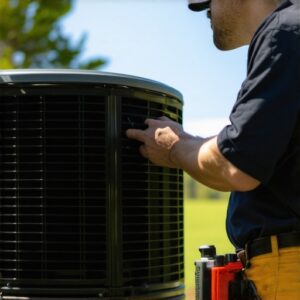
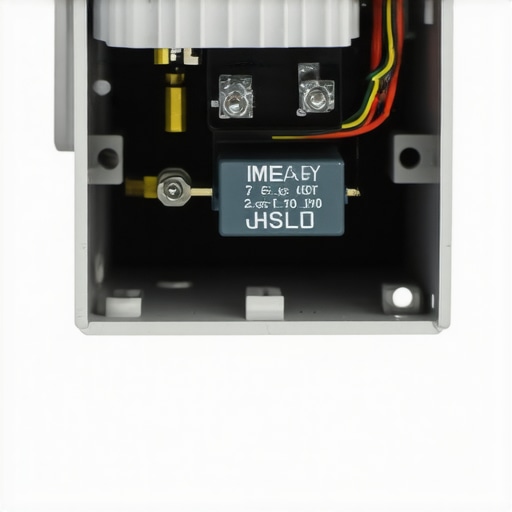
Last season, I followed one of these ‘Commission Kings’ to a job in the suburbs. A homeowner, let’s call her Martha, was sitting in a 85-degree living room with a quote for a full $12,000 system replacement. The sales tech told her the ‘guts were fried.’ I walked out to the unit, pulled the service panel, and there it was: a dual-run capacitor that had ‘popped its top’ like a cheap can of soda. The dielectric oil was leaking, and the top was bulged. I replaced that $25 part, cleaned the contactor, and the unit roared to life, pulling a perfect 12-amp draw. Martha didn’t need a new system; she needed an honest mechanic who understood phase-shift physics. This is why I preach the gospel of choosing the right HVAC fixes instead of falling for the first shiny brochure someone shoves in your face.
“The most expensive equipment in the world cannot overcome a bad duct system, nor can it function without the precise electrical phase-shift provided by a healthy capacitor.” – Industry Axiom
The Physics of the ‘Kick’: Why the Capacitor Matters
In our northern climate, where we transition from heavy gas furnace repair seasons into the sudden humidity of summer, your AC takes a beating. The capacitor is essentially a temporary battery that provides the ‘torque’ or the ‘kick’ needed to get the compressor and fan motor spinning. Because single-phase residential power doesn’t naturally create a rotating magnetic field, we use the capacitor to create a second ‘phase’ by shifting the electrical sine wave. It’s the difference between trying to start a bicycle from a dead stop on a hill versus having someone give you a massive shove.
When that capacitor fails—often due to the high ambient heat or just plain old age—the motor sits there, energized but motionless. This is called ‘Locked Rotor Amps’ (LRA). The motor is drawing maximum current, turning all that electricity into heat instead of motion. If you let it hum for too long, you will actually cook the internal windings of the compressor, turning a simple repair into a legitimate need for furnace repair services or a new condenser. If your unit is struggling, you should look into how to identify when furnace repair is urgent before the heat kills your ‘juice’ pump.
The Forensic Anatomy of Failure
When I’m performing a combustion analysis on a furnace or checking a condenser, I’m looking for the ‘telltale heart’ of the system. In a cooling unit, that is the contactor and the capacitor. Thermodynamic Zooming tells us that if the evaporator coil can’t drop below the dew point because the compressor isn’t spinning, you aren’t removing latent heat. You’re just moving hot, humid air. In a cold climate like ours, the stress of the winter often masks these issues. We spend all winter focusing on heat exchanger cleaning and baseboard heater repair, but the moment that first 80-degree day hits, the electrical components of the cooling side are put under massive load.
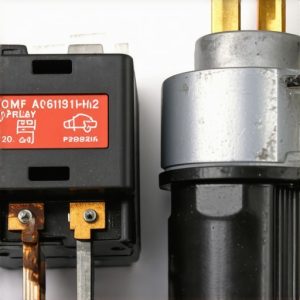
Is it always the capacitor? No. Sometimes it’s the contactor—the high-voltage relay that snaps shut when the thermostat calls for cool. I’ve seen ants crawl into those contactors and get fried between the points, preventing the ‘juice’ from reaching the motor. It smells like burnt vinegar and ozone. If the contactor is pitted and charred, your compressor is struggling to get clean power. This is why preventative maintenance contracts are worth their weight in gold. We catch the ‘pop-top’ capacitors before they leave you sweating at midnight on a Saturday.
The Cold Climate Reality: Furnaces and Mini-Splits
In regions where gas furnace repair is a way of life, we often see ‘zombie systems.’ These are units that have been neglected because the homeowner was too focused on their spa heater services or dryer vent cleaning. But your HVAC system is an ecosystem. If your furnace filter is clogged, your AC evaporator coil will freeze into a block of ice. When that ice melts, it can short out the very electrical components we’re talking about. For those looking for more efficiency, a ductless mini-split installation is a great alternative because they use ‘Inverter’ technology—meaning they don’t rely on these old-school, failure-prone capacitors. They ramp up and down smoothly, like a dimmer switch instead of a heavy industrial toggle.
“Equipment shall be sized according to the heating and cooling loads calculated in accordance with ACCA Manual J.” – ASHRAE Standard 6.2
Repair vs. Replace: The Mechanic’s Math
When I see a system that’s 15 years old with a failed capacitor, I don’t automatically tell the customer to scrap it. If the ‘suction line’ is still ‘beer-can cold’ and the compressor isn’t pulling high amps, a $500 repair (including labor and a full system health check) is a better investment than an $8,000 replacement. However, if I find a cracked heat exchanger during a routine gas furnace repair, or if the compressor has actually ‘grounded’ to the frame, we have to talk about the ‘Regulatory Cliff.’ With the 2025 transition to A2L refrigerants, the old R-410A units are becoming dinosaurs. You can find out more about these shifts in heating service innovations transforming 2025.
The Airflow Manifesto
You can have the best capacitor in the world, but if your ‘Tin Knocker’ (duct guy) didn’t size the return air properly, your system is suffocating. I’ve walked into houses where the owner complained about ‘bad units,’ only to find they had covered their vents or hadn’t had a dryer vent cleaning or duct inspection in a decade. High static pressure is the silent killer of compressors. It makes the motor work harder, which generates more heat, which kills the capacitor faster. It’s a vicious cycle of physics that no ‘Sales Tech’ will ever explain to you because they’d rather sell you a new box than fix your air-starved ducts. If you want the real story, check out AC installation secrets that HVAC pros won’t tell you.
At the end of the day, comfort isn’t magic—it’s mechanics. Whether you need baseboard heater repair to survive the winter or a quick capacitor swap to get through a heatwave, you need someone who respects the equipment. Don’t let a hum turn into a heartbreak. Get a tech who knows the difference between a minor electrical glitch and a terminal mechanical failure. Stay cool, keep your coils washed, and never trust a tech who doesn’t carry a multimeter.