The Sound of a Dying Breaker and the Smell of Failure
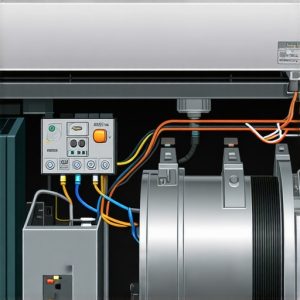
You’re sitting in your living room, the heat outside is a punishing 112°F, and you hear it: the clunk-snap of a breaker tripping in the panel. The silence that follows is deafening. You reset it, but twenty minutes later, it’s back to the same mechanical heartbeat of failure. Most homeowners think it’s just a bad breaker, or maybe a “Sparky” didn’t size the wire right. But as someone who has spent thirty years crawling through blown-in insulation and dragging manifold gauges across blistering rooftops, I can tell you that the breaker isn’t the problem—it’s the messenger. It’s telling you that your compressor is gasping for breath, trying to pull more “juice” than your electrical system can handle. Specifically, it’s likely struggling with inrush current, a phenomenon that traditional single-stage units treat like a sledgehammer to your electric bill and your equipment’s lifespan.
“The most expensive equipment in the world cannot overcome a bad duct system.” – Industry Axiom
I remember following a ‘Sales Tech’ out to a job in the high desert last August. This guy was wearing a crisp white shirt without a single smudge of Pookie on it—that was my first red flag. He’d quoted a retired shop teacher $18,500 for a full system replacement because the breaker kept tripping. He told the guy the compressor was “grounded.” I walked in, pulled the service disconnect, and smelled it immediately: that sour, acidic stench of a capacitor that had literally boiled over. It wasn’t a dead compressor; it was a $40 part and a restricted return air duct that was causing the unit to work itself into a frenzy. I caught the Sales Tech in the driveway and told him to find a new career before I reported his license. This is why you need a technician, not a salesman. We look at the physics, not the commission check. Sometimes, the fix is as simple as preventative maintenance, but more often than not, if you have a recurring breaker issue, you are facing a fundamental flaw in how your system handles heat loads.
The Anatomy of the Trip: Why the Current Spikes
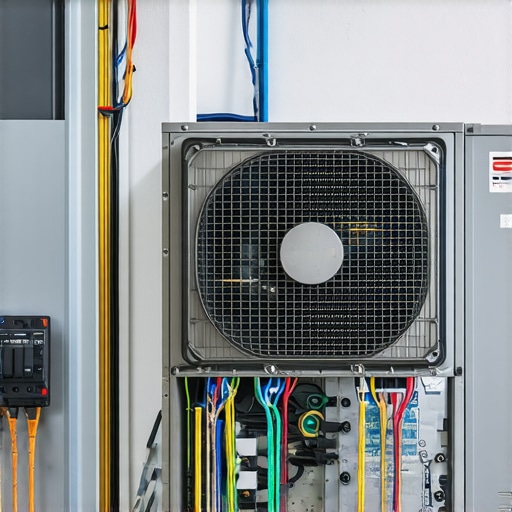
To understand the solution, you have to understand the mechanical anatomy of your AC. Your compressor is the heart of the system. Its job is to take low-pressure, cool refrigerant gas from the suction line (which should be “beer can cold” if the charge is right) and compress it into a high-pressure, hot gas. In a standard single-stage unit, the motor is either 0% or 100%. When it kicks on, it requires something called Locked Rotor Amps (LRA). This is a massive surge of electricity needed to break the inertia of the motor and start the compression cycle. If your condenser coils are caked in desert dust or your ductwork is restricted, the head pressure rises. The higher the pressure, the harder the compressor has to work. When that LRA hit happens on a system that is already struggling, the heat inside the wires causes the breaker to trip to prevent a fire. It’s a safety feature, but it’s also a symptom of a system that is fundamentally inefficient for our climate.
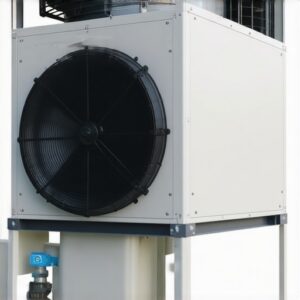
In the Southwest, we deal with sensible heat that can bake a capacitor in a single afternoon. When the ambient temperature hits 110°F, the temperature inside your condenser cabinet can reach 140°F. This is where inverter-driven compressors change the game. Unlike the old-school “thumpers” that slam on at full speed, an inverter-driven system uses a variable frequency drive to soft-start the motor. It ramps up slowly, avoiding that massive electrical spike. It’s the difference between flooring a car from a dead stop and gradually accelerating onto the highway. By modulating the speed of the compressor, these units can maintain a constant temperature, removing latent heat (humidity) during our monsoon season without short-cycling. Short-cycling is the silent killer of HVAC; it doesn’t allow the evaporator coil to stay below the dew point long enough to actually dehumidify the air, leaving you with a house that feels like a cold swamp.
The Inverter-Driven Solution: Thermodynamic Zooming
Let’s do some thermodynamic zooming. When your system is running, the refrigerant is undergoing a phase change. In the evaporator coil inside your home, the liquid refrigerant evaporates into a gas, absorbing heat from your indoor air. If you have an inverter-driven compressor, the system can “see” that your house only needs a little bit of cooling to stay at the setpoint. Instead of shutting off and waiting for the house to heat up again, the inverter slows the refrigerant flow. This keeps the coil at a steady temperature and provides superior air purification integration because the air is constantly being pulled through your high-efficiency filters rather than sitting stagnant. This constant airflow is vital. When a Tin Knocker installs your ducts, they are designing a path for air, but if that air isn’t moving because the unit is off, the air quality drops instantly.
“The design of the duct system shall be based on the calculated heat gain and heat loss of the structure.” – ACCA Manual J
If you’re tired of the breaker tripping, you might also look into cold climate heat pumps, which use this same inverter technology to provide heat even when the mercury drops. In our region, we often see people switching from old gas furnaces to these high-efficiency heat pumps. However, if you’re sticking with gas, a two-stage furnace installation paired with an inverter AC is the gold standard. The two-stage furnace handles the dry winter chill without blasting you with scorched air, while the inverter AC handles the summer sun. And don’t forget the remote thermostat access; being able to monitor your system’s amp draw and performance from your phone can alert you to a failing bearing or a clogged filter before the breaker ever has the chance to trip.
The Math of the Mechanical: Repair vs. Replace
I get asked all the time: “Is it worth fixing my old 410A unit?” Here is the cold, hard truth. A repair on a grounded compressor or a major refrigerant leak can easily run you $2,000 to $4,000. For an old unit that is already tripping the breaker, you are essentially putting a band-aid on a terminal patient. An inverter-driven system might cost more upfront, but when you factor in the 30-50% reduction in your energy bill and the fact that you won’t be calling me at 2 AM on a Sunday, the ROI is clear. This is why I advocate for priority service memberships. A real technician will check your capacitors, wash your condenser coils, and check the static pressure of your ductwork twice a year. We catch the small things—the pitted contactor, the loose wire nut, the slight screech of a motor bearing—before they turn into a catastrophic failure.
We also need to talk about the transition to heating. Even in drier climates, furnace tune-up services are non-negotiable. I’ve seen too many cracked heat exchangers that started as a simple airflow issue. If your AC was tripping the breaker all summer, your blower motor was likely overheating, too. That same blower motor is what moves the heat from your furnace. If you ignore it, you’re looking at a furnace repair emergency in January. Whether it’s gas line installation for furnaces or radiant floor heating installation, the physics remains the same: you cannot move heat efficiently if your equipment is fighting against itself. Stop letting ‘Sales Techs’ sell you a box; start investing in a system that respects the laws of thermodynamics.
If you are ready to stop the cycle of resetting breakers and start experiencing actual comfort, it is time to look at an inverter-driven solution. Don’t wait for the “thumper” to die in the middle of a record-breaking heatwave. Contact us today for a real diagnostic that looks at your whole home, not just the nameplate on the unit.