The Curse of the Freezing Bonus Room
You know the room. It’s that space over the garage or the converted attic where your slippers feel like ice blocks and you can see your breath in January. Most homeowners think the solution is to call a ‘Sales Tech’ who will try to sell them a $15,000 whole-home system upgrade. But as a guy who’s spent thirty years crawling through blown-in insulation, I’m here to tell you that’s a load of horse hockey. My old mentor used to scream at me, ‘You can’t cool—or heat—what you can’t touch!’ This is the fundamental law of airflow. If the air doesn’t reach the room with enough velocity and mass, the horsepower of your main furnace is irrelevant. Bonus rooms are notorious for having terrible static pressure because some Tin Knocker thirty years ago decided to run a single six-inch flex line forty feet from the plenum with three 90-degree bends. You’re not getting heat; you’re getting a gentle whisper of lukewarm air that dies before it hits the floor. This is why wall furnace installation is the surgical strike you actually need.
“The most expensive equipment in the world cannot overcome a bad duct system.” – Industry Axiom
The Physics of the ‘Ghost Room’
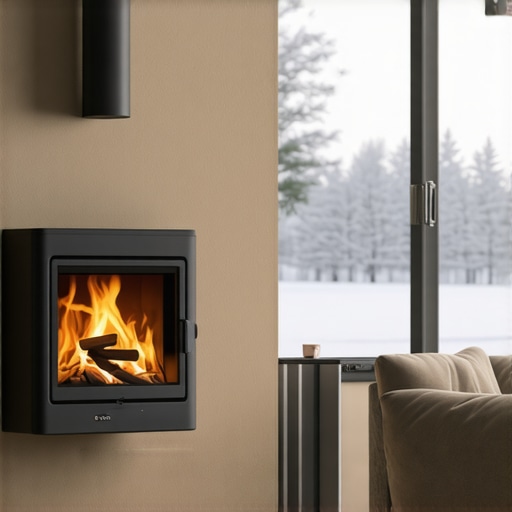
In the North, where the polar vortex likes to park itself, the enemy is the cracked heat exchanger and the simple fact that heat rises, but it also escapes through every uninsulated rim joist. When we talk about HVAC repair for a bonus room, we aren’t just looking at the thermostat. We’re looking at the thermal boundary. A bonus room over a garage is surrounded by cold air on five sides. Your central system is already struggling to maintain the set point in the main living area. By the time the ‘juice’ (the heat energy) travels through those restricted ducts, it has lost its sensible heat. This is where static pressure testing reveals the truth: your main blower motor simply can’t push enough CFM (Cubic Feet per Minute) to overcome the friction of those long runs. Instead of stressing your main unit into an emergency heating repair situation, a dedicated wall furnace provides localized, high-intensity heat. It operates on the principle of direct convection. The heat exchanger gets hot, the air passes over it, and it dumps heat exactly where you are sitting, not into the crawlspace.
Why Wall Furnaces Beat Central HVAC Expansion
I’ve seen guys try to ‘fix’ this by cutting a new register into the existing trunk line. All they do is steal air from the master bedroom and drop the static pressure for the rest of the house. It’s a rookie mistake. A wall furnace is a self-contained unit. Whether it’s a gravity-fed model or a direct-vent forced air unit, it doesn’t care about your main ductwork. For those looking at shop heater services or heating an outbuilding, the logic is the same. You need a dedicated heat source that can handle the high heat loss of a poorly insulated perimeter. If you’re worried about safety, modern wall units have come a long way from the ‘fire-boxes’ of the 70s. They use sealed combustion, meaning they pull air from outside and vent the exhaust outside, keeping your indoor air safe from carbon monoxide. This is much more reliable than trying to daisy-chain hydronic heating systems into a room that wasn’t plumbed for it. According to choosing the right HVAC fixes, localized solutions often provide the best return on investment for comfort.
“Standard duct design often fails to account for the thermal boundary complexities of rooms situated over unconditioned spaces.” – ACCA Manual J Reference
The Technical Grit: Maintenance and Longevity
Let’s talk about the guts of these things. One of the most common service calls I get for wall units involves pilot light relighting or furnace flame sensor cleaning. These are simple components, but they are the heart of the system. The flame sensor is a rod that uses the flame to conduct a small micro-amp signal to the control board to prove that a fire actually exists. If that rod gets a layer of carbon or oxidation, it won’t ‘see’ the flame, and the unit will shut down for safety. I’ve seen commercial furnace repair companies charge five hundred bucks just to rub a piece of Scotch-Brite on a sensor. It’s a scam. You need a tech who understands the difference between a real failure and a dirty component. Regular maintenance on these units is minimal compared to a full system, but it’s critical. You should also be aware of refrigerant leak detection if you opt for a mini-split instead, but for pure heating power in a northern climate, gas-fired wall furnaces are hard to beat. If you are experiencing issues, check out furnace repair myths debunked by industry experts to avoid getting hosed by a sales tech.
Thermodynamics of Comfort: Latent vs. Sensible Heat
In a cold bonus room, we are fighting sensible heat loss. The walls are cold, the floor is cold, and you feel that ‘chill’ even if the air temperature says 70 degrees. This is because your body is radiating heat toward the cold surfaces. A wall furnace provides radiant warmth that heats the objects in the room, not just the air. This is a key part of efficient HVAC repairs. When we install these, we ensure the venting is perfect. If the venting isn’t right, you’ll get flame rollout or moisture buildup. I always tell homeowners that ‘Pookie’ (mastic) and proper tin-work are the only things standing between them and a frozen pipe. If you have a bonus room that is currently a walk-in freezer, stop trying to tweak a central system that wasn’t designed for the load. Go with a wall furnace. It’s the veteran move. It saves your main unit from overworking, it lowers your utility bills, and it actually works. For more on keeping your system running long-term, see top HVAC repair strategies.