The Sound of a Failing System at 3 AM
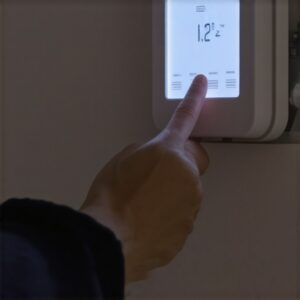
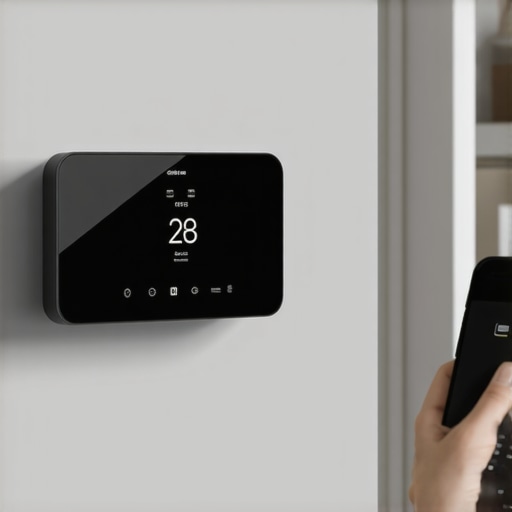
I have spent three decades listening to the death rattles of furnaces in the middle of a Chicago-style deep freeze. There is a specific sound an inducer motor makes when it is about to quit—a high-pitched whine that tells me the homeowner is about to have a very cold, very expensive morning. But these days, technology allows us to catch those whispers before they turn into screams. Remote thermostat access is not just a gadget for people who like to play with their phones; it is a diagnostic window into the mechanical soul of your HVAC system. When you can monitor your home temperature from a beach in Mexico, you are actually monitoring the health of your inverter-driven compressors and your heat exchanger. If that temperature starts creeping down despite a 72-degree setpoint, you know the furnace is losing the war against the frost long before the pipes burst.
The Physics Lesson: Why Airflow is King
My old mentor, a grizzled veteran we called ‘Big Sal,’ used to slam his hand against a poorly sized return air drop and scream, ‘You can’t move BTUs if you don’t move CFM! You can’t cool what you can’t touch!’ He was right. Most people think HVAC is about blowing cold or hot air, but it is actually about heat transfer. If your gas furnace repair needs are piling up, it is likely because your airflow is choked. Static pressure is the silent killer. A whole-home humidifier that hasn’t seen a new pad in three years or a bypass humidifier repair that was botched by some ‘Tin Knocker’ who didn’t know his head from a hole in the ground will restrict that airflow, forcing your blower motor to work twice as hard until it literally cooks itself.
“The most expensive equipment in the world cannot overcome a bad duct system.” – Industry Axiom
The Remote Access Advantage in Cold Climates
In the North, we deal with the ‘Polar Vortex’ effect. When the mercury drops to -20°F, your system is under maximum stress. This is where remote access becomes a lifesaver. By tracking run times, you can see if your system is ‘short cycling.’ If I see a unit turning on and off every six minutes, I don’t need to be in the mechanical room to know that the furnace flame sensor cleaning was skipped, or worse, the heat exchanger cleaning is overdue because the secondary is plugged with soot. If you’re curious about how these systems fail, check out our guide on how to identify when furnace repair is urgent. Remote access gives you the data, but you still need the mechanical integrity to back it up.
The Anatomy of a High-Efficiency Machine
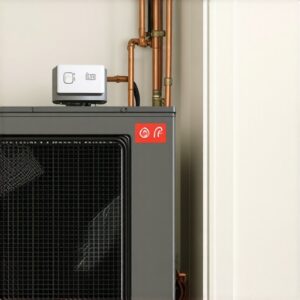
Modern heating is a different beast than the cast-iron boilers of the 70s. We are looking at inverter-driven compressors that can ramp up and down in 1% increments and furnaces with Energy Star heating certification that squeeze every ounce of energy out of the gas. But here is the catch: these systems are sensitive. A wall furnace installation in a tight crawlspace requires precision. If your HVAC load calculation services were done on a napkin instead of a proper Manual J, your expensive inverter unit will never reach its rated efficiency. It will be like putting a Ferrari engine in a lawnmower. You need to understand the expert tips for 2025 success when it comes to high-tech installs. Without proper sizing, your smart thermostat is just a fancy clock on a failing wall.
The ‘Sales Tech’ Scam and Real Maintenance
I despise ‘Sales Techs.’ You know the type—they show up with a clean uniform and a iPad, spend five minutes looking at your unit, and tell you that you need a $15,000 replacement because your ‘juice’ is low. Listen to me: it is a sealed system. If the refrigerant (the gas) is low, you have a leak. Topping it off is a band-aid. A real tech will check the furnace flame sensor cleaning, verify the manifold pressure on a gas furnace repair, and actually pull the blower wheel to check for balance. If they aren’t looking at your heat exchanger for cracks with a borescope, they aren’t doing their job. They’re just trying to hit a quota. For more on this, read about furnace repair myths debunked.
“Proper sizing and installation are the most important factors in determining the efficiency of central air conditioning and heating systems.” – Energy Star Heating Guidelines
The Humidity Factor and Thermal Comfort
In the winter, the air in the North gets so dry it starts stealing moisture from your skin and your hardwood floors. This is why whole-home humidifiers are mandatory, not optional. But a humidifier is a water-based system inside a metal box—it’s a recipe for disaster if not maintained. If you see white crusty buildup on your bypass humidifier repair site, that’s calcium. That calcium will eventually clog your drain line and flood your furnace circuit board. I’ve seen $800 boards fried because a $10 water panel wasn’t changed. Comfort is a balance of sensible heat (the temperature) and latent heat (the humidity). If your remote thermostat says it’s 72 but you feel cold, your humidity is likely at 15%. You need to get that up to 35% to feel the ‘warmth’ you’re paying for.
The 2025 Regulatory Cliff
We are entering a new era of HVAC. The transition to A2L refrigerants and the push for Energy Star heating certification means the equipment is getting more complex and more expensive. If you are considering a commercial furnace repair or a new wall furnace installation, you need to act now before the new sensor requirements drive prices up another 20%. The old days of ‘slapping it in’ are gone. You need HVAC load calculation services to ensure the ductwork can handle the static pressure of these new high-efficiency coils. If you want to stay ahead of the curve, you should look into heating service innovations for 2025. Don’t let a ‘Sparky’ or a general handyman touch these systems; the electronics are too delicate for guesswork.
Conclusion: Physics Always Wins
At the end of the day, your home’s comfort isn’t magic; it’s physics. Whether you are using remote thermostat access to monitor a commercial furnace repair from your office or just making sure your whole-home humidifiers are keeping the air breathable, the mechanical fundamentals must be sound. Don’t be fooled by ‘Pookie’ (mastic) covering up bad joints or ‘Sales Techs’ pushing gear you don’t need. Focus on airflow, maintain your furnace flame sensor, and keep that heat exchanger clean. If you do the small things right, the big things—like your compressor—will take care of themselves. If you’re ready to get serious about your system, reach out to someone who knows the difference between a real repair and a sales pitch at our contact page.