The Anatomy of a Ceiling Collapse
I’ve spent thirty years crawling through blown-in insulation that felt like a sauna, and if there is one sound that still makes my stomach turn, it’s the rhythmic drip… drip… drip… of a secondary condensate pan that’s about to overflow. Most homeowners think their HVAC system is just a box that blows cold air, but it’s actually a massive dehumidification factory. When that factory’s plumbing fails, you aren’t just looking at a warm house; you’re looking at ten thousand dollars in drywall and mold remediation. My old mentor used to scream at me, ‘You can’t cool what you can’t touch, and you can’t touch what you can’t drain!’ This was his way of saying that airflow is the king, but moisture management is the kingdom’s gatekeeper. If you don’t control the water, the water will control your mortgage. Modern heat pump installation has come a long way, but the physics of the dew point haven’t changed since the dawn of time. When that warm, wet air hits a 45-degree evaporator coil, that latent heat has to go somewhere, and it turns into liquid water. If your flue pipe installation or drain lines aren’t perfect, that water is headed for your ceiling.
“Condensate disposal shall be by gravity to an approved neutralizer, or to a sanitary sewer, or to an approved location.” – International Mechanical Code (IMC) Section 307
The Forensic Diagnosis: Why Your Unit is a Water Bomb
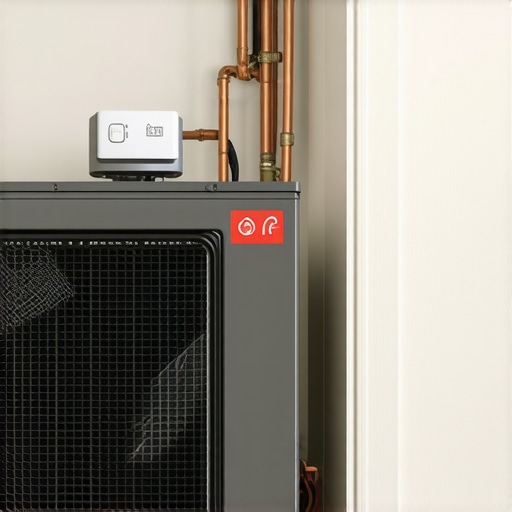
Let’s talk about system performance testing. Most ‘Sales Techs’—those guys who show up in a clean white shirt and try to sell you a new unit because your capacitor died—won’t tell you that a clogged drain is often a symptom of poor airflow. When your filter is packed with dog hair and skin cells, the static pressure rises, and the air velocity across the coil slows down. This causes the coil to ‘slug’ or freeze, and when that ice melts, it doesn’t always go into the pan. This is where integrating smart sensors becomes a literal lifesaver. By utilizing a smart thermostat setup paired with moisture sensors in the primary and secondary pans, you can kill the 24V signal to the compressor the second moisture is detected where it shouldn’t be. It’s the difference between a minor inconvenience and a flooded basement. We see this often in geothermal heat pump systems where water-to-air heat exchange is constant. If you’re not monitoring that flow, you’re flying blind. I’ve seen energy recovery ventilators (ERVs) installed without proper drainage that ended up raining on a server rack. It isn’t pretty, and it’s completely avoidable.
The Math of Prevention: $50 vs. $8,000
If you’re looking at thermostat installation, don’t just settle for a puck on the wall that changes the temp. You need a hub. A proper programmable thermostat programming routine should include alerts for high humidity and leak detection. Think of your HVAC system like a human body: the compressor is the heart, the ductwork is the lungs, and the drain line is the… well, you get the idea. If the system is backed up, the whole thing suffers. I’ve followed behind ‘Sales Techs’ who quoted a family $15,000 for a new system because the ‘coil was leaking.’ In reality, the dryer vent cleaning had been neglected, the house was under negative pressure, and the AC was pulling humid air through every crack in the building, causing massive condensation. A $200 sensor and some pookie (mastic) on the duct joints would have fixed it. This is why choosing the right HVAC fixes matters more than the brand of the box you buy. You can buy the most expensive Trane or Carrier, but if the tin knocker didn’t pitch the drain line right, you’re going to have a bad time.
“The design and installation of the condensate disposal system shall be such that it does not cause damage to the building.” – ACCA Manual S
Thermodynamic Zooming: The Physics of the Drip
In a humid climate, the ‘suction line’—that’s the big copper pipe—should be ‘beer can cold.’ When the refrigerant evaporates, it’s pulling sensible heat out of your air, but it’s also doing the heavy lifting of removing latent heat. In a standard four-ton system, you could be pulling gallons of water out of the air every single day. If you haven’t had a propane conversion service or a regular check-up, your system might be short-cycling. Short cycling is the enemy of dehumidification. The compressor doesn’t run long enough to get the coil cold enough to reach the dew point, so the house stays ‘cold and clammy.’ This is a recipe for mold in the ducts. By integrating smart sensors, you can track these cycles. If your system is kicking on and off every six minutes, your smart thermostat setup will log that data, and a real tech can diagnose a failing contactor or an oversized unit before the ‘hidden flood’ begins. For more on this, check out our ultimate guide to AC installation for the upcoming year.
The Future of Flow: A2L Refrigerants and Sensor Arrays
As we move into 2025, the industry is changing. R-410A is on the way out, and the new A2L refrigerants (like R-454B) are coming in. These are ‘mildly flammable,’ which sounds scary, but it just means we have to be better at our jobs. New systems will come with factory-installed leak sensors for the ‘gas’ (refrigerant), but they won’t always catch a water leak. That’s on you. Whether you are doing a new heat pump installation or just trying to keep an old R-22 ‘beater’ running, you need to be proactive. Don’t wait for the ‘sparky’ to tell you your air handler is shorting out because it’s sitting in a pool of water. Invest in system performance testing and ensure your flue pipe installation isn’t back-drafting moisture into your attic. A little bit of pookie and a smart sensor can save you a lifetime of headaches. If you’re worried about your current setup, it’s time to look into top HVAC repair strategies to keep your home dry and your wallet full. Airflow is king, but water is the assassin. Don’t let a clogged $5 pipe destroy your $500,000 home.
[image-placeholder]