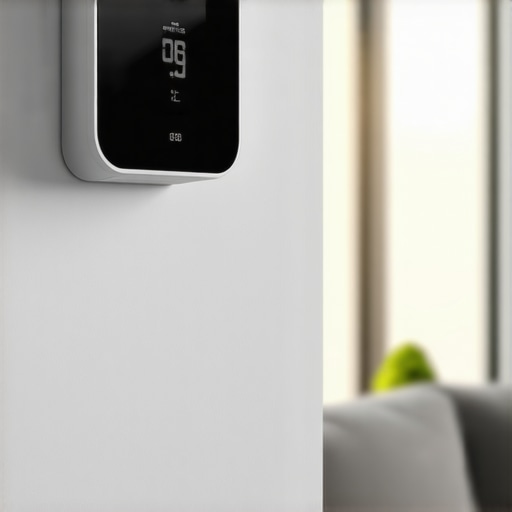
The Airflow Manifesto: Why Your Thermostat Is the Heart of Your Home Physics
My old mentor used to scream at me until his face was the color of a cherry-red heat exchanger, ‘You can’t heat what you can’t touch, and you can’t touch what you can’t move!’ I was twenty-two, covered in soot from a boiler maintenance service, and I didn’t get it. I thought the furnace did the work. I was wrong. The air is the vehicle, and in the frozen tundra of our northern winters, your thermostat isn’t just a remote control—it is the navigator. Most homeowners treat a smart thermostat like a fancy digital picture frame. They slap it on the wall, connect the Wi-Fi, and think they’re saving money. But if you don’t understand the psychrometrics of your home, you’re just driving a Ferrari in first gear. A professional setup isn’t about the app; it’s about managing static pressure, demand-controlled ventilation, and ensuring your heat pump replacement doesn’t turn into a multi-thousand-dollar paperweight because the staging wasn’t configured for your specific ductwork.
“The most expensive equipment in the world cannot overcome a bad duct system, and the smartest control is useless if it doesn’t understand the load it’s managing.” — Industry Axiom
In our climate, we aren’t just fighting the cold; we are fighting the danger of cracked heat exchangers and the inefficiency of flame rollout. When the mercury drops below zero, a geothermal heat pump system or a high-efficiency furnace needs to breathe. I’ve seen dozens of limit switch replacement calls that were completely avoidable. Why? Because some DIYer or a ‘Sparky’ who didn’t know his way around a low-voltage terminal board didn’t set the fan delays correctly. The heat builds up, the limit switch trips to save your house from burning down, and eventually, that bi-metal strip just gives up the ghost. A professional setup ensures the blower is ramped up at the exact millisecond the plenum reaches temp, moving that energy into your living room instead of cooking your heat exchanger.
The Static Pressure Trap: Why Pookie Beats Tape
Let’s talk about zoning system installation. If you have one room that’s a meat locker and another that’s a sauna, your thermostat is likely lying to you. Airflow is a lazy beast; it takes the path of least resistance. When we install a professional smart system with hospital HVAC zoning logic, we aren’t just opening and closing dampers. We are managing the total external static pressure. If you close off too many zones without a bypass or a variable speed motor that understands how to torque down, you’ll blow the ‘Pookie’ (that’s mastic for the laypeople) right out of your duct seams. You can’t just tape over a bad design. Professional integration allows the thermostat to communicate with the motor, telling it exactly how much ‘juice’ to pull to maintain the right CFM without whistling like a teakettle through your registers.
“Standard 62.2 defines the roles of mechanical ventilation in low-rise residential buildings, but it is the control logic that determines if that ventilation is a benefit or a burden to the thermal envelope.” — ASHRAE Standards
We also have to consider the secondary heat sources. I’ve walked into homes where a wood burning stove installation was fighting the central heating system. The thermostat in the hallway thinks it’s 75 degrees because of the stove, while the bedrooms are freezing. A pro-level smart setup uses remote sensors and ‘Average Temperature’ logic to prevent the furnace from staying dormant while your pipes freeze in the north wing. This is the level of detail that saves you from 2 AM emergency calls. It’s about more than comfort; it’s about the mechanical longevity of the system. For more on this, check out these top HVAC repair strategies to extend your system’s life.
The Regulatory Cliff and Your Wallet
As we move into 2025, the industry is shifting. We are seeing the phase-out of R-410A and the rise of A2L refrigerants. This makes heating service more technical than ever. When you’re looking at a heat pump replacement, you need a control system that can handle the specific defrost cycles required for our humid-cold transitions. If your thermostat isn’t calibrated for the ‘balance point’—the temperature where the heat pump can no longer keep up and the auxiliary heat kicks in—you are literally burning money. Professional installers provide rebate application assistance because these high-end smart controls often qualify for local utility ‘Demand Response’ programs. They pay you to let them shave a few degrees off the peak load, but only if the system is commissioned correctly. If you’re wondering how to navigate these choices, read about choosing the right HVAC fixes for your specific home layout.
The Invisible Benefit: Humidity and Health
In the North, the air in winter is drier than a popcorn fart. This dry air pulls moisture out of your skin, your hardwood floors, and your lungs. A professional smart thermostat setup often includes integrated humidification control. Unlike the old-school dial on the return duct that everyone forgets to change, a smart system monitors the outdoor temperature to prevent ‘window sweating’ while keeping your indoor RH at a comfortable 35%. This is the ‘Thermodynamic Zooming’ people miss. It’s not just about the sensible heat (what the thermometer reads); it’s about the latent heat and the moisture content. Managing this properly prevents that ‘static shock’ every time you touch a doorknob. If your current system is struggling, you might need to look at heating service hacks for comfort and savings in 2025 to get ahead of the curve. Real comfort is physics, not magic, and it starts with a control system that actually knows what it’s looking at.