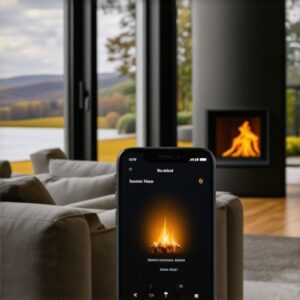
The Ghost in the Machine: Why Your Thermostat Is Lying to You
I remember my old mentor, a grizzly veteran who could smell a cracked heat exchanger from the driveway, used to scream at me until his face turned the color of a manifold gauge: ‘You can’t cool what you can’t touch, and you can’t heat a ghost!’ This was 1994, and we were dragging heavy tin knocker tools through a crawl space, but the physics hasn’t changed. He was obsessed with airflow and presence. Most homeowners think a thermostat is a brain; in reality, without occupancy sensors, it is just a stubborn light switch that doesn’t know if you are home or halfway to the Bahamas. If you are still running a system based on a static schedule, you are bleeding cash into the attic insulation for heating that was never meant to hold that much waste.
“The most expensive equipment in the world cannot overcome a bad duct system.” – Industry Axiom
The Forensic Diagnosis: Anatomy of a Thermal Failure
Let’s look at the mechanical anatomy of your comfort. Your HVAC system is like a body: the furnace or boiler is the heart, the ducts are the arteries, and the thermostat is the nervous system. When you install a wall furnace installation or perform an oil to gas conversion, you are upgrading the ‘heart.’ But if your nervous system (the thermostat) thinks the living room is empty when it’s actually 2 degrees colder than the hallway, you’re short-cycling your equipment into an early grave. Occupancy sensors use infrared and ultrasonic technology to detect ‘sensible heat’—the actual heat given off by human bodies. In a cold climate like Chicago or the Northeast, where steam boiler repair and heat exchanger cleaning are seasonal rituals, every minute your burner stays off because the ‘ghosts’ aren’t home is money in your pocket.
Thermodynamic Zooming: How Sensors Fight Latent Heat
In a Northern winter, the enemy isn’t just the cold; it’s the lack of control. When your house is empty, you don’t need to maintain a 72°F setpoint. A smart thermostat with remote sensors understands the delta-T (the temperature difference) between your drafty crawl space heating solutions and your bedroom. Without these sensors, your boiler might keep firing because a draft hit the hallway sensor, even though the rest of the house is tight. This leads to excessive wear. I’ve seen steam boiler repair bills that could have been avoided if the system hadn’t been fighting a phantom load all day. By using occupancy sensors, the system shifts into an ‘Away’ mode the moment it stops sensing movement, preventing the constant expansion and contraction of the heat exchanger that leads to cracks and low-GWP refrigerant retrofits issues later on.
The Math of Repair vs. Replace
Is it worth it? A high-end sensor setup might cost you $200, but a mid-winter portable heater safety checks emergency call costs more. If you’re running an old system, you might be tempted by ‘Sales Techs’ to dump $15k into a new unit. Don’t. Start with the logic. Efficient control via occupancy sensors is part of the heating service innovations transforming 2025 climate control. By integrating these sensors, you ensure your swamp cooler maintenance or heating cycle only runs when the ‘load’ (you) is present.
“Energy efficiency is not just about the equipment; it is about the precise delivery of conditioned air to the point of use.” – ASHRAE Fundamentals
If you’re doing a spa heater services or checking attic insulation for heating, you’re already looking at the envelope; now look at the trigger. Managing the ‘juice’—our slang for the energy or refrigerant—requires knowing exactly where the demand is. For those in the middle of an ultimate guide to ac installation expert tips for 2025 success, adding sensors is the single most cost-effective way to lower your Total Cost of Ownership.
The 2025 Regulatory Cliff and Efficiency
We are entering the era of A2L refrigerants and high-efficiency mandates. Every low-GWP refrigerant retrofits project we see now is focused on precision. If you are still using a mercury bulb or a basic programmable unit, you are living in the Stone Age. Proper control through sensors reduces the runtime of your compressor and blower motor. This isn’t just about ‘saving the planet’; it’s about keeping your suction line from freezing and your pookie-sealed ducts from leaking air into an empty room. This is the core of efficient HVAC repairs: the blueprint for cooler summers and warmer winters. Stop heating the ghosts in your guest room. Use the sensors to tell the brain where the life is, and let the thermodynamics do the rest.
Maintenance vs. The Scam Tune-Up
Before you call a sparky for a wiring issue or schedule a heat exchanger cleaning, look at your thermostat’s data. If it shows your system is running while you’re at work, you’re being robbed by your own hardware. Real maintenance isn’t just a 15-minute ‘dusting’; it’s optimizing the logic of the house. This is a primary focus in heating service hacks for comfort and savings in 2025. Sensors are the only way to bridge the gap between human behavior and mechanical reality. Without them, your HVAC system is just a dumb, expensive box burning cash.