The Sound of Silence: A Midnight HVAC Post-Mortem
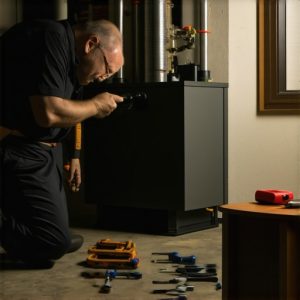
It is 3:15 AM in the middle of a January cold snap. Outside, the wind is howling at twenty miles per hour, and the mercury is hovering somewhere near zero. Inside, the house is dead quiet. That is the sound of an expensive problem. Most homeowners think their furnace just ‘works’ until it doesn’t, but as someone who has spent thirty years crawling through spider-infested crawlspaces and melting on rooftops, I can tell you that mechanical failure is never random. It is a forensic trail of neglected physics. My old mentor, a crusty tin knocker who could smell a gas leak from a block away, used to scream at me, ‘You can’t cool what you can’t touch, and you can’t heat what you don’t respect!’ This is why airflow matters more than horsepower. He’d grab a handful of dust from a return grill and tell the customer, ‘This isn’t just dirt; it’s the tombstone of your blower motor.’ He was right. When people ignore HVAC maintenance plans, they aren’t just skipping a tune-up; they are actively inviting a catastrophic failure of the thermodynamic cycle.
“Proper sizing and installation of heating equipment shall be based on local design temperatures and building load.” – ACCA Manual J
The Forensic Diagnosis: Anatomy of a Heating Crisis
Let’s get technical for a second. Your furnace isn’t just a box that makes fire. It is a complex interaction of fluid dynamics, electrical resistance, and chemistry. When you call for furnace ignition repair in the dead of winter, the problem usually started months ago. Consider the flame sensor. It’s a tiny rod of stainless steel that uses the principle of flame rectification to tell the control board that it’s safe to keep the gas valve open. Over time, silica buildup from the combustion process coats that rod. The control board expects a signal in microamps; when it doesn’t get it, it shuts the system down to prevent a gas buildup. This is a safety feature, but it’s also a common point of failure that a simple annual inspection would have solved with a piece of emery cloth. Then there’s the capacitor replacement services we perform daily. A run capacitor is like a battery that never stops working; it provides the ‘kick’ the motor needs to stay in phase. In the cold North, when that inducer motor is fighting against heavy, dense air in a frozen vent pipe, a weak capacitor will pop like a firecracker. If you’re not checking these tolerances with a multimeter during a seasonal check, you’re just guessing. And guessing is how you end up with a frozen pipe and a $10,000 flood insurance claim.
The Hidden Enemy: Cracked Heat Exchangers and Carbon Monoxide
In our climate zone, where the furnace runs for six months straight, the heat exchanger is the most critical organ in the system. It’s the metal barrier between the toxic flue gases (carbon monoxide) and the air you breathe. Every time your furnace kicks on, that metal expands; every time it shuts off, it contracts. After ten thousand cycles, the metal gets brittle. This is where ‘Sales Techs’ love to scare people, but a real veteran knows how to find the hairline fractures that actually matter. If your furnace is short-cycling, it might be overheating the exchanger, leading to premature metal fatigue. This is especially true with variable speed furnace services where the airflow fluctuates based on demand. If the static pressure is too high because you used one of those ‘1-inch thick purple filters’ that act like a brick, you are literally cooking your heat exchanger from the inside out. We use predictive maintenance alerts now to catch these temperature spikes before they become cracks, but nothing beats a visual inspection with an inspection camera. You can see furnace repair myths debunked by industry experts to understand why ‘just topping it off’ or ‘spraying it down’ isn’t a real solution.
Steam Boilers and Industrial Scale Heating
Not everyone is running a forced-air furnace. In older urban corridors, steam boiler repair is a lost art. A steam system is a different beast entirely—it’s all about water chemistry and pressure. If the ‘Sparky’ you hired tries to treat a boiler like a furnace, run. You have to understand the ‘bang’ in the pipes isn’t just noise; it’s water hammer caused by improper pitch or trapped condensate. On the industrial heater services side, the stakes are even higher. We’re talking about thousand-gallon systems where a failed low-water cutoff can lead to a literal explosion. Whether it’s a residential unit or a massive plant, the logic remains: entropy is always winning. You combat entropy with preventative HVAC repair tips for year-round efficiency. This includes everything from checking the manifold pressure of the gas valve to ensuring the HEPA filter systems aren’t creating so much drag that the motor burns out trying to pull air through a wall of fabric.
“The most expensive equipment in the world cannot overcome a bad duct system.” – Industry Axiom
The 2025 Shift: Smart Stats and Efficiency
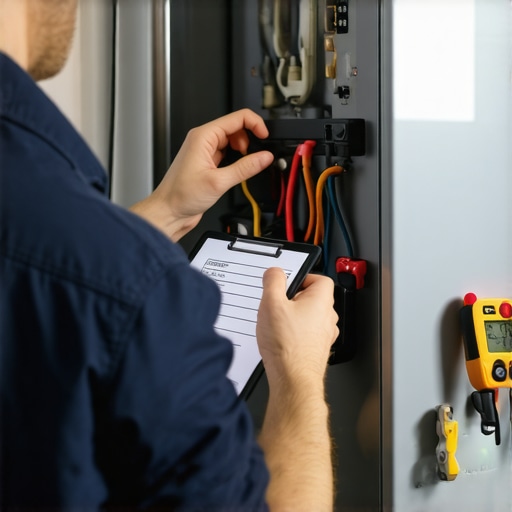
We are entering a new era of climate control. With smart thermostat setup becoming the norm, we have more data than ever, but data without a brain is useless. A smart thermostat can tell you the temp is dropping, but it won’t tell you that your igniter has a resistance of 100 ohms when it should be 40. That’s why how to identify when furnace repair is urgent and why is such a critical piece of knowledge for modern homeowners. Even specialized equipment like spa heater services now requires an understanding of board-level electronics. If you’re waiting for the ‘click-click-click’ of a failed ignition to call us, you’ve already lost money. Annual inspections allow us to measure the ‘Total External Static Pressure’—the blood pressure of your HVAC system. If that pressure is high, your blower is working twice as hard for half the heat. You’re paying the utility company for the privilege of killing your equipment. Don’t be the person who spends $15,000 on a new install because they didn’t want to spend $150 on a technician who actually knows how to use a manometer and a combustion analyzer. Real maintenance is about physics, not sales pitches. It’s about ensuring the latent heat of vaporization is handled in your condensing furnace so that acidic condensate doesn’t eat through your secondary coil. That is the logic of the inspection. “, “image”: {“imagePrompt”: “A professional HVAC technician using a digital combustion analyzer and a thermal imaging camera to inspect a high-efficiency furnace heat exchanger in a dimly lit basement, showing the heat patterns and technical readings on the screen.”, “imageTitle”: “Professional Furnace Diagnostic Inspection”, “imageAlt”: “HVAC technician performing a combustion analysis and heat exchanger inspection on a residential furnace.”}, “categoryId”: 0, “postTime”: “”}