The Sound of a Dying Heat Cycle
The silence is what gets you. It’s 3 AM in mid-January, the outside air is a biting -10°F, and you wake up not because of a noise, but because of the lack of one. The rhythmic thrum of your furnace has vanished. You shiver, reach for the thermostat, and see the dreaded blank screen or the ‘service’ icon flashing like a distress signal. As a tech who has spent three decades crawling through spider-infested crawlspaces and balancing on icy parapets, I can tell you that most of these midnight panics are entirely preventable. We are entering the season of ‘The Big Freeze,’ and if you haven’t looked at your heating system since last spring, you’re playing Russian roulette with your comfort. My old mentor, a grizzled guy who could sniff out a cracked heat exchanger from the driveway, used to scream at me, ‘Kid, you can’t heat what you can’t touch!’ He was obsessed with the physics of heat transfer. He meant that if your airflow is restricted, or your components are fouled with a decade of dust, all that expensive energy you’re paying for is just heating up the metal cabinet, not your living room. Comfort isn’t magic; it is a strict adherence to the laws of thermodynamics.
“The most expensive equipment in the world cannot overcome a bad duct system.” – Industry Axiom
The Forensic Anatomy of Your Heating System
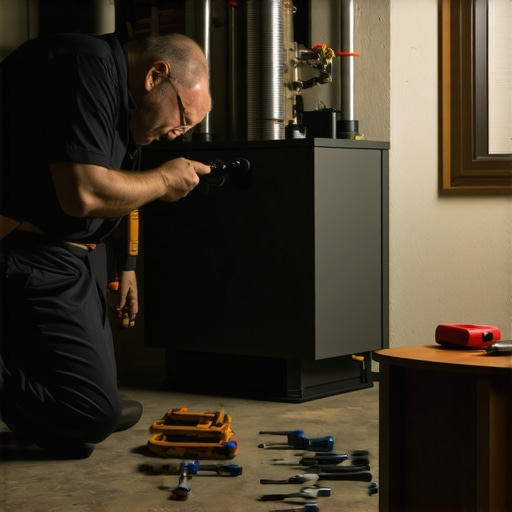
When I walk up to a unit for an annual heating inspection, I’m not looking to sell you a shiny new box. I’m performing a mechanical autopsy on a living system. We start with the heart: the heat exchanger. In a high-efficiency furnace installation, you have two of these. The primary handles the brunt of the flame, while the secondary scavenges the remaining heat until the exhaust gases condense. If there is even a hairline fracture in that steel, you aren’t just losing efficiency—you’re potentially venting carbon monoxide into your bedrooms. This is where refrigerant leak detection logic applies to heating; we are looking for the escape of something that should be contained. For those with hydronic systems, boiler repair services often reveal that the expansion tank has waterlogged or the circulator pump is cavitating, trying to move water that isn’t there. If you’re running a pellet stove, I’m looking at the auger and the thermocouple replacement history. That little thermocouple is the sentinel; if it doesn’t see a flame, it shuts everything down to prevent your house from filling with unburnt fuel. It’s a $30 part that can cause a $1,000 headache if it fails on a Friday night.
The Airflow Manifesto: Why Your Vents Matter
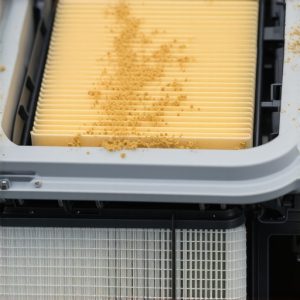
Air is the medium of your comfort. If the ‘Tin Knockers’ (ductwork installers) who built your house sized the returns too small, your blower motor is essentially trying to breathe through a cocktail straw. This increases static pressure, which kills motors and fries control boards. During a proper inspection, we check the ‘Pookie’—that’s the mastic sealant—on your duct joints. If your attic is being heated instead of your kitchen, you’re literally burning money. We also look at dryer vent cleaning as part of the total home airflow health. A clogged dryer vent doesn’t just make your clothes stay damp; it creates a backpressure and fire hazard that affects the overall pressure envelope of your home. In northern climates, where the air gets bone-dry, we look at dehumidification services—or more accurately, humidification in the winter—to prevent your hardwood floors from shrinking and your skin from cracking. But remember, too much moisture leads to mold in the ducts. It’s a delicate dance of psychrometrics.
“Design heating and cooling loads shall be determined in accordance with ACCA Manual J.” – ASHRAE Standard 6.2
The Tech-Forward Home: Sensors and Logic
We’ve moved past the days of the simple mercury tilt-switch thermostat. Today, we are integrating geofencing temperature control and occupancy sensor installation into the heating logic. Why heat the guest wing if nobody has walked in there for three days? These sensors tell the furnace to ramp down when the house is empty, but more importantly, geofencing tells the system you’re five miles away and heading home, so it can start the recovery process. This prevents ‘short cycling,’ where a unit turns on and off rapidly, which is the fastest way to kill a compressor or a blower motor. For those with supplemental heat, electric heater services ensure that your kickspace heaters or radiant panels aren’t pulling 30 amps through a loose wire that’s waiting to arc. If you’re wondering how to choose the right HVAC fixes, it starts with understanding these controls. Modern 2025 systems are basically computers that happen to move hot air, and if the ‘Sparky’ (electrician) didn’t ground the system properly, a single lightning strike can wipe out your entire investment.
The Reality of the Repair vs. Replace Math
I get asked every day: ‘Do I fix this old beast or scrap it?’ Here’s the cold truth. If your furnace is over 15 years old and the heat exchanger is rusted, you’re throwing ‘gas’ (refrigerant/fuel) down the drain. You can read more about identifying urgent furnace repairs to see where you stand. A high-efficiency furnace installation might cost $6,000 to $9,000, but it can drop your utility bill by 30%. If you’re just dealing with a failed igniter or a dirty flame sensor, pay for the repair. But if I see ‘scabbing’ on the burner tubes, I’m telling you to start shopping. I’ve seen ‘Sales Techs’ try to condemn a perfectly good unit because of a bad capacitor. Don’t fall for it. Check out furnace repair myths debunked to protect your wallet. A real tech will show you the physical failure, not just tell you about it. We use thermal imaging and combustion analyzers to prove the system is failing. If they don’t have a tool in their hand, they aren’t a tech; they’re a salesman in a uniform.
Preventative Maintenance vs. The Emergency Call
Being proactive is the only way to survive a polar vortex. An annual checklist should include checking the ‘suction line’ on your heat pump to ensure it’s not icing up, verifying the pellet stove repair schedule for the season, and ensuring your boiler repair services include a full flush of the heat exchanger to remove scale. We look for signs of ‘flame rollout,’ where the fire literally jumps out of the burner because the flue is blocked by a bird’s nest or ice. This is why preventative HVAC repair tips are so critical. You don’t want to find out your inducer motor is seized when it’s 10 degrees outside. If you’re ready to get serious about your home’s health, you can contact us for a real evaluation, not a sales pitch. We focus on strategies to extend your system’s life because I’d rather maintain your unit for twenty years than replace it once and never see you again. Comfort is a long-term relationship with physics, and we’re the matchmakers.