The Sound of a Frozen Silence
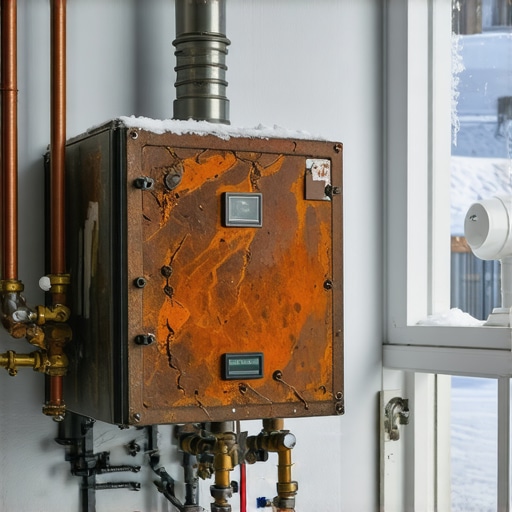
There is a specific kind of silence that only exists at 3:00 AM in the middle of a January polar vortex. It’s not the peaceful kind of quiet; it’s the heavy, pressing silence of a house losing its battle against the elements. If you’ve ever stood in your basement, shivering in a bathrobe, staring at a boiler that refuses to fire up, you know that sound. Or rather, that lack of sound. As a tech who’s spent three decades dragging manifolds through crawlspaces, I can tell you that most of those emergency calls were preventable. Homeowners love to wait. They think if the ‘gas’ is flowing and the light is on, everything is fine. But hydronic heating is a game of physics, and physics doesn’t care about your procrastination.
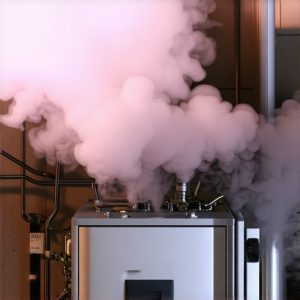
My old mentor, a grizzly veteran who could diagnose a bad inducer motor just by the vibration in the floorboards, used to scream at me, ‘You can’t heat what you can’t touch!’ He wasn’t talking about the radiators. He was talking about the heat exchanger. If your boiler is scaled up or soot-covered, that flame is just wasting money while the heat goes right out the flue pipe installation. This is why HVAC repair isn’t just about fixing what’s broken; it’s about ensuring the thermodynamics are actually working in your favor. This lesson is especially true in the frozen North, where the danger isn’t just a cold house—it’s flame rollout and carbon monoxide poisoning from a cracked heat exchanger.
“The most expensive equipment in the world cannot overcome a bad duct system or a neglected combustion chamber.” – Industry Axiom
The Mechanical Anatomy: Why Boilers Fail When the Mercury Drops
A boiler is essentially a high-performance engine for water. To understand why it fails, you have to look at the mechanical anatomy. You have the heat exchanger—the heart where the magic happens. You have the circulator pump—the muscles pushing the lifeblood through the house. And you have the controls—the brain. When you ignore maintenance until the first freeze, you are asking an engine that’s been sitting stagnant for six months to suddenly run at 100% capacity in extreme conditions. It’s like trying to run a marathon after sitting on a couch for half a year without even a warm-up stretch.
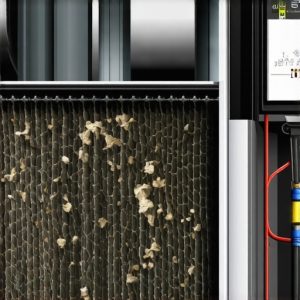
During a critical heating assessment, we look for scale. Scale is the silent killer. Even a thin layer of calcium buildup inside the heat exchanger acts as an insulator. This forces the metal to get hotter than it was designed to, leading to stress fractures. Once that metal cracks, you aren’t just looking at a repair; you’re looking at a replacement. This is where static pressure testing becomes vital. We need to know if the system can actually move the energy it produces. If the pressure is off, the system ‘short cycles,’ turning on and off rapidly, which fries the control board and wears out the igniter.
The Evolution: From Oil to Gas and Smart Controls
Many older homes in the Northeast are still running on ancient oil-fired beasts. I’ve seen oil to gas conversion projects that slashed a homeowner’s utility bill by 40% overnight. Modern gas boilers are condensing units, meaning they capture the latent heat in the exhaust gases—heat that used to just disappear up the chimney. If you are still dragging an oil nozzle into your basement, you are literally burning money. But even with a gas unit, the ‘set it and forget it’ mentality is a trap. We are now seeing a massive shift toward app-controlled heating systems and complex programmable thermostat programming. These aren’t just toys; they allow the system to modulate, running at lower speeds to maintain a steady temp rather than blasting 180-degree water through the pipes every twenty minutes.
“Design conditions for heating systems must account for the 99% dry-bulb temperature to ensure safety and continuity during extreme weather events.” – ASHRAE Fundamentals
If your house has ‘hot spots’ and ‘cold spots,’ your issue might not be the boiler at all. It might be the delivery. We often recommend zoning system installation to split the load. Why heat the guest room to 72 degrees when nobody is in it? By using dampers and smart valves, we can direct the ‘juice’ where it’s needed. For homes without traditional ductwork, a ductless mini-split installation can provide supplemental heat during those ‘shoulder’ months of October and April, saving your main boiler for the heavy lifting of deep winter. Some homeowners are even opting for dual fuel heat pump systems, which use electricity when it’s mild and switch to gas when the real freeze hits.
The Forensic Diagnosis: Repair vs. Replace
When I walk into a basement, I’m doing a forensic diagnosis. I’m looking at the color of the flame (it should be a crisp blue, not a lazy orange). I’m smelling for that acidic, sour scent of a failing component. I’m checking the flue pipe installation for signs of backdrafting. If I find a cracked section, we have to talk about AC installation or a full system overhaul. Sometimes, a simple fix like a $50 expansion tank can save a $10,000 boiler. But if you wait until the pipes are literally humming with ice, the damage is already done. Understanding how to choose the right fix is the difference between a minor inconvenience and a financial disaster.
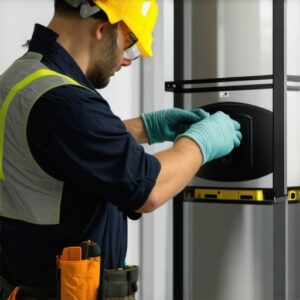
Preventative maintenance is about more than just cleaning a burner. It’s about checking the pH of the system water. It’s about ensuring the safety limits—the things that keep your house from exploding or filling with CO—are actually functional. A ‘Sales Tech’ will walk in and see a ten-year-old unit and tell you it’s junk. A real tech, a ‘tin knocker’ with a soul, will tell you that with proper static pressure testing and a clean heat exchanger, that unit has another decade in it. Don’t fall for the ‘scam tune-up’ where they just spray some WD-40 and leave. Demand a combustion analysis. Demand to see the numbers. For more on this, check out our guide on extending your system’s life and learn the heating service hacks that actually save you money.
Conclusion: Don’t Be the Emergency Call
As we move into 2025, the technology is getting better, but the physics remains the same. Heat moves to cold. Water expands when it freezes. And a neglected boiler is a ticking time bomb. Whether you are looking into ductless mini-split installation for a new addition or just need your programmable thermostat programming fixed, the time to act is when the sun is out and the birds are chirping. Don’t wait for the first freeze. Don’t be the person crying in the dark at 3 AM because they ignored a $150 service call in September. Real comfort isn’t about the number on the wall; it’s about the reliability of the system in the basement. Be smart. Get it checked. Keep the ‘gas’ flowing and the ‘sparky’ away from your emergency repairs. For professional assistance, you can always contact us to ensure your home stays a sanctuary, not an icebox. Check our privacy policy for more details on how we handle your service data.