The Sound of a Silent Killer: Why Your New Furnace is Eating Your Old Chimney
My old mentor used to scream at me until he was purple in the face: ‘You can’t cool what you can’t touch, and you can’t vent what you can’t contain!’ This was back when we were still installing heavy cast-iron boilers that could survive a nuclear blast. He was obsessed with airflow, not just in the supply ducts, but in the exhaust. He knew that the physics of combustion didn’t end at the heat exchanger. If you don’t respect the exit path, the system will eventually find a way to vent through your bank account. We see it every winter in the North: a homeowner upgrades to a two-stage furnace installation or a high-efficiency system, and three years later, their chimney looks like it’s been hit by a sledgehammer from the inside out. This isn’t bad luck; it’s a failure to understand the thermodynamic transition of flue gases.
We are currently standing on a regulatory cliff. With the industry pivoting toward low-GWP refrigerant retrofits and increasingly stringent AFUE (Annual Fuel Utilization Efficiency) ratings, the way we exhaust heat is changing. If you are still running a modern furnace into an unlined masonry chimney, you aren’t just being old-school; you’re inviting a chemical reaction that will dissolve your mortar joints into a salty, acidic mush. This isn’t a ‘sales tech’ pitch to pad a ticket—it is a fundamental requirement of the National Fuel Gas Code (NFPA 54). [IMAGE_PLACEHOLDER]
The Thermodynamics of the Dew Point: Why ‘Cold’ Flue Gas is Dangerous
To understand why your masonry is at risk, we have to perform some Thermodynamic Zooming on the combustion process. When your furnace burns natural gas or propane, the primary byproducts are carbon dioxide and water vapor. In the old days of 60% efficiency ‘atmosphere’ furnaces, the flue gases were incredibly hot—sometimes over 400°F. That heat provided massive ‘buoyancy,’ shooting the exhaust out of the chimney before it had a chance to cool down. But modern systems, even non-condensing 80% units, extract more heat into the home. This means the exhaust is much cooler when it enters the chimney.
Here is the trap: a large, cold masonry chimney acts as a massive heat sink. As the relatively ‘cool’ flue gas rises, its temperature drops below the dew point—usually around 120°F to 130°F. When that gas hits the cold bricks, the water vapor condenses into liquid water. But it’s not just water. It mixes with sulfur and nitrogen oxides from the combustion process, creating a dilute but relentless cocktail of sulfuric and nitric acid. This acidic liquid soaks into the porous mortar and bricks, leading to a process called ‘spalling’ where the face of the brick literally pops off.
“The inner chimney flue shall be sized to prevent the condensation of flue gases which can lead to the deterioration of masonry and vent connectors.” – NFPA 54: National Fuel Gas Code
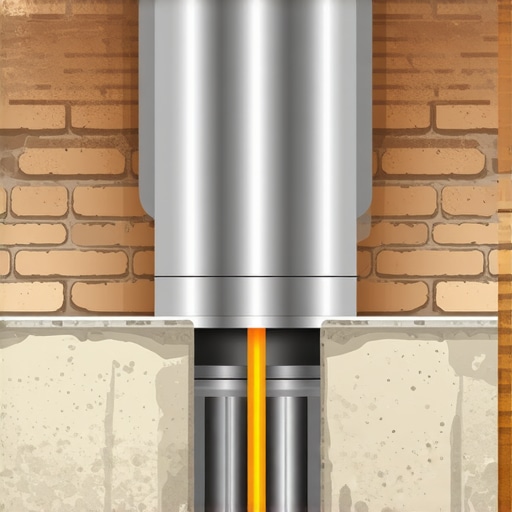
If you’ve noticed white, powdery stains on your chimney’s exterior (efflorescence) or found chunks of clay tile in your furnace’s clean-out, your chimney is already being digested by acid. This is why a stainless steel chimney liner is mandatory. It reduces the ‘effective diameter’ of the flue, ensuring the gases move fast enough to escape before they condense. It’s the same logic we use in duct design services—velocity is the only thing that keeps the system stable.
The Regulatory Shift: 2025 and the A2L Transition
We are entering a new era of HVAC. The phase-out of R-410A in favor of ‘mildly flammable’ A2L refrigerants is grabbing all the headlines, but the venting regulations for gas-fired equipment are just as critical. When we perform a heat exchanger cleaning or a full system replacement, we are looking at the ‘venting footprint.’ If you are integrating zoning system installation, the furnace often runs on low-stage for longer periods. This lower firing rate produces even cooler flue gases, making a chimney liner even more vital. Without it, you are essentially running a laboratory-grade acid factory in your basement.
Don’t let a ‘sales tech’ tell you that you can skip the liner to save $1,200 on a $10,000 install. They won’t be there when the chimney collapses or when carbon monoxide begins leaking into the attic because the masonry has failed. If you want to know more about the technical nuances of modern heating, check out this guide on heating service innovations. The goal is a system that is ‘beer can cold’ on the suction line in summer and ‘venting clean’ in the winter.
The Synergy of IAQ and Proper Venting
A chimney isn’t just a hole in the roof; it’s part of your home’s pressure envelope. If the chimney is drafting poorly due to sizing issues, it can cause back-drafting, which ruins your IAQ improvement services. You can have the best HEPA filters and whole-home humidifiers in the world, but if your furnace is dumping CO into the mechanical room because of a cold, oversized chimney, your air quality is zero. This is why we often recommend programmable thermostat programming that accounts for cycle times to prevent the ‘short-cycling’ that keeps chimneys cold and wet.
“Masonry chimneys shall be lined with a material that will resist corrosion, softening, or cracking from flue gases at temperatures up to 1800°F.” – International Fuel Gas Code (IFGC)
Whether you are looking at ventless gas heater services for a supplemental room or a heavy-duty infrared heater installation in a garage, the physics of gas remains the same: you must manage the moisture. For those in older homes, a liner is the only way to bridge the gap between 1920s masonry and 2025 combustion technology. If your furnace is acting up, learn how to identify when furnace repair is urgent before the acid damage becomes a structural nightmare.
The Forensic Verdict: Liner vs. Masonry Failure
In the trade, we call the guys who just slap units in ‘box swappers.’ A real ‘tin knocker’ or service vet looks at the whole house. If I see a masonry chimney without a liner, I see a ticking time bomb. The installation of a high-quality AL29-4C stainless steel liner is the ‘Pookie’ of the venting world—it seals the deal and ensures the job lasts thirty years instead of three. It keeps the heat in the gas and the acid out of the bricks. That is the difference between a ‘cheap’ install and a professional one. For more strategies on longevity, see our top HVAC repair strategies.