The Sound of a Silent Killer: Why Combustion Analysis Isn’t Optional
I remember my old mentor, a man who had more silver in his hair than a roll of solder and smelled perpetually of PVC glue and burnt ozone. He used to scream at me in the middle of a frozen crawlspace, ‘Kid, you can’t burn what you can’t breathe! Airflow is the soul of the machine, and if you don’t respect the physics, the physics will kill the customer.’ That was thirty years ago, and while the furnaces have gotten ‘smarter,’ the thermodynamics haven’t changed one bit. When your furnace kicks on, it’s not just ‘making heat.’ It’s a controlled chemical explosion of methane and oxygen. If that balance is off by even a fraction, you aren’t just losing efficiency; you’re brewing carbon monoxide in your basement. Most ‘Sales Techs’ will walk up to a unit, see a blue flame, and tell you it’s fine. They’re liars. You cannot see combustion efficiency with the naked eye. You need a calibrated analyzer, a probe in the flue, and a technician who actually understands the difference between sensible and latent heat recovery.
“The most expensive equipment in the world cannot overcome a bad duct system.” – Industry Axiom
The Forensic Diagnosis: Anatomy of a Proper Combustion Tune-Up
In the cold North, we don’t play games with cracked heat exchangers or flame rollout. When I walk into a house for a 24/7 heating emergency response, I’m looking for the ‘tells.’ I’m looking for soot patterns on the burner door and the smell of aldehydes—that sharp, metallic scent that screams ‘incomplete combustion.’ A real professional checklist starts with the mechanical anatomy. We begin with heat exchanger cleaning. If that metal is coated in scale, the heat can’t transfer to your home’s air. Instead, it stays in the flue, driving up your ‘stack temperature’ and wasting your money. If the heat exchanger is cracked, that’s it. Game over. I’ve seen guys try to patch them with pookie (mastic), which is criminal. A crack means CO is leaking into your breathable air, and no amount of duct tape is going to save you. This is why identifying when furnace repair is urgent is a life-or-death skill.
The Homeowner’s Professional Checklist
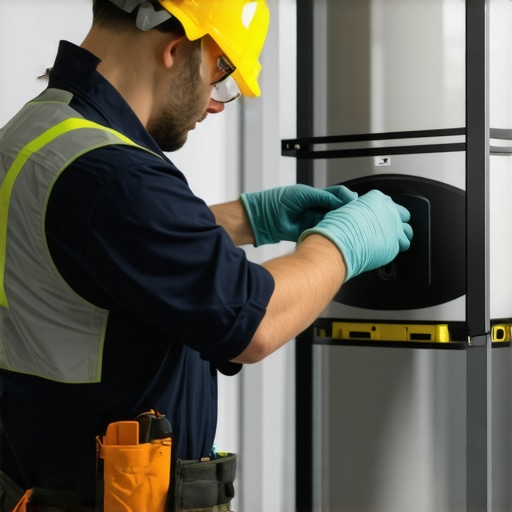
When the tech arrives, they shouldn’t just have a screwdriver. They should have a digital combustion analyzer and a leak detector. Here is what you need to watch for: 1. Draft Pressure Testing: Is the inducer motor pulling enough air to vent the toxins? 2. Gas Pressure Calibration: Over-firing a furnace is the fastest way to crack a heat exchanger. 3. CO Ambient Monitoring: Checking the air in the room, not just the flue. 4. Blower Motor Health: A blower motor replacement is often needed because restricted airflow caused the motor to overheat and ‘cook’ its bearings. 5. Venting Integrity: This includes dryer vent cleaning and checking the furnace flue for bird nests or ice blockages. If you have a high-efficiency unit, we’re looking at the condensate drain too. If that ‘juice’ (acidic water) backs up, it’ll eat through the secondary heat exchanger in a season.
“Carbon monoxide is a byproduct of incomplete combustion. Proper air-to-fuel ratios must be maintained to ensure safe operation.” – ASHRAE Standard 62.1
Thermodynamic Zooming: The Physics of the Flame
Let’s talk about the ‘Gas.’ In a perfect world, your furnace takes in O2 and CH4 and spits out CO2 and H2O. But we don’t live in a perfect world. We live in a world of new construction heating design where the tin knocker (duct guy) might have undersized the return air. When a furnace is ‘starved’ for air, the flame gets lazy. It starts licking the back of the heat exchanger, creating hot spots. This leads to metal fatigue. If you’ve heard about furnace repair myths debunked, the biggest one is that a ‘yellow flame’ is the only sign of trouble. I’ve seen ‘perfect’ blue flames that were putting out 400ppm of CO because the secondary heat exchanger was clogged with dust from lack of duct cleaning services. You need leak detector integration into your home’s safety net. If you’re really serious about air quality, look into HEPA filter systems, but be warned: if your ductwork isn’t designed for that ‘static pressure,’ you’ll burn out your blower in a month.
Modern Innovations: From Gas to Hyper-Heat
As we move into 2025, the landscape is changing. I’m seeing more hyper-heat heat pumps being installed in cold climates. These aren’t your grandpa’s heat pumps that stopped working at 40 degrees. These things can pull heat out of -15 degree air. But even they require a different kind of ‘combustion’ logic—specifically, the management of the defrost cycle and backup heat strips. We’re also seeing occupancy sensor installation tied into smart thermostats to reduce the ‘short cycling’ that kills compressors and heat exchangers alike. If you’re looking at heating service innovations for 2025, it’s all about precision. Whether it’s a furnace or a heat pump, the ‘Forensic Diagnosis’ remains the same: measure the delta-T, check the static pressure, and never trust a unit you haven’t put a meter on. If you suspect your system is failing the ‘physics test,’ it’s time to contact a professional who knows their way around a manometer, not just a sales brochure.