I followed a ‘Sales Tech’ last November who quoted a retired shop teacher $24,000 for a full oil-to-gas conversion. The kid told him his heat exchanger was ‘about to turn into a Roman candle.’ I got there, pulled the burner, and found a dirty nozzle and a cracked cad cell. A $150 fix. That’s the industry today—guys in shiny shirts looking for a commission instead of looking at the manifold pressure. But if you’re actually looking to dump the oil tank, you need the truth about the physics, not a sales pitch. Switching from oil to natural gas isn’t just about swapping a box in the basement; it’s a total shift in how your home handles BTUs and moisture. If you don’t understand static pressure and latent heat, you’re just throwing money into the combustion chamber.
The Forensic Diagnosis: Anatomy of an Oil-to-Gas Transition
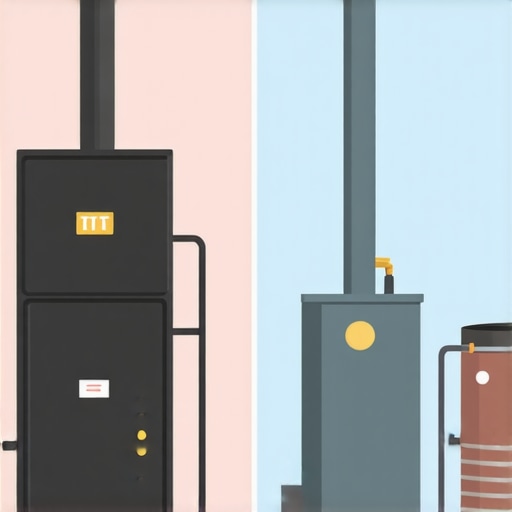
In the Northeast and Midwest, where the frost line is no joke, oil has been the old reliable for decades. It’s dense, it’s hot, and it’s dirty. When you move to natural gas, you’re moving from a fuel that produces heavy soot to one that produces acidic condensate. This is where most homeowners get burned. They buy the furnace but forget the chimney liner installation. Natural gas flue gases are cooler than oil; if you vent them into an oversized, unlined masonry chimney, that water vapor condenses on the cold bricks, mixes with old sulfur deposits, and creates sulfuric acid that eats your mortar from the inside out.
“The most expensive equipment in the world cannot overcome a bad duct system or an improperly vented flue.” – Industry Axiom
Thermodynamic Zooming: Why Two-Stage Matters
When we talk about a two-stage furnace installation, we aren’t just upselling you. We’re talking about the ‘Swing.’ A traditional oil furnace is either 100% on or 100% off. It’s like driving a car with only two settings: neutral and floor-it. A two-stage system allows the unit to run at about 65% capacity on those chilly-but-not-freezing days. This longer run time is crucial for mixing the air. In a cold climate, the air near the floor stays cold while the ceiling stays hot. By running at a lower stage, the blower moves air more consistently, eliminating those cold pockets. This is where control board diagnostics come into play; a smart board knows when to ramp up to the second stage based on the thermostat’s call for heat, ensuring you aren’t burning ‘juice’ you don’t need to.
The Hidden Infrastructure: Pookie, Tin, and Sparky
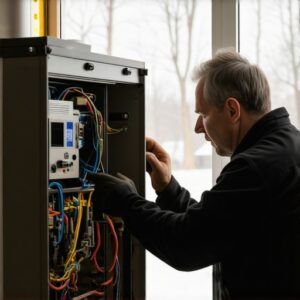
Any tin knocker worth his salt will tell you that gas furnaces move air differently. Oil units often have higher discharge temperatures but lower airflow volumes. When you switch, your existing ductwork might be too small for the CFM (Cubic Feet per Minute) required by a high-efficiency gas furnace. If your ducts are ‘choked,’ the static pressure climbs, and you’ll fry your blower motor in three years. You need to seal every joint with ‘pookie’ (mastic) to ensure that the pressure we’re building actually reaches the registers. And don’t forget the sparky; your old oil burner likely ran on a simple 15-amp circuit, but a modern high-efficiency system with a variable speed motor might need a dedicated line and a clean ground to protect those sensitive electronics from power surges.
The Airflow Manifesto: Humidity and Comfort
Oil heat is notorious for drying out a house, but it’s not the fuel’s fault—it’s the air leaks. However, gas furnaces, specifically 90%+ AFUE models, create a different environment. Because they are sealed combustion, they don’t pull air from inside the house for the flame, which is great for efficiency but means your bypass humidifier repair becomes a priority. Without proper humidity control, that 72-degree air feels like 68. We aim for 35% relative humidity to keep the ‘sensible heat’ feeling comfortable. If you’re seeing ‘predictive maintenance alerts’ on your smart thermostat, it’s often because the humidifier pad is scaled up or the solenoid is stuck. Ignoring this leads to the ‘Cold 70’ phenomenon where the thermometer says you’re warm, but your skin says otherwise.
“Ventilation systems shall be designed and installed so that the gas-burning equipment is provided with an adequate supply of air for proper combustion and ventilation.” – NFPA 54 / National Fuel Gas Code
Maintenance: The Preventative Wall
I tell my customers that a preventative maintenance contracts is basically insurance against a Christmas Day breakdown. With gas, we’re looking at leak detector integration. Modern gas valves are reliable, but joints can vibrate loose. We use ultrasonic leak detectors to find the micro-leaks that a ‘soap and bubbles’ test might miss. If you’re coming from an oil background, you’re used to the annual ‘brush and vac’ to get the soot out. With gas, we focus on control board diagnostics and cleaning the flame sensor. A dirty flame sensor is the #1 cause of no-heat calls; it’s a tiny rod that uses the flame to conduct a micro-amp signal back to the board. If it’s coated in oxidation, the board thinks there’s no fire and shuts the gas off for safety. That’s a $300 service call for a 5-minute cleaning job—unless you have HVAC maintenance plans in place.
Alternative Zones and Summer Transitions
While we’re focused on the furnace, don’t ignore the rest of the house. Often, an oil-to-gas conversion is the perfect time to look at electric heater services for that one sunroom that never stays warm, or even swamp cooler maintenance if you’re in a dry fringe zone that uses evaporative cooling in the shoulder seasons. However, in our cold northern climate, the focus remains on the heat exchanger. If you’ve spent your life with a boiler, moving to forced air is a shock. It’s faster, but it’s noisier. That’s why we insist on high-quality chimney liner installation and proper duct sizing. If you want to know more about the long-term play, check out heating service hacks for comfort and savings in 2025 to see how the tech is changing.
The Real Cost: Breaking Down the Numbers
Is it worth it? An oil-to-gas conversion usually runs between $6,000 and $12,000 depending on the gas line run and the chimney situation. You’ll save roughly 30-50% on your monthly fuel bill. But the real ‘cost’ is the risk of a bad install. A two-stage furnace installation done by a hack who doesn’t check the gas manifold pressure will result in ‘short-cycling,’ which kills the compressor in the summer and the heat exchanger in the winter. You need a pro who understands the ultimate guide to ac installation principles even when they are working on a furnace, because the airflow is the same for both. For more on how to vet these guys, read ac installation secrets that hvac pros wont tell you. Don’t be the person who spends $10k to save $200 a month only to have the unit fail in five years because of high static pressure. Get it checked, get it lined, and get it right.