The Sound of a Dying Heat Exchanger at 3 AM
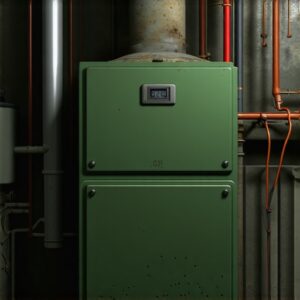
I’ve spent thirty years dragging my tool bag through cramped crawl spaces and freezing attics, and if there is one thing I’ve learned, it’s that a furnace doesn’t just ‘stop working.’ It’s a slow, agonizing mechanical murder, usually committed by the homeowner who thinks a ‘tune-up’ is just a way for a company to get their foot in the door. I’m not a sales tech; I’m an airflow architect. I don’t care about selling you a shiny new cabinet with a colorful logo. I care about the fact that 90% of the emergency calls I take in the dead of January could have been prevented by understanding the basic thermodynamics of your home. My old mentor used to scream at me, ‘You can’t heat what you can’t touch!’ He would whack a manometer and remind us that airflow matters more than raw horsepower. This is the core of heating service: if the air isn’t moving across that heat exchanger at the exact right CFM, you aren’t just losing efficiency—you’re cooking your components from the inside out.
“The most expensive equipment in the world cannot overcome a bad duct system.” – Industry Axiom
The Forensic Diagnosis: Anatomy of a Neglected System
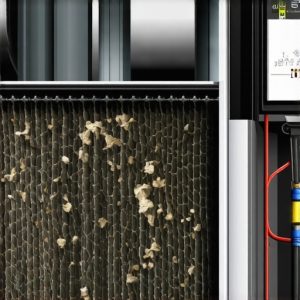
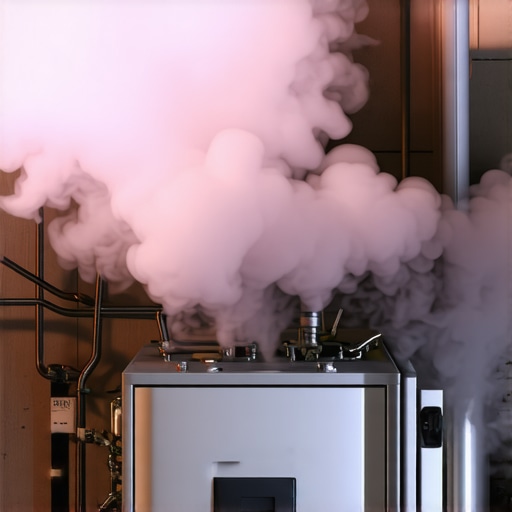
When I walk up to a furnace that’s locked out on a high-limit switch, I’m looking at the ‘lungs’ of your house. In a cold climate like the Northeast or the Midwest, the enemy isn’t just the cold; it’s the expansion and contraction of metal. Every time your furnace kicks on, that heat exchanger expands. When it cools, it contracts. If you haven’t had your variable speed furnace services checked, that metal is under massive stress. If the blower motor is bogged down with dust because you skipped the HEPA filter systems maintenance, the heat isn’t being pulled away fast enough. The metal gets too hot, becomes brittle, and eventually, you get a crack. A crack in a heat exchanger isn’t just a repair; it’s a death sentence for the unit and a carbon monoxide risk for your family. This is why understanding how to identify when furnace repair is urgent and why is more than just a convenience—it’s a safety protocol.
Thermodynamic Zooming: Latent vs. Sensible Heat
Let’s talk physics. Most people think a furnace just ‘makes’ hot air. In reality, we are managing heat transfer. In a high-efficiency condensing furnace, we are dealing with the latent heat of vaporization. We are cooling the flue gases so much that the water vapor turns back into liquid, releasing extra BTUs. If your drain lines are clogged with sludge because of neglect, that acidic condensate backs up into the secondary heat exchanger. I’ve seen $5,000 units ruined by a $0.05 piece of debris in a trap. This is where furnace repair myths debunked by industry experts come into play. People think these systems are ‘set and forget.’ They aren’t. They are chemical processing plants sitting in your basement.
The Airflow Manifesto: Beyond the Cabinet
If you want real comfort, you have to look at zoning system installation and hospital HVAC zoning concepts. In a hospital, we control every cubic inch of air to prevent cross-contamination. In your home, we do it to prevent ‘hot spots’ and ‘cold spots.’ If you have a room that’s always five degrees colder, it’s not a furnace problem; it’s a static pressure problem. Your ‘tin knocker’ (the duct guy) might have undersized the return air. I’ve spent hours applying ‘pookie’ (mastic) to duct seams because air leakage is the silent killer of AFUE ratings. Modern solutions like geofencing temperature control and thermostat wiring upgrades allow us to manage these loads dynamically, but only if the ‘juice’ (the gas pressure) and the airflow are balanced. For those in more arid regions, evaporative cooler services require a completely different psychrometric approach, focusing on the wet-bulb temperature, but the principle of maintenance remains the same.
“Equipment shall be sized to meet the calculated sensible and latent loads… improperly sized equipment will not provide required indoor comfort.” – ACCA Manual J
The Real Cost: A Breakdown of the Numbers
A standard annual check might cost you a few hundred dollars. Neglecting it? You’re looking at a $800 blower motor, a $1,200 inducer assembly, or a $12,000 full system replacement when the ‘sparky’ (electrician) tells you your compressor or furnace board fried because of a low-voltage short. We are seeing massive shifts in the industry, which I detail in heating service innovations transforming 2025 climate control. With the transition to new refrigerants and higher SEER2/HSPF2 requirements, the price of equipment is only going up. Buying a cheap unit today is a trap; if the installation isn’t handled with programmable thermostat programming and proper crawl space heating solutions, you’re just burning money. I always tell my clients that a ‘Sales Tech’ will try to sell you a new furnace when yours is dirty, but a real technician will find the ‘pookie’ leaks and the thermostat wiring issues that are actually causing the problem. Your furnace is a machine, not a magic box. Treat it like one.