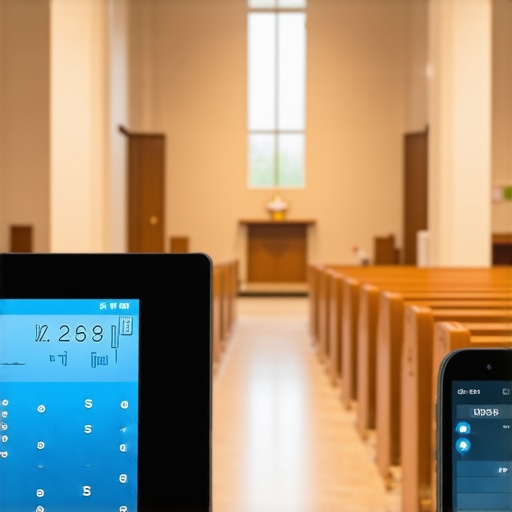
My old mentor used to scream at me until his neck veins turned purple: ‘You can’t heat what you can’t touch!’ He wasn’t talking about physical contact; he was talking about the thermal boundary layer and the sheer physics of air molecules moving across a heat exchanger. In the world of church heating systems, this lesson is the difference between a comfortable congregation and a $50,000 replacement bill that nobody budgeted for. Churches are thermodynamic nightmares. You’ve got fifty-foot ceilings, stained glass windows with the R-value of a wet paper bag, and a building that sits stone-cold for six days a week only to be shocked into life on Sunday morning. That ‘thermal shock’ is exactly why remote thermostat access and monitoring aren’t just gadgets—they are life support for your furnace.
The Forensic Diagnosis: Why Church Systems Die in the Dark
In thirty years of crawling through crawlspaces and balancing on rusted ladders, I’ve seen more church boilers and furnaces die from neglect than from actual wear. The cycle is always the same. The building committee wants to save money, so they keep the heat at 50°F all week. Then, the sexton arrives at 6:00 AM on Sunday and cranks it to 72°F. The system goes from a dead stop to a full-blown roar, hitting its high-limit switch and stressing every weld in the heat exchanger. This is where a draft inducer motor repair usually starts. That little motor is the lungs of your system. If it’s struggling to pull air through a cold, heavy chimney, it’s going to burn out its bearings. You’ll hear that high-pitched screech—the sound of a ‘Sparky’ or a ‘Tin Knocker’ like me getting ready to write a big invoice. By implementing heating service innovations, you can see these failures coming before the sanctuary feels like a meat locker.
“The most expensive equipment in the world cannot overcome a bad duct system or improper operating cycles.” – Industry Axiom
When we talk about the ‘Forensic Diagnosis’ of a church system, we have to look at the chimney liner installation. Most old churches were built for coal or oil. When they swapped to gas, they often ignored the venting physics. Gas exhaust is cooler and more acidic. If you don’t have a proper liner, that moisture condenses, eats your masonry, and eventually chokes the furnace. Remote monitoring can actually track the flue gas temperature trends. If the ‘gas’ or ‘juice’ isn’t burning right, the sensors tell us long before the Carbon Monoxide detectors start screaming. It’s about IAQ improvement services as much as it is about heat. You don’t want a ‘Sales Tech’ coming in and telling you the whole thing is shot when all you needed was a $300 sensor and some ‘Pookie’ (mastic) to seal up the leaks.
The Cold Climate Reality: Heat Pumps and Polar Vortices
In the North, where the wind bites through stone walls, we’re seeing a shift toward cold climate heat pumps. But here’s the kicker: churches often try to treat them like old-school boilers. A heat pump doesn’t ‘blast’ heat; it sips it. It moves heat from the outside air (even at -10°F) into the building. If you don’t have remote monitoring to manage the ‘ramp-up’ period, you’ll end up using the expensive electric backup heat, and your utility bill will look like a mortgage payment. This is where hospital HVAC zoning logic comes into play. You don’t need to heat the sanctuary to 70°F for a Tuesday night bake sale in the basement. Remote access allows for granular control, ensuring you aren’t wasting ‘juice’ on empty rooms. If you’re unsure how to manage these transitions, choosing the right HVAC fixes is the first step toward sanity.
“Ventilation systems shall be designed to provide a minimum outdoor air intake rate based on the floor area and occupancy of the space.” – ASHRAE Standard 62.1
I remember a job last January. The church’s old atmospheric boiler was chugging along, but the draft inducer was failing intermittently. Because they had no remote monitoring, the system tripped on a ‘flame rollout’ safety at 3:00 AM on a Friday. By Sunday morning, the pipes in the basement had burst. If they had spent the money on a furnace tune-up service that included a remote diagnostic hub, I would have received a text message on Friday morning. I could have swapped that motor in twenty minutes. Instead, they spent $12,000 on water damage restoration. This is why I tell every deacon: the ‘gas’ is cheaper than the ‘glass.’ Monitoring the ‘suction line’—making sure it’s beer-can cold in the summer or checking the head pressure in the winter—is the only way to protect the ‘heart’ of the building.
Thermodynamic Zooming: Humidity and the ‘Cold Swamp’ Effect
Let’s talk about evaporative cooler services and humidity. In some climates, churches use swamp coolers to save on electricity. But in humid zones, an oversized unit that isn’t monitored will ‘short cycle.’ It drops the temperature so fast that it never removes the latent heat (the moisture). The result? The pews feel sticky, and the hymnals start to grow mold. Remote monitoring tracks the dew point. It tells the system to run the blower longer at a lower speed to squeeze the water out of the air. This is a core part of IAQ improvement services. You aren’t just moving air; you’re managing a delicate chemical balance. If your system is acting up, you need to know how to identify when furnace repair is urgent before the mold takes root in the organ pipes.
Ultimately, a church heating system is a beast. It requires a heating service professional who understands that ‘horsepower’ doesn’t mean anything if the ‘static pressure’ is too high. If your ductwork is too small, your furnace is like an athlete trying to run a marathon while breathing through a cocktail straw. Remote monitoring allows us to see the ‘static’ increase over time, signaling that it’s time for a filter change or a coil cleaning before the compressor commits suicide. Don’t fall for the ‘Sales Tech’ who wants to sell you a new unit without looking at your chimney liner or your remote access needs. Stick with the guys who know the smell of a sour compressor and the value of a well-placed sensor. Check our heating service hacks for 2025 to see how the industry is changing for the better.