The silence of a commercial spa at a mountain resort isn’t peaceful; it’s the sound of lost revenue and shivering guests. When a high-output commercial spa heater fails to ignite in sub-zero ambient temperatures, you aren’t just looking at a broken appliance; you’re looking at a failure in the thermodynamic chain. As a tech who has spent three decades chasing ghosts in mechanical rooms, I can tell you that the ‘no flame’ code is rarely about the flame itself. It’s about the physics of the environment. My old mentor used to scream, ‘You can’t burn what you haven’t prepared!’ He was referring to the precise ratio of oxygen to fuel, and how the smallest deviation in static pressure or sensor cleanliness can turn a million-BTU heater into a massive paperweight. This isn’t just about swapping parts like a ‘Sales Tech’ looking for a commission; it’s about a forensic diagnosis of the ignition sequence.
“The combustion air must be sufficient to provide for the complete combustion of the fuel gas, and to provide ventilation for the surrounding atmosphere.” – NFPA 54 National Fuel Gas Code
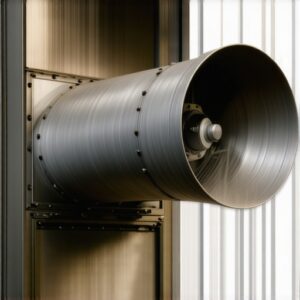
In cold climate zones, the enemy is density and condensation. When the air is thick and freezing, your gas-to-air mixture changes. If you are dealing with commercial furnace repair or high-end spa boilers, you have to look at the draft. We often see technicians misdiagnose a bad control board when the real culprit is a slight blockage in the intake or an improperly sized vent. This is where static pressure testing becomes your best friend. If the blower can’t overcome the resistance of the venting, the pressure switch won’t close, and your ‘Sparky’ (the ignition electrode) will never get the signal to fire. You might think you need capacitor replacement services for the blower motor, but if the ducting is restricted, a new capacitor is just putting a band-aid on a broken leg.
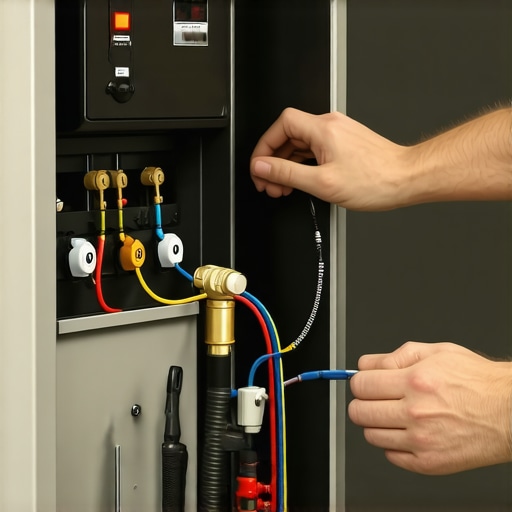
The anatomy of a commercial ignition system is a hierarchy of safety. First, the inducer motor must create a vacuum. If you’re working in a tight mechanical room, you might need crawl space heating solutions just to keep the condensate lines from freezing and backing up into the combustion chamber. Once that vacuum is confirmed, the control board sends ‘the juice’ to the igniter. In modern systems, this is often a Hot Surface Igniter (HSI) or a Direct Spark Ignition (DSI) probe. If you smell that sour, acidic scent of a scorched transformer, you know you’ve got a short. But more often, the failure is subtle—a micro-crack in the porcelain of the probe that leaks voltage to the frame instead of jumping the gap to the burner. This is why refrigerant leak detection logic actually applies here; you are looking for the path of least resistance where things are ‘leaking’ out of their intended vessels.
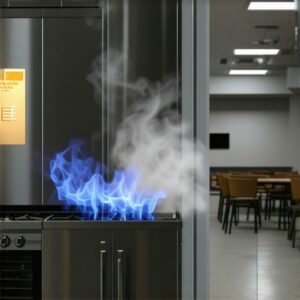
Let’s talk about the ‘Flame Rectification’ process—this is where the thermodynamic zooming matters. The control board doesn’t just ‘see’ the light of the fire; it uses the flame as a conductor. The flame ionizes the air, allowing a tiny micro-amp signal to pass from the sensor to the burner ground. If that sensor is coated in the white silica dust common in commercial spa environments, the signal dies. The heater fires for four seconds and then shuts down—the classic ‘short cycling’ nightmare. I’ve seen guys try to sell a $15,000 system when all they needed was a piece of steel wool and five minutes of labor. This is why understanding how to identify when furnace repair is urgent and why is critical for facility managers who don’t want to get fleeced.
“Standardized testing of static pressure is the only way to verify that the equipment is operating within its design parameters and ensuring long-term reliability of the ignition sequence.” – ACCA Manual D
In high-efficiency commercial setups, we are increasingly seeing solar thermal heating integration. This is great for the green-energy ‘Tin Knockers’ to brag about, but it adds a layer of complexity to the ignition logic. The gas heater acts as a ‘booster’ when the solar gain isn’t enough. If the integration logic isn’t calibrated, the gas heater might try to ignite while the water is already at 104°F, leading to high-limit trips. Similarly, modulating furnace repair techniques are becoming standard for spa heaters. These units don’t just blast on and off; they modulate the gas valve. If your leak detector integration isn’t sensing the gas pressure drop correctly during modulation, the burner will stumble and lock out on a low-flame signal.
For those in the North, the ‘Polar Vortex’ creates unique failures. I once followed a tech who told a client their cold climate heat pumps were dead because the backup gas heater wasn’t kicking in. It turned out the regulator vent on the exterior of the building was iced over. The gas couldn’t flow because the diaphragm couldn’t move. A little bit of warmth and some ‘Pookie’ (mastic) to seal the cabinet from moisture infiltration saved the day. If you aren’t doing MERV filter upgrades on the air intakes of your mechanical rooms, you’re inviting dust to coat these sensitive components, leading to premature failure. You can find more on this in our top hvac repair strategies to extend your systems life guide. When the spa is down, the clock is ticking. Don’t be the guy who just replaces the board. Be the guy who understands the physics of the fire.