The Physics of the Plate: Why Comfort is a Calculation, Not a Guess
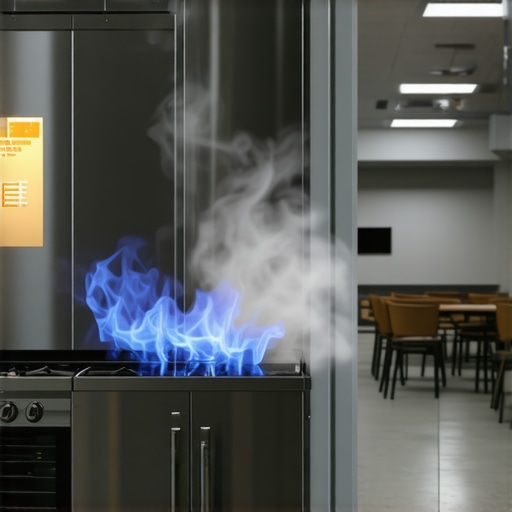
My old mentor, a grizzled tin knocker named Gus who’d lost two fingers to a sheer and half his hearing to rattling blowers, used to corner me in the back of a van and scream, ‘You can’t cool what you can’t touch!’ He wasn’t talking about the food. He was talking about the molecules. He understood that in a commercial kitchen, the laws of thermodynamics are being violated every time a line cook cranks the exhaust hood. This is the fundamental truth most restaurant owners miss: your HVAC system is a breathing organism, and right now, it’s suffocating. When you see a utility bill that looks like a mortgage payment, you aren’t just paying for comfort; you are paying for the war between your exhaust fans and your makeup air. If your new construction heating design didn’t account for the massive cubic feet per minute (CFM) being sucked out of the building, you’re literally burning cash to heat the neighborhood alleyway.
“The most expensive equipment in the world cannot overcome a bad duct system.” – Industry Axiom
The Airflow Manifesto: Why Your Dining Room is a Meat Locker and Your Kitchen is a Sauna
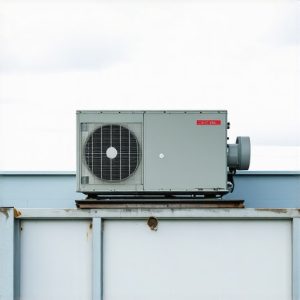
In the North, where we deal with the biting reality of the polar vortex, the balance of a building’s pressure is everything. Most restaurateurs think they have a ‘bad unit’ because the front of the house is freezing while the chef is fainting. It’s not the unit. It’s the static pressure. When a ‘Sales Tech’—those guys in the crisp white shirts who’ve never felt the sting of furnace flame sensor cleaning on a Sunday night—tells you that you need a bigger rooftop unit (RTU), he’s lying to you. A bigger unit in an unbalanced building just short-cycles. It blasts cold or hot air, hits the setpoint on a poorly placed thermostat, and shuts off before it can actually move the air in the corners. This is where zoning system installation becomes the difference between a profitable quarter and a loss. Without proper zoning, your industrial heater services are just throwing BTUs into a void. We look for ‘beer can cold’ on the suction line, sure, but we also look at the ‘pookie’ (mastic) on the joints. If your ductwork is leaking air into the ceiling plenum, you’re paying to condition a space where no one sits.
The Manual J Lie and the Reality of Commercial Loads
You can’t just ‘guesstimate’ a restaurant. Residential manual J calculations are child’s play compared to a commercial kitchen. You have latent heat from boiling pasta water, sensible heat from the charbroiler, and a revolving door that lets in a 10-degree gust every thirty seconds. If your contractor didn’t perform a rigorous load calculation, your two-stage furnace installation is basically a guessing game.
“Design heating and cooling loads shall be determined in accordance with ASHRAE/ACCA Standard 183.” – ASHRAE Standards
Many older establishments are still running on ancient boilers that need a radiator replacement or, more likely, a full oil to gas conversion to survive the 2025 energy mandates. The sheer inefficiency of burning oil in a modern economy is a death sentence for your margins. When we perform a combustion analysis on an old burner, we often find that 30% of your fuel is just going straight up the flue. That’s not a heating system; that’s an expensive chimney.
The Tech’s Secret: It’s the Controls, Stupid
I’ve seen it a thousand times: a manager gets frustrated that the kitchen is hot, so they drop the thermostat to 55 degrees. They think they’re ‘forcing’ the AC to work harder. All they’re doing is freezing the evaporator coil into a block of ice, which eventually slugs the compressor with liquid ‘juice’ (refrigerant) and kills the heart of the system. This is why programmable thermostat programming is not a luxury; it’s a security measure. You need to lock those controls down. A smart tech knows that heating service innovations transforming 2025 climate control are less about the metal and more about the logic. If you aren’t using heating service innovations to manage your peak demand, you’re letting the ‘Sparky’ (electrician) and the gas company dictate your profit margins. A properly staged system, perhaps a two-stage furnace installation, allows the equipment to run at 60% capacity most of the time, only ramping up when the dinner rush hits. This prevents the constant ‘bang-on, bang-off’ that destroys contactors and capacitors.
Beyond the Filter: The Silent Killers of Efficiency
We need to talk about furnace flame sensor cleaning. It sounds small, like something you’d ignore. But a dirty sensor means the board doesn’t ‘see’ the flame, shuts the gas off, and tries again. Do this ten times an hour, and you’re wasting gas and wearing out your ignitor. It’s part of a top hvac repair strategy that keeps your system alive for twenty years instead of ten. In the North, ice is our enemy. A rooftop unit that hasn’t had a combustion analysis in three years is a carbon monoxide risk waiting to happen. If your heat exchanger cracks because of poor airflow—remember what Gus said—you’re looking at a $10,000 problem that a $200 maintenance visit could have caught. Whether it’s an oil to gas conversion or just a simple efficient hvac repair, the goal is always the same: keep the air moving and keep the pressures balanced. If your restaurant smells like the grease trap everywhere, including the dining room, your HVAC is failing its primary mission of ventilation. Stop listening to the Sales Techs who want to sell you a shiny new box. Start listening to the tin knockers who want to fix your air. Comfort isn’t a knob you turn; it’s a science you maintain. Check our privacy policy for more info on how we handle your facility data during audits.