The Matched Coil Mandate: Why Mismatched AC Systems Are 2025’s Biggest Money Pit
I remember my first week in the trade, shivering in a Chicago basement while my old mentor—a man who smelled exclusively of pipe dope and burnt copper—barked at me. ‘You can’t cool what you can’t touch!’ he yelled, pointing a calloused finger at a rusted A-coil that was half the size it should have been for the condenser sitting outside. He was right. You see, most ‘box swappers’—those sales techs who call themselves installers—will tell you that as long as the ‘juice’ is flowing, you’re fine. They are lying. In our climate, where we transition from school boiler maintenance in the morning to emergency AC calls by noon, physics doesn’t take a day off. If you are looking into expert tips for 2025 AC success, the most important lesson is matching your indoor and outdoor coils. If they aren’t a matched set, you aren’t buying a cooling system; you’re buying a countdown to a compressor burnout.
The Death of R-410A and the A2L Transition
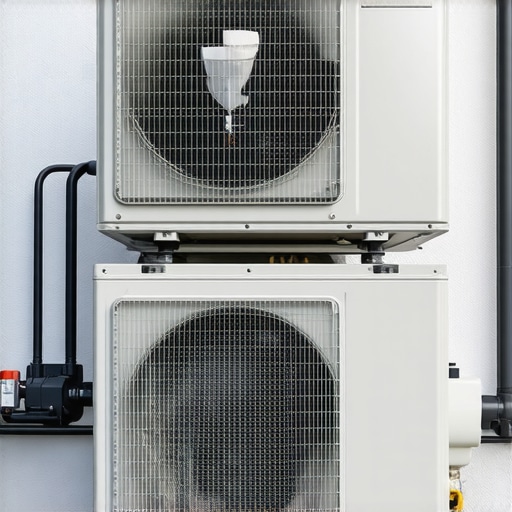
We are standing on a regulatory cliff. As of 2025, the industry is moving away from R-410A in favor of A2L refrigerants like R-454B. These are ‘mildly flammable,’ which sounds scary to a homeowner but is just another Tuesday for a tech who knows how to use a torch. The real issue is that these new systems require internal leak sensors and specific coil geometries to handle the different thermodynamic properties of the ‘gas.’ You cannot simply slap a new 2025 condenser onto an old 2015 evaporator coil and expect it to work. The expansion valves won’t play nice, and you’ll end up with liquid slugging back to your compressor, killing it faster than a wall furnace installation done by an unlicensed ‘handyman.’ Understanding AC installation secrets means recognizing that the indoor coil is the heart of the heat exchange process.
“The indoor and outdoor sections of a split system must be matched to provide the certified performance for which they were designed.” – ACCA Manual S
The Physics of the ‘Tin Knocker’ and Static Pressure
In the North, we deal with extreme temperature swings. We need furnace repair expertise for the winter and high-efficiency cooling for the humid summers. When you install a new outdoor unit, that unit is rated for a specific SEER2 (Seasonal Energy Efficiency Ratio). That rating isn’t just about the compressor; it’s about the surface area of the indoor evaporator coil. If your ‘tin knocker’ (the ductwork guy) hooks up a high-efficiency condenser to a small, old coil, the refrigerant won’t fully evaporate. You’ll have a ‘suction line’ that isn’t ‘beer can cold’—it’ll be a frozen block of ice. This ruins the ‘delta-T’ (the temperature difference), and your smart thermostat setup will keep the unit running for hours, wasting energy while your house stays a humid 78 degrees.
The Thermodynamic Zoom: Latent vs. Sensible Heat
In humid climates, your AC has two jobs: lowering the temperature (sensible heat) and removing moisture (latent heat). A matched coil is designed to reach a specific temperature just below the dew point. If the coil is mismatched, it might cool the air too quickly without removing the moisture, leaving you in a ‘cold swamp.’ This is why we push for demand-controlled ventilation and proper thermostat installation. A mismatched system can’t take advantage of modern remote thermostat access features because the underlying hardware is fundamentally broken. Whether you are dealing with spa heater services or pellet stove repair, the principle of matched components remains the same: the system is only as strong as its weakest link.
“Standardized testing requires that the combination of the evaporator coil and the condensing unit achieves specific SEER2 and EER2 ratings for regulatory compliance.” – ASHRAE Standard 210/240
The Scam of the ‘Dry Charge’ and Why It Fails
Some ‘Sales Techs’ will try to sell you a ‘dry charge’ unit to avoid replacing the indoor coil. This is a trap. These units are often less efficient and are basically a loophole to keep old, failing technology on life support. If you want year-round efficiency, you need a full system swap. When we do a furnace tune-up services visit and find a cracked heat exchanger, we don’t just patch it; we replace it because safety and physics demand it. The same goes for your AC. A mismatched coil leads to poor oil return. The oil that lubricates the compressor travels with the refrigerant. If the velocities in the evaporator coil are off because of a mismatch, that oil gets trapped inside the coil, and your compressor starves and seizes. That is a $3,000 mistake that could have been avoided with a $1,500 coil match. Check out furnace repair myths to see how similar ‘shortcuts’ end up costing more in the long run.
Final Verdict: Don’t Let a ‘Sparky’ Wire a Disaster
Your HVAC system is a closed-loop thermodynamic machine. When you change one part, the balance shifts. If you are investing in school boiler maintenance or even just a smart thermostat setup, you are looking for reliability. Don’t let a ‘Sparky’ or a cut-rate tech convince you that ‘a coil is a coil.’ It isn’t. Use ‘Pookie’ (mastic) to seal your plenums, ensure your static pressure is within the manufacturer’s specs, and for the love of all things mechanical, match your coils. If you find yourself in a situation where your system is already failing, know when furnace or AC repair is urgent to prevent a total home catastrophe.