The Ghost of Unbalanced Airflow
I’ve spent three decades crawling through fiberglass-filled attics where the temperature hits 130°F, and if there is one thing I’ve learned, it’s that homeowners are being sold a lie. They think that if the second floor is a sweltering swamp while the living room is a meat locker, they just need a bigger unit. That is ‘Sales Tech’ logic, and it’s a load of garbage. My old mentor, a man we called ‘Lead-Pipe’ Larry, used to shove a manometer in my hand and scream, ‘You can’t cool what you can’t touch!’ He was right. You can buy a 5-ton unit for a 2,000-square-foot house, but if your ductwork is only sized for 3 tons, you aren’t getting more cooling—you’re just killing your compressor. We call this ‘The Airflow Manifesto.’ If your upstairs is too hot, it’s not a capacity problem; it’s a physics problem. It’s about Total External Static Pressure (TESP), the ‘blood pressure’ of your HVAC system.
The Physics of the ‘Too Hot Upstairs’ Nightmare
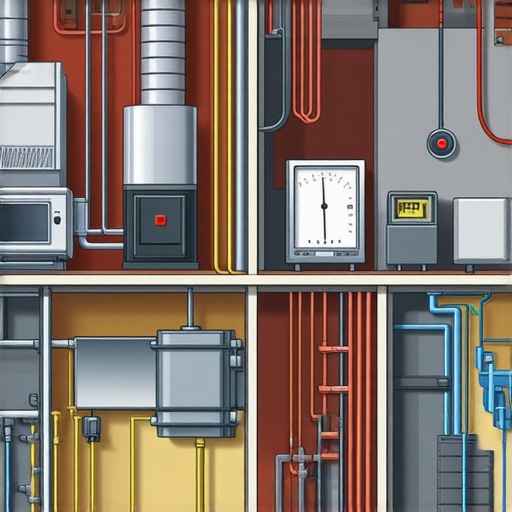
Static pressure is the resistance to airflow within your ducts. Think of it like drinking a thick milkshake through a tiny cocktail straw. Your blower motor—the heart of the system—has to work twice as hard to push air through restricted channels. When I perform a diagnostic, I don’t just look at the thermostat. I’m looking at the supply and return plenums. Most ‘Tin Knockers’ who slapped these houses together in the 90s didn’t care about Manual D. They just threw some flex duct in a crawl space and called it a day. But for those of us doing cold climate heat pumps installations or heat pump replacement in the North, we know that every fraction of an inch of water column matters.
“The most expensive equipment in the world cannot overcome a bad duct system.” – Industry Axiom
If your static pressure is too high, the air stays in the ducts too long. It loses its ‘juice’ (velocity) before it ever reaches the upstairs registers. This leads to the evaporator coil dropping below the dew point too aggressively, removing too much latent heat and sometimes freezing the coil solid. By the time the air reaches that master bedroom, it’s a pathetic puff of lukewarm humidity. This is why AC installation secrets that HVAC pros wont tell you often revolve around duct design rather than the shiny box outside. To solve this, we don’t just ‘top off the Freon’—that’s a scam. We use a manometer to find where the bottleneck is. Usually, it’s an undersized return air drop or a filter that’s so thick it’s basically a wall of cardboard.
The Northern Climate Challenge: From Furnaces to Boilers
Up here, we aren’t just fighting the heat; we are fighting the ‘Polar Vortex’ effect. A system that can’t move air in July is a system that will fail you in January. When we talk about gas line installation for furnaces or heat exchanger cleaning, we are talking about system integrity. A cracked heat exchanger often starts with poor airflow—high static pressure causes the furnace to overheat, cycling on the limit switch until the metal fatigues and cracks. That’s a death sentence for the unit and a carbon monoxide risk for you. I’ve seen hotel boiler services where the entire lobby was freezing because the draft inducer motor repair was ignored, leading to poor combustion and failed heat transfer. It’s all connected. Whether it’s a pellet stove repair or an infrared heater installation, if the heat can’t get to the occupant, you’re just burning money.
The Solution: Mastic, Dampers, and Smart Tech
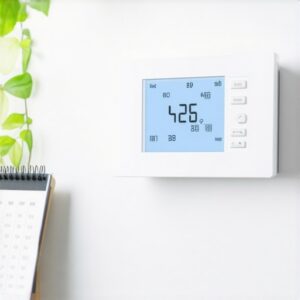
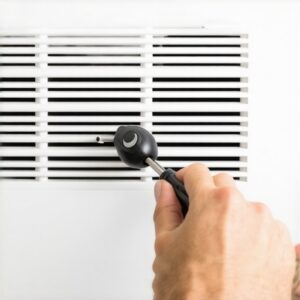
So, how do we fix the upstairs heat? We start by sealing the leaks. Forget duct tape; it’s useless after two seasons. We use ‘Pookie’—a thick, gray mastic that creates a permanent seal. Then we look at crawl space heating solutions to ensure the duct runs aren’t losing energy to the dirt below. Sometimes, the fix is as simple as a voice control setup Alexa Google integrated with smart dampers, allowing the system to divert air exactly where it’s needed based on real-time pressure readings. But you can’t just slap a smart thermostat on a broken system. You need to understand the thermodynamics first. Heating service hacks for comfort and savings in 2025 always point back to the basics: clean coils, sealed ducts, and balanced pressure.
“Static pressure shall not exceed the manufacturer’s rated maximum for the equipment to ensure rated SEER and AFUE performance.” – ACCA Manual D
If your tech doesn’t pull out a manometer, they aren’t a tech—they’re a salesman. Real pros know that a draft inducer motor repair or a heat pump replacement is only the beginning. You have to verify the airflow. If you’re tired of sleeping in a sauna while your downstairs is a walk-in cooler, stop looking for a ‘quick fix’ and start looking at the physics of your home. Check out top hvac repair strategies to extend your systems life for more on how to keep your equipment running until the wheels fall off. Don’t let a ‘Sales Tech’ talk you into a $15,000 unit when $500 in duct modifications could solve your problem for good.